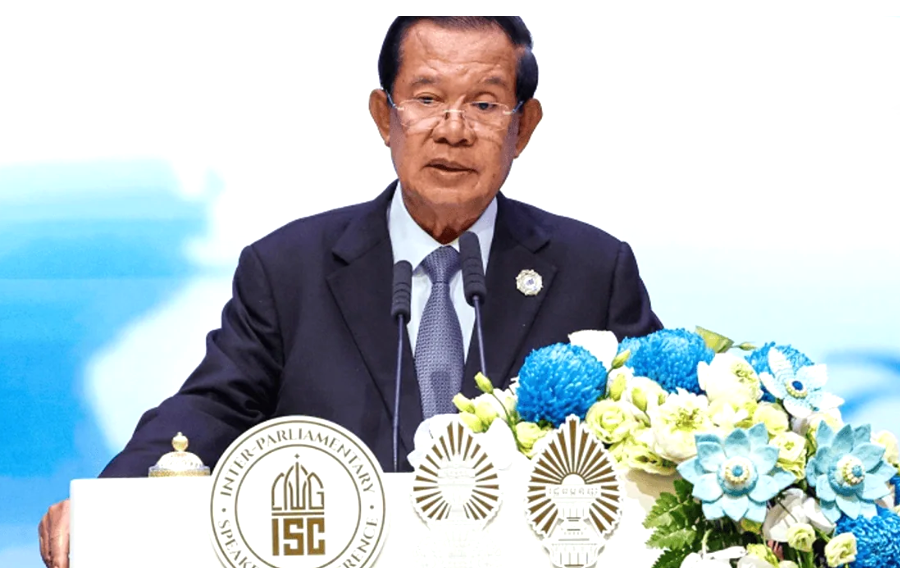
Speaking to parliamentary leaders gathered in Phnom Penh for the 2nd Inter-Parliamentary Speakers' Conference, Hun Sen articulated a provocative interpretation of Cambodia-Thailand border tensions, framing them as part of a broader pattern where powerful nations use pretextual concerns to advance geopolitical interests. His remarks on Thursday reflected frustration with what he characterised as the manipulation of transnational security issues to mask territorial grabs, a charge that illuminates the fraught dynamics between two neighbouring Southeast Asian nations with a complex historical relationship marked by competing territorial claims.
The conference itself brought together a diverse array of parliamentary delegations, including representatives from Pakistan, Malaysia, Myanmar, Australia and Russia. This setting provided Hun Sen a prominent platform to articulate Cambodia's grievances before an international audience, transforming what might have been a routine diplomatic forum into a venue for airing serious allegations about sovereignty violations. The breadth of attendance underscored how border disputes and questions of territorial integrity resonate across multiple regions, particularly among nations conscious of great power pressures and competing strategic interests.
Hun Sen's central contention centred on how modern interstate conflict has evolved beyond conventional warfare. Rather than direct military confrontation, he argued, contemporary powers increasingly pursue territorial and strategic objectives by leveraging ostensibly legitimate international concerns—in this case, the genuine problem of transnational online scam operations that have plagued Southeast Asia. By characterising Thailand's actions as disguised under the pretext of combating cross-border crime, Hun Sen suggested a cynical manipulation of shared security concerns to achieve unrelated geopolitical ends. This framing reveals how security language itself has become contested terrain in international relations, where the same issue can be simultaneously a genuine threat and a convenient justification for unilateral action.
Beyond the immediate Cambodia-Thailand dispute, Hun Sen articulated a sweeping critique of contemporary international disorder. He identified multiple overlapping forms of conflict that bypass traditional military engagement: trade wars instrumentalising customs regimes to punish adversaries, technology competition for semiconductor dominance and cyber-security infrastructure, and resource protectionism around energy and rare earth minerals. Each of these domains represents an arena where wealthy, technologically advanced nations can exercise disproportionate leverage against smaller, developing economies. For Malaysian and other Southeast Asian policymakers, this taxonomy of conflict is particularly resonant, as the region sits at the intersection of major power competition across precisely these dimensions.
Central to Hun Sen's argument was the accusation that powerful states have become architects of instability while simultaneously claiming to defend a rules-based international order. He specifically warned against what he termed the exclusive exercise of self-defence doctrine and unjustified pre-emptive strikes by major powers, suggesting that such behaviour has undermined the collective security framework that the United Nations was designed to guarantee. This critique echoes longstanding concerns among non-aligned and developing nations that international law operates as an instrument of powerful states rather than a constraint upon them. Hun Sen's invocation of this complaint elevated it beyond Cambodia's particular circumstances to articulate a shared vulnerability experienced across the developing world.
The Senate president expressed particular alarm at the potential cascade effect of security anxiety throughout the developing world. If smaller nations cannot rely on international treaties and institutional frameworks to protect their sovereignty, he reasoned, they face acute pressure to pursue independent military capabilities or seek alliance relationships that compromise their autonomy. Hun Sen cautioned that this dynamic threatens the international non-proliferation framework itself, as security-desperate nations might pursue weapons capabilities to deter external aggression. This observation carries significant implications for Southeast Asian stability, particularly as the region has historically prided itself on avoiding arms races and military buildups.
Hun Sen also directed criticism at what he characterised as a regime of double standards in international accountability. He contended that developed nations apply strict human rights, environmental and counter-crime standards to smaller, vulnerable countries while overlooking these same issues when committed by powerful states. This asymmetry, he suggested, reflects not genuine principle but rather a mechanism of control, designed to constrain the development trajectories and policy choices of weaker nations. His complaint resonates with long-standing grievances from the Global South about the conditionality regimes embedded in international development assistance, trade agreements and security partnerships.
The Senate president's framing of Cambodia's structural vulnerabilities as contextual factors that should moderate international judgment reveals a defensive posture beneath his aggressive rhetoric. By emphasizing Cambodia's ongoing recovery from historical conflict and limited development capacity, Hun Sen appealed to international sympathy while simultaneously suggesting that wealthy nations apply inappropriate standards to countries still rebuilding institutional capacity. This argument simultaneously justifies Cambodia's own governance shortcomings while deflecting criticism by reference to geopolitical pressure. The rhetorical move is particularly significant given international concerns about Cambodia's human rights record and democratic governance, issues that Hun Sen effectively reframed as weaponised accusations rather than legitimate accountability mechanisms.
Hun Sen's characterisation of economic and trade relationships as increasingly weaponised reflects genuine anxieties across Southeast Asia about supply chain dependencies and the strategic weaponisation of economic interdependence. He highlighted how trade rules and preferences change unpredictably, generating uncertainty for businesses and governments alike. This observation speaks to recent experiences during US-China trade tensions and more recent shifts in US policy toward allies and adversaries. For Malaysia and other regional economies integrated into global supply chains and dependent on preferential access to major markets, the instability Hun Sen describes represents a tangible threat to economic planning and development strategies.
The Senate president's call for restoration of the rules-based order, coupled with reinvigoration of the UN Charter and ASEAN Charter, articulated a conservative vision of international relations that paradoxically sat uneasily with his own accusations that Thailand had violated ceasefire agreements with impunity. This tension—between advocating for rule-based order and claiming that such rules are routinely ignored by more powerful actors—reflects a genuine dilemma for smaller nations. Hun Sen's solution implicitly relied on a reconstituted international order where enforcement mechanisms actually constrain powerful states, a scenario that appears increasingly distant from contemporary reality.

