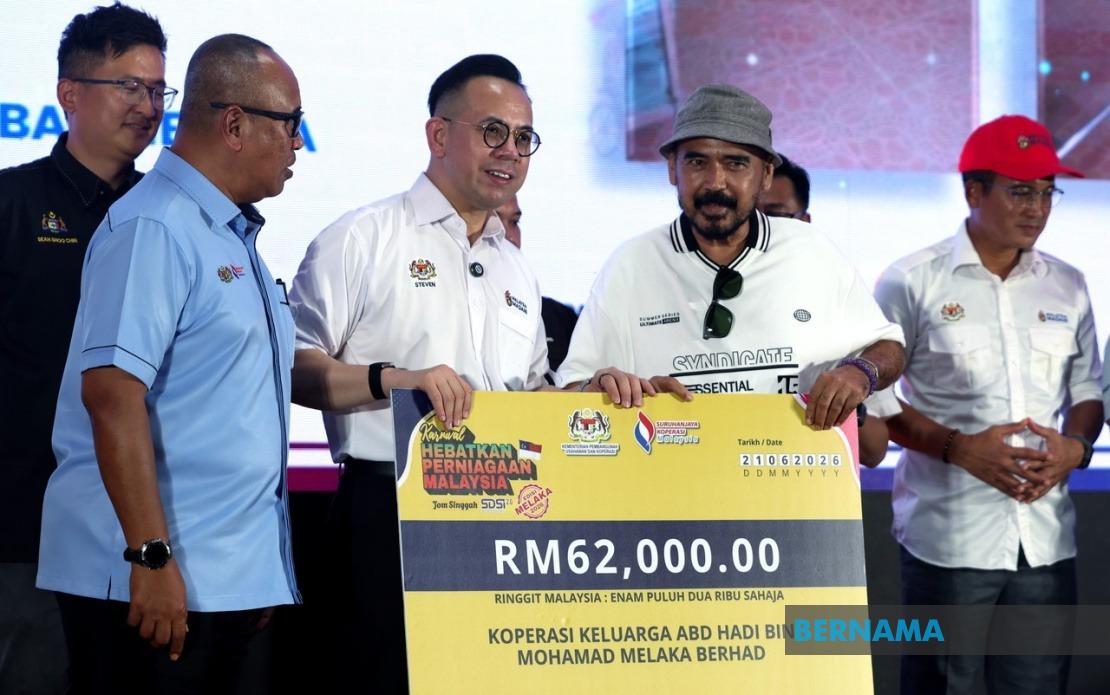
The Ministry of Entrepreneur Development and Cooperatives (KUSKOP) has concluded its latest carnival initiative in Melaka with substantial results, reporting RM8.45 million in combined business matching value and financing prospects. The three-day Empowering Malaysian Businesses Carnival, which ran from June 19 to 21, brought together entrepreneurs, financiers, and business support organisations in what represents the second instalment of the HPM 2026 Carnival series.
The event drew considerable interest from the broader business community, with 70,000 visitors passing through the carnival venues during the weekend gathering. This substantial foot traffic underscores the appetite among Malaysian entrepreneurs for structured networking and business development opportunities, particularly those seeking to expand beyond their existing operational capacity. The carnival format, combining exhibition space with facilitated business interactions, has proven effective in creating an accessible entry point for enterprises at various growth stages.
The headline figure of RM8.45 million comprises two distinct components reflecting different pathways to business expansion. Business matching sessions conducted across 72 separate engagements between entrepreneurs and potential partners or investors yielded RM6.4 million in identified opportunities. These sessions brought together 25 prospective entrepreneurs with established business entities and investment-minded individuals, creating targeted connections designed to translate into concrete commercial relationships.
Paralleling the matching component, the carnival's financial interaction sessions produced equally promising results. A total of 55 micro, small and medium enterprises participated in dedicated sessions with financial institutions and lending bodies, resulting in RM2.05 million in identified financing potential. This pathway addresses one of the persistent challenges facing Malaysian SMEs: access to appropriately structured capital for growth initiatives. The presence of multiple financial providers at the carnival enabled enterprises to explore options beyond their traditional banking relationships.
Direct commercial activity at the carnival also demonstrated the viability of the event format. Entrepreneurs utilising the carnival platform to showcase and sell products directly to consumers generated RM532,802.77 in immediate sales. While modest compared to the matching and financing figures, these direct sales represent tangible economic activity and provide immediate revenue to participating enterprises while validating their product-market fit with consumers.
The Melaka carnival forms part of the broader Hebatkan Perniagaan Malaysia agenda, spearheaded by KUSKOP Minister Steven Sim Chee Keong. This initiative sits within the government's ABCD framework, which prioritises accelerating productivity, reducing bureaucratic obstacles, improving capital accessibility, and expanding market access for domestic enterprises. The carnival series represents the practical manifestation of this strategic approach, translating policy objectives into tangible business development platforms.
The significance of this initiative extends beyond individual carnival outcomes. The HPM Carnival series addresses a structural gap in Malaysia's entrepreneurship ecosystem: the absence of low-barrier, cost-effective platforms where enterprises can simultaneously access multiple services—networking, financing, mentorship, and direct market access—within a single venue. For smaller entrepreneurs with limited resources for market research, investor relations, or financial negotiation, such consolidated platforms substantially reduce friction and information asymmetries.
Looking ahead, KUSKOP has already scheduled the third instalment of the HPM 2026 Carnival series for Penang, scheduled for July 17 to 19 at the Penang Waterfront Convention Centre. This progression to Malaysia's northern corridor represents an intentional geographic strategy to ensure regional distribution of entrepreneurship support opportunities. By rotating carnivals across different states, KUSKOP reduces travel burdens for entrepreneurs outside the Klang Valley and demonstrates commitment to geographically inclusive economic development.
The Penang carnival provides an opportunity to assess whether the Melaka outcomes represent replicable results or outcomes specific to that market. If the northern region demonstrates similar or superior engagement levels, it would suggest that the carnival model has genuine scalability potential. For policymakers and business support agencies across Southeast Asia observing Malaysia's approach, the HPM series offers insights into structured, high-volume entrepreneurship support delivery.
For Malaysian entrepreneurs, particularly those operating in MSME segments, the carnival series represents accessible pathways to capital, partnerships, and market validation. The RM8.45 million in Melaka-generated business potential, if converted into actual transactions at reasonable rates, could channel meaningful capital into the entrepreneurial sector and strengthen Malaysia's domestic business ecosystem. The subsequent Penang event will provide further evidence regarding whether this carnival model has established itself as a sustainable component of Malaysia's entrepreneurship support infrastructure.