The American airline industry is undergoing a profound transformation, with carriers deliberately reconfiguring their entire operations to serve high-spending passengers at the expense of budget-conscious travellers. What once was an industry built on democratising air travel has shifted decisively towards a two-tier system where the travel experience depends almost entirely on a passenger's willingness to pay premium fares. Delta Air Lines CEO Ed Bastian captured this strategic pivot succinctly when he stated that the industry cannot compete on price, but must instead pursue excellence in service delivery.
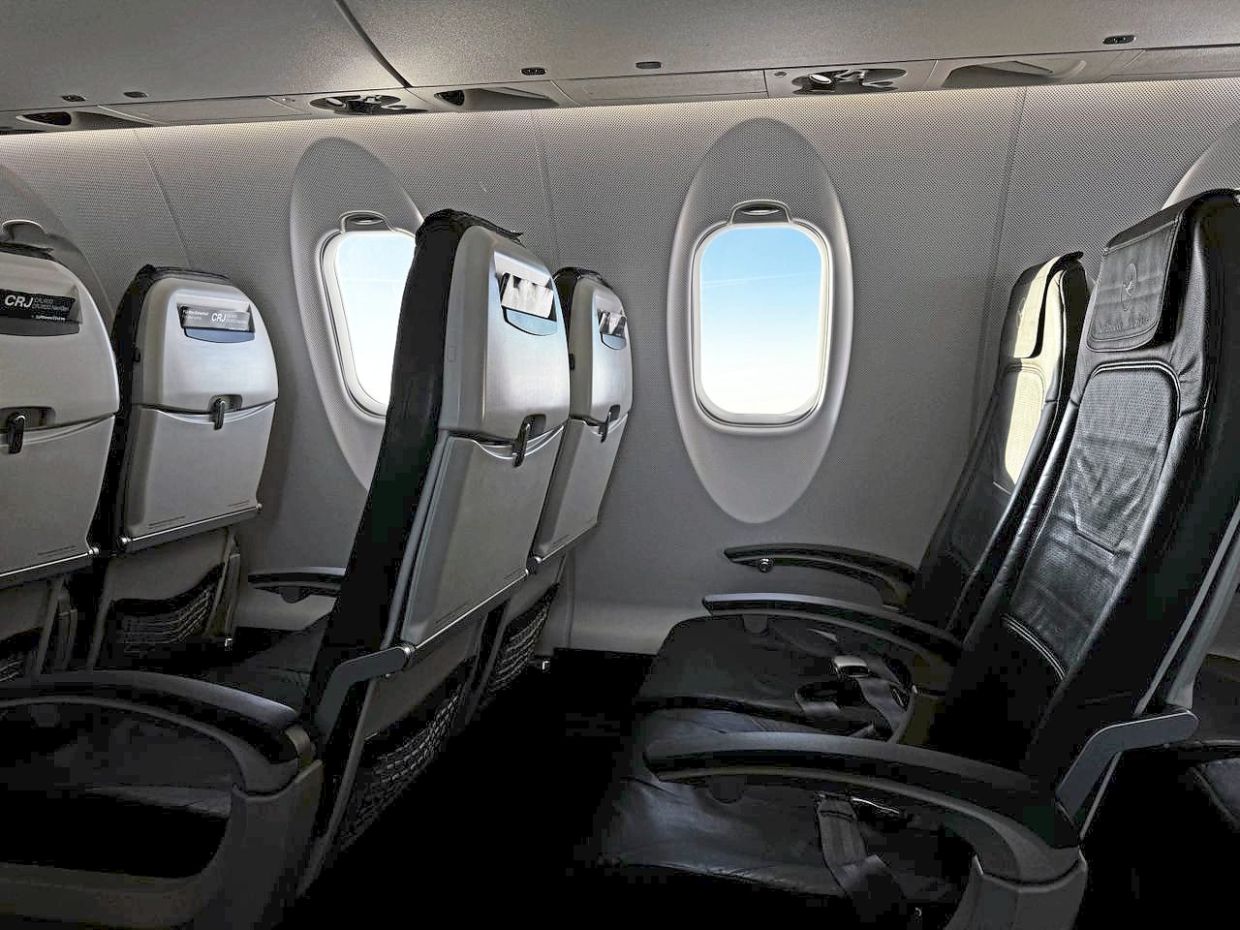
The contrast between premium and economy travel experiences has become strikingly pronounced. A first-class passenger at one of America's "Big Three" carriers—Delta, American Airlines, or United Airlines—gains access to expedited security screening, exclusive lounges featuring craft cocktails and professionally prepared meals, early boarding privileges, and spacious seating with enhanced amenities. Meanwhile, economy passengers navigate crowded security queues, purchase sandwiches priced at US$16 (RM65) at airport cafes, and endure the indignity of boarding with the final groups, often without guaranteed overhead bin space. The contrast extends to in-flight experiences, where premium cabin passengers enjoy lie-flat seats, premium bedding, and gourmet dining, while economy travellers fold themselves into narrow seats hoping to catch fragmented sleep.
This strategic reorientation did not emerge suddenly but rather evolved gradually over the past fifteen years. Industry analysts credit Delta with pioneering the shift in the early 2010s by employing sophisticated revenue management systems to identify coach passengers willing to upgrade to premium seats at intermediate prices. Rather than reserving premium cabins exclusively for elite frequent flyers receiving complimentary upgrades, Delta discovered an untapped market among leisure and business travellers willing to pay for noticeably improved comfort, service, and amenities. This discovery fundamentally altered airline economics and laid the foundation for today's aggressive premium focus. The pandemic of 2019-2021 accelerated this trend unexpectedly. As business travel collapsed and corporate video conferencing displaced many international trips, industry observers anticipated carriers would return to competing on price to fill empty seats. Instead, leisure travellers demonstrated surprising willingness to purchase premium seats and add-on services, convincing airlines that demand extended well beyond traditional business travellers. This revelation proved pivotal, permanently shifting executive priorities toward capturing premium revenue.
The financial transformation has been dramatic. Premium cabins, including the newer premium economy category offering enhanced legroom and amenities, now generate revenue disproportionate to the physical space they occupy. On transatlantic routes particularly, business-class ticketing alone generates nearly equivalent revenue to entire economy cabins, despite occupying roughly one-quarter of the aircraft space. Former Delta President Glen Hauenstein characterised the evolution by noting that premium products, once treated as loss leaders to incentivise frequent flyer loyalty, have become the highest-margin revenue streams in modern airline operations. This realisation drives executive decision-making across the industry, with airline leaders regularly highlighting premium revenue growth during investor presentations.
The manifestation of this premium focus has become visually obvious throughout the travelling experience. Delta's newest airport lounges resemble upscale restaurants rather than utilitarian waiting areas, featuring open kitchens preparing sophisticated dishes such as hamachi crudo, cocktail bars crafting made-to-order beverages, soundproofed relaxation pods for undisturbed rest, and outdoor observation decks overlooking the tarmac. American Airlines partnered with the James Beard Foundation, a prestigious culinary institution, to reimagine lounge menus and inflight dining. The airline redesigned its Boeing 787-9 Dreamliners with business-class compartments featuring sliding privacy doors creating individual enclosed suites, lie-flat seats exceeding the length of standard twin mattresses, and luxury amenity kits incorporating premium skincare products from celebrity aestheticians. United Airlines introduced business-class suites with 27-inch entertainment displays, caviar service, and multi-course dining on intercontinental routes, with menus explicitly designed around culinary inspirations from cities throughout United's global network.
The expansion of premium capacity shows no signs of moderating. Delta's next-generation Airbus A350-1000 aircraft, entering service in 2027, will dedicate nearly half its cabin to premium seating, fundamentally reversing historical cabin allocation. American Airlines announced plans to expand premium cabin capacity by 50 percent by the decade's conclusion. This allocation represents a deliberate corporate choice to prioritise revenue maximisation over seat quantity, directly contradicting the industry's historical focus on maximum capacity utilisation. Aircraft redesigns occurring industry-wide reflect this philosophy, with new configurations systematically reducing economy seat counts in favour of premium offerings.
Carriers are simultaneously experimenting with new pricing structures to capture additional premium revenue from price-sensitive passengers. Delta introduced "basic" premium fares offering discounted access to front-cabin seating but requiring passengers to forgo conveniences such as advance seat selection and lounge access. United implemented similar tiered pricing structures within premium cabins earlier this year, enabling carriers to segment premium demand across multiple price points. These strategies represent sophisticated revenue maximisation tactics, allowing airlines to capture passengers willing to pay more than economy fares but unwilling to purchase full premium products.
Critics observe the irony inherent in this transformation with pointed scepticism. William J. McGee, senior fellow for aviation at the American Economic Liberties Project, sardonically suggested that "Marie Antoinette would feel very comfortable on any of the big three airlines these days," before characterising the distinction between premium and economy as modern airlines essentially telling budget passengers to "let them eat Biscoffs," referencing the complimentary cookies distributed in economy cabins. United CEO Scott Kirby has defended the premium investment strategy by contending that premium expansion represents only one component of comprehensive service improvements across all passenger categories, citing investments in seatback entertainment systems and mobile application enhancements. This framing attempts to reposition premium focus as part of universal improvement rather than explicitly stratified service delivery.
For Malaysian and Southeast Asian travellers, these transformations carry significant implications for future regional air travel experiences. As American carriers reconfigure their fleets and business models, international airlines serving these markets inevitably face pressure to implement competitive premium cabin expansions. The shift fundamentally reflects changing global travel patterns where affluent leisure travellers increasingly rival traditional business passengers as revenue drivers. This realignment suggests that budget-conscious Malaysian travellers and regional business passengers should anticipate compressed economy cabin space, higher base fares, and increasingly fragmented service delivery based on fare categories. The strategic choices made by American aviation leaders today will influence competitive dynamics and pricing structures throughout global aviation networks for decades to come, potentially affecting both international carriers serving Malaysia and regional airlines competing for market share.

