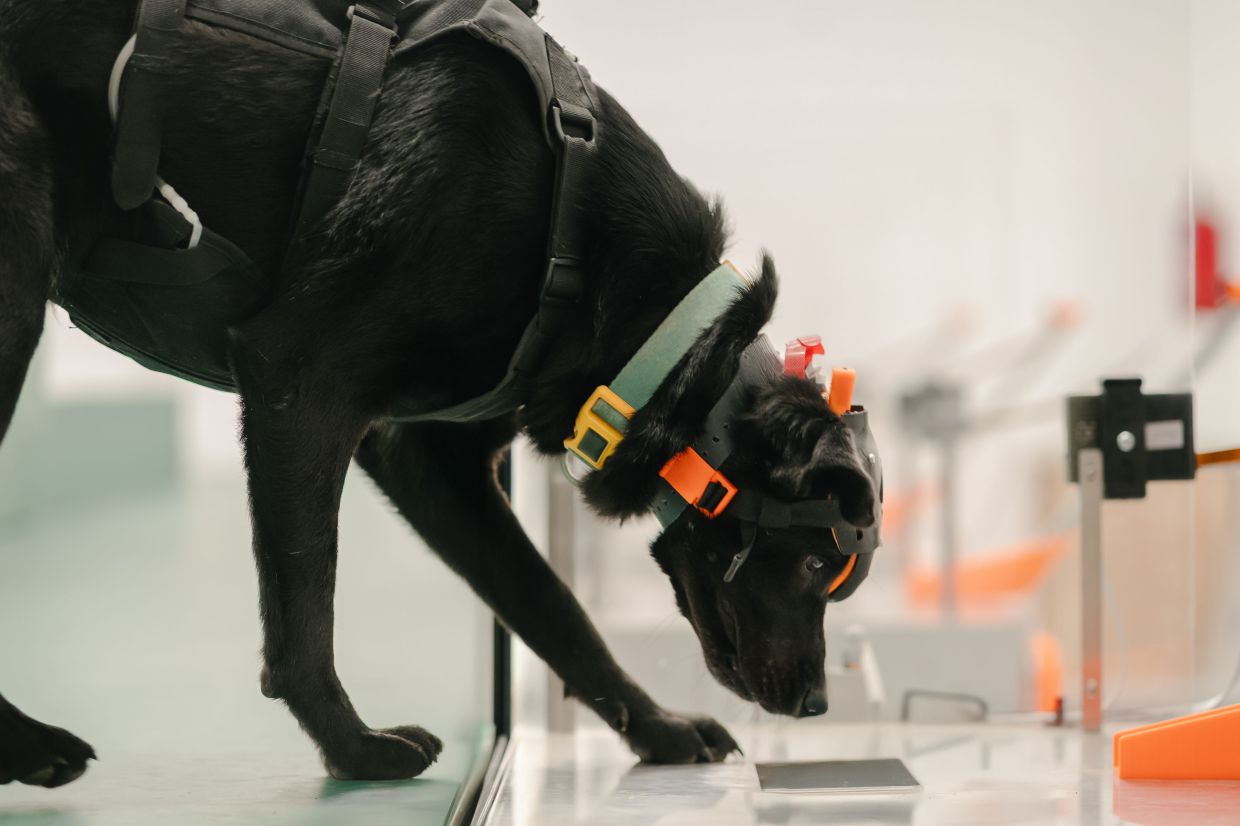
Outside Bengaluru, a team of beagles, labradors and Dutch shepherds report for duty each day at Dognosis, a two-year-old startup attempting to democratise cancer detection across India. Armed with nothing but their extraordinary sense of smell—capabilities far exceeding human olfactory abilities—these animals are being trained to identify traces of malignancy in breath samples with a precision that rivals, or potentially surpasses, conventional medical testing. The startup represents an intriguing convergence of biotechnology and artificial intelligence, leveraging dogs' proven ability to detect disease while harnessing machine learning to standardise and scale what has historically been an unpredictable biological process.
The Dognosis model operates with elegant simplicity. Patients breathe into masks, which are then sent to the company's laboratory facility. There, trained dogs are exposed to these breath samples while sophisticated sensors monitor their every reaction—body movement, respiration patterns, neural activity and behavioural cues. Artificial intelligence algorithms analyse this data stream to determine whether cancer markers are present, all without requiring imaging scans, blood tests or biopsies. Co-founder Akash Kulgod frames the challenge as "finding a needle in a haystack of who in a population has an undiagnosed case of cancer." This approach transforms the canine nose into a diagnostic instrument, addressing one of healthcare's most persistent obstacles: how to reliably identify malignancy before symptoms emerge.
The venture has attracted backing from established early-stage investors including Accel India and San Francisco's Caffeinated Capital. A pre-seed funding round in 2024 secured US$1.5 million, with additional undisclosed capital raised subsequently. According to Kulgod, this financial runway extends two years based on the company's projected growth trajectory, providing sufficient runway to validate the technology and establish operational proof of concept across Indian healthcare settings.
At Dognosis's facility, work is deliberately designed as play rather than labour. The dogs spend between 30 minutes and an hour daily on detection tasks, rewarded with treats for correct identifications. During recent observation, a two-year-old beagle named Whiskey processed ten breath samples in succession, displaying characteristic behaviour patterns—pausing, sniffing intently, circling deliberately—when encountering positive samples. This choreography of detection, while seemingly intuitive to the animals, reflects months of careful conditioning and reward-based training protocols.
Scientific validation remains crucial to credibility. In a Phase 2 study published in the Journal of Clinical Oncology, Dognosis reported approximately 90 percent sensitivity for early-stage cancers across seven broad disease categories encompassing more than twenty cancer types, including breast cancer. Intriguingly, dogs trained on ten cancer types subsequently identified an eleventh they had never encountered, suggesting the underlying olfactory signatures may operate according to principles beyond simple pattern memorisation. This capacity for generalisation—applying learned skills to novel situations—hints at sophisticated biological recognition mechanisms that transcend straightforward classification.
India's cancer burden provides compelling context for this innovation. The country ranks third globally for cancer incidence, according to the International Agency for Research on Cancer. During 2024 alone, approximately 1.5 million new diagnoses emerged alongside more than 900,000 deaths, representing a public health crisis of staggering proportions. Roughly one in ten Indians face cancer risk before age seventy-five. Breast cancer leads diagnostic frequency, followed by cancers affecting the lip, oral cavity, lung and cervix. Yet screening—the foundational intervention preventing late-stage disease—remains vanishingly rare across the population.
The screening gap is particularly alarming. Between 2019 and 2021, only 1.9 percent of Indian women reported ever undergoing cervical cancer screening, while merely 0.9 percent had experienced breast or oral cancer examinations. Among men, screening participation drops to 1.2 percent for oral cancer detection. These figures illuminate why early detection remains elusive; most Indian cancer patients present with advanced disease where treatment options narrow substantially and survival prospects diminish correspondingly. A low-cost, accessible prescreening mechanism could fundamentally reshape disease trajectory across the population.
Dognosis plans to launch an at-home multicancer prescreening test across India next year, priced at several thousand rupees—positioning it far below conventional diagnostic expenses. The company's ambitious expansion roadmap envisions processing one million annual tests within a defined timeframe, doubling its canine workforce to thirty animals and reducing turnaround times to approximately one week. Simultaneously, leadership is evaluating United States market entry, with facility establishment targeted for late 2027 or early 2028. These expansion timelines suggest confidence in regulatory pathways and commercial viability, though significant logistical challenges remain unresolved.
A parallel venture, New Jersey-based SpotitEarly, has reported similarly impressive canine detection results, though commercialisation remains pending. Both companies confront comparable obstacles: demonstrating accuracy sustainability across larger, more heterogeneous populations; developing scalable logistics for processing vast quantities of breath samples; and cultivating physician and patient confidence in screening systems centred on animal biology rather than imaging machinery or molecular diagnostics. Trust represents a formidable psychological barrier when patients and clinicians must embrace non-traditional diagnostic paradigms.
Expert perspectives temper enthusiasm with appropriate caution. Pankaj Chaturvedi, deputy director of the Centre for Cancer Epidemiology at Tata Memorial Centre in Mumbai, emphasises that emerging technologies must "strengthen—not replace—existing screening programs." This formulation acknowledges canine detection's potential while guarding against technological determinism that might undermine established preventive frameworks. Integration with conventional medicine, rather than substitution, likely represents the realistic pathway forward.
Dognosis has commenced Phase 3 trials across ten hospitals throughout India, recruiting approximately 10,000 participants over twelve months. This study specifically targets asymptomatic individuals bearing elevated cancer risk alongside survivors vulnerable to disease recurrence. Participants flagged by canine assessment receive conventional follow-up including imaging and biopsy, establishing ground truth against which dog performance will be measured. Results will substantially determine whether widespread deployment proves feasible.
Regulatory strategy reveals pragmatic navigation of India's approval landscape. Kulgod argues that prescreening tools, unlike diagnostic devices, escape regulatory requirements in India, enabling faster market entry. This distinction—between preliminary screening that identifies individuals warranting further evaluation versus definitive diagnosis—permits deployment while institutional validation continues. Whether regulatory authorities ultimately accept this categorisation remains uncertain, though early indications suggest sympathetic reception.
The implications for Malaysia and Southeast Asia warrant consideration. High cancer incidence across the region, combined with limited screening infrastructure in many communities, creates market and public health opportunities for scalable detection technologies. If Dognosis successfully validates its approach, regional expansion could follow, providing governments with accessible tools addressing cancer's earlier stages when treatment efficacy peaks. For a region grappling with rising non-communicable disease burdens amid resource constraints, such innovation offers genuine potential to reshape diagnostic accessibility.

