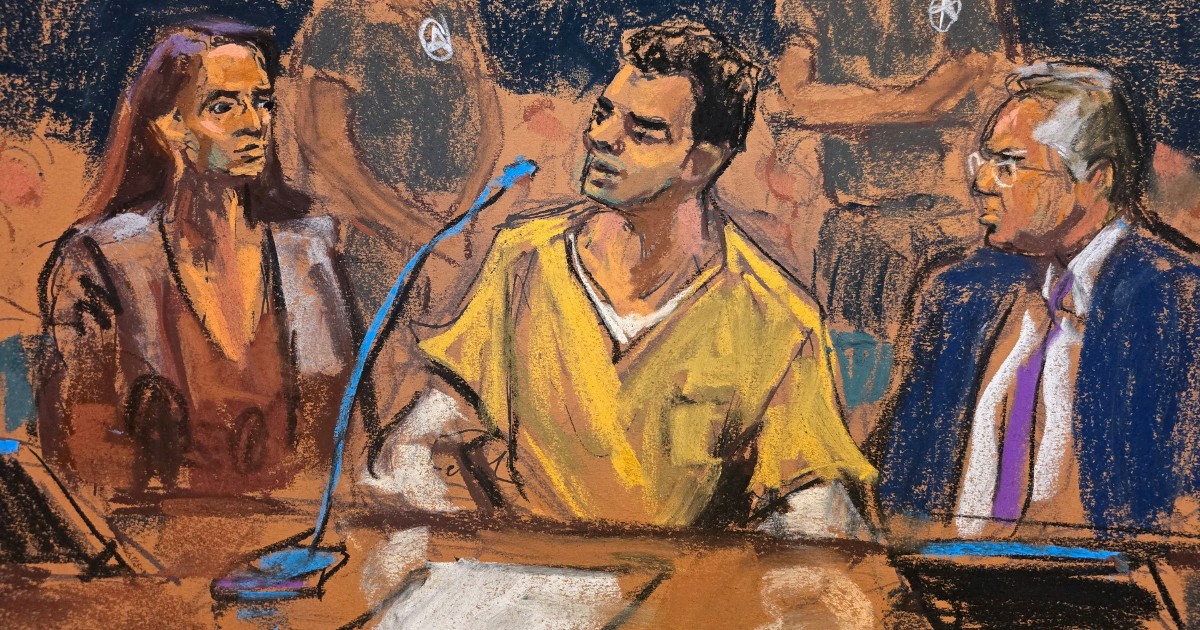
Luigi Mangione's transformation from an apparently ordinary person to someone willing to commit murder reveals the explosive tensions simmering within America's troubled healthcare system, particularly around the insurance industry's role in denying patient care. During a charged courtroom proceeding, Mangione admitted responsibility for the shooting death of Brian Thompson, a prominent executive at UnitedHealthcare, while framing the killing as a form of protest against what he characterized as an inhumane insurance apparatus that prioritizes profits over patient welfare.
The case has exposed fault lines in American society regarding healthcare access and the deep frustration many citizens harbour toward insurance companies. Mangione's willingness to resort to violence, coupled with his articulate justification centring on systemic healthcare failures, suggests that public anger at the US insurance industry extends far beyond typical consumer complaints. For Malaysia and the wider Southeast Asian region, the incident serves as a cautionary tale about the consequences of allowing healthcare systems to become dominated by profit-driven insurance intermediaries rather than focusing primarily on patient outcomes and accessibility.
Mangione appears to have experienced genuine suffering from a back injury that, according to his narrative presented in court, left him unable to obtain the treatment he required from his insurance provider. Rather than accepting his condition, he reportedly spent considerable energy researching what he saw as systemic failures within the health insurance model itself. His transformation suggests that personal grievances, when combined with a broader ideological critique of institutional structures, can radicalize an individual in unexpected ways. This trajectory from frustrated patient to accused killer demonstrates how medical suffering, financial hardship, and perceived institutional injustice can interact dangerously.
The incident has reignited debates about the US healthcare system's reliance on private insurance gatekeepers. Unlike many Asian countries that maintain more state-directed healthcare frameworks or mixed models with stronger government oversight, America's largely privatized insurance system creates opportunities for companies to deny coverage based on cost-benefit calculations rather than medical necessity. Mangione's stated motivation—that his actions were intended to improve healthcare delivery—reflects a conviction that the insurance industry itself represents an obstacle to treating patients effectively and equitably.
Public reaction to Mangione's arrest has been unexpectedly complicated, with some social media commentary expressing sympathy for his grievances even while condemning the violence. This ambivalent response underscores how polarized American society has become regarding healthcare access. For Southeast Asian observers, the case highlights the political and social risks of designing healthcare systems that create deep inequalities in treatment access or that allow insurance companies excessive power to determine who receives what medical care.
Mangione's background as someone from a privileged family background—he attended an Ivy League university—adds another layer of complexity to understanding his motivations. Typically, perpetrators of violence motivated by systemic grievances come from marginalized populations. That someone with educational and economic advantages would commit murder over healthcare access suggests the issue transcends traditional socioeconomic divisions. The pain from his back condition, according to his own account, proved no less real or consequential to him than to someone without his initial advantages, and his inability to obtain relief through insurance mechanisms apparently drove him toward violence.
The legal proceedings have become a platform for Mangione to articulate a detailed critique of how American health insurance operates. Rather than expressing remorse or psychological disturbance as might be expected from a defendant in a high-profile murder case, Mangione used the courtroom to argue that the insurance industry systematically denies necessary care and that his actions represented a form of justice. This rhetorical strategy—positioning murder as a public service—raises troubling questions about how grievances with institutions can be weaponized and escalated into violent action.
From a Southeast Asian perspective, the Mangione case demonstrates the importance of maintaining robust public healthcare systems that do not depend heavily on private insurance gatekeepers making coverage determinations. Many countries in the region, including Malaysia, have preserved more direct government involvement in healthcare delivery through entities like Kementerian Kesihatan Malaysia, which helps ensure that clinical need rather than insurance company profit calculations drives treatment decisions. The US model, by contrast, frequently leaves patients negotiating with insurance companies over coverage for medically recommended procedures.
The incident also raises questions about how American society processes and channels systemic frustration. In democracies with functioning political institutions, healthcare reform typically occurs through electoral processes, legislative action, and public advocacy rather than through individual violence. That Mangione apparently felt compelled to resort to murder suggests either that he believed conventional political channels had failed, or that his rage at the system exceeded his capacity to pursue incremental reform through established means.
As the case proceeds through the legal system, it will likely generate deeper examination of whether US healthcare policies create conditions that enable radicalization. The fact that Mangione's stated motivation resonates with many Americans—even as they reject his violent methods—indicates that healthcare frustration in the United States has reached crisis proportions. For Malaysia and other developing nations strengthening their healthcare infrastructure, the Mangione case serves as a reminder that treating healthcare primarily as a commercial enterprise rather than a fundamental social service can generate profound social instability and dangerous public resentment.

