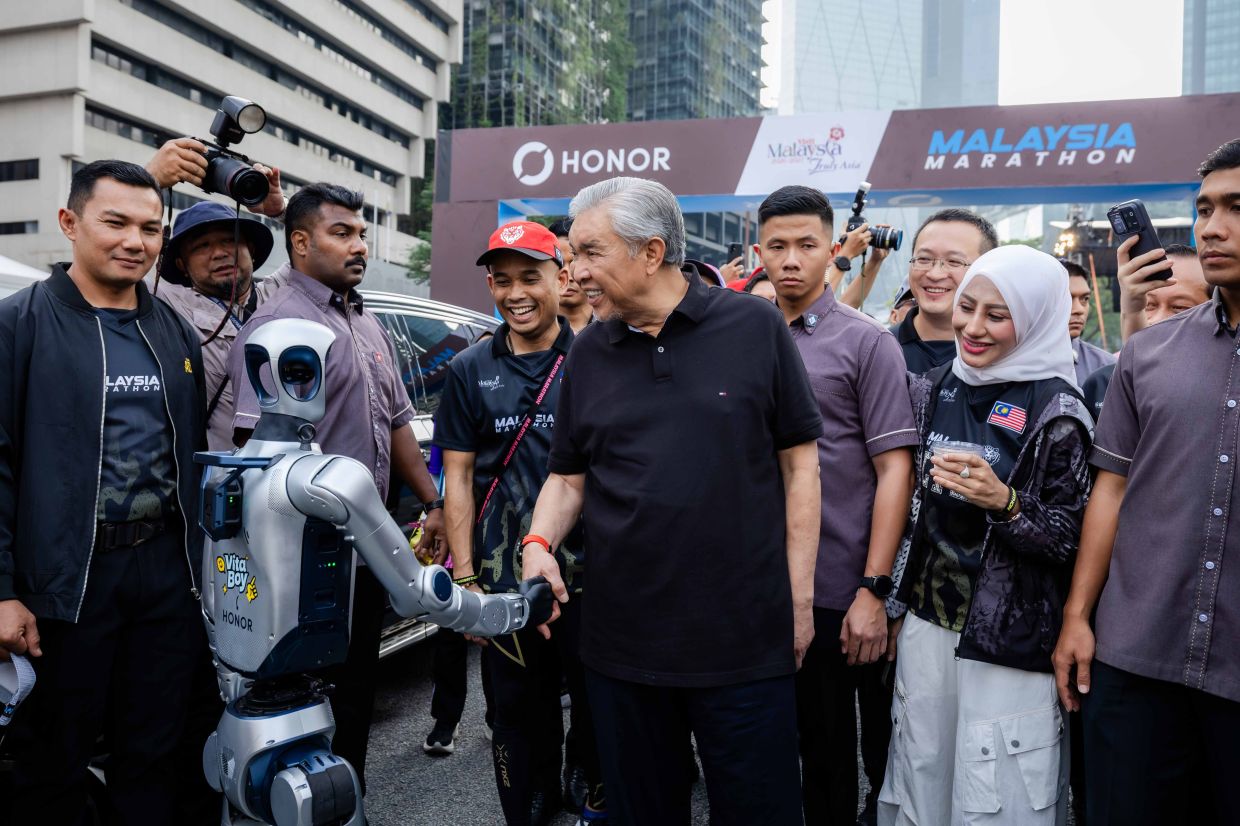
HONOR's advanced humanoid robotics programme reached a significant milestone this week when its D1 model completed a 10-kilometre marathon course in Kuala Lumpur, marking the first time the Chinese technology company has deployed the technology outside its home market. The achievement represents more than a mere export of hardware; it underscores the growing maturity of humanoid robotics in handling diverse environmental conditions and demonstrates how autonomous systems are beginning to transition from controlled laboratory settings into public-facing real-world applications.
The D1 robot's journey to Malaysia follows an impressive track record in domestic competition. In Beijing, the machine shattered the human world record for the half-marathon distance, covering 21.1 kilometres in just 50 minutes and 26 seconds while maintaining a peak velocity of 14.5 metres per second. Those metrics, achieved under controlled conditions in northern China's relatively temperate climate, provided a foundation for understanding the robot's mechanical capabilities. However, translating that performance into Malaysia's humid equatorial environment presented entirely different engineering challenges that tested whether the technology could genuinely function outside its optimised home territory.
The logistics of running a humanoid robot through a 10-kilometre course in tropical Malaysia exposed the device to sustained environmental stressors fundamentally different from indoor or Chinese outdoor testing. High ambient temperatures and humidity levels place profound demands on battery chemistry and thermal management systems, as energy consumption rises when motors must work harder to maintain movement stability against environmental variables. The sustained performance requirement—maintaining consistent speed and mechanical integrity across ten kilometres of continuous operation—provided engineers with valuable data about how thermal stress affects computational systems and motor responsiveness. This represents genuine innovation validation, not merely a marketing stunt, as real-world deployment invariably reveals engineering challenges that simulation cannot fully anticipate.
The Malaysia Marathon 2026 event itself became the stage for a broader technological showcase. A second HONOR robot, the A1 model, participated in the 5-kilometre category, while Deputy Prime Minister Datuk Seri Dr Ahmad Zahid Hamidi, alongside cabinet colleagues and public figures, helped flag off the race. The presence of senior government officials provided implicit endorsement of the technology's commercial and developmental significance, signalling that Malaysia's leadership recognises humanoid robotics as part of the nation's broader technological future. This positioning matters because public acceptance and regulatory frameworks for autonomous systems require visible government engagement and legitimisation.
HONOR strategically integrated the robot deployment with Malaysia's National Day celebrations, creating symbolic resonance beyond the immediate athletic achievement. A particularly notable element involved 1,000 local students processing alongside the robots while carrying what was described as the nation's longest Jalur Gemilang flag. This choreography transformed a corporate demonstration into a patriotic and educational event, embedding the technology narrative within national identity and youth engagement frameworks. Such integration represents sophisticated marketing strategy, yet it also reflects genuine public relations value—making advanced robotics accessible and relevant to ordinary Malaysians rather than positioning it as an esoteric foreign technology.
HONOR's corporate messaging framed the Malaysia Marathon initiative as illustrating how technology has evolved from a paradigm of "serving people" toward "moving alongside people." This rhetorical positioning attempts to address societal concerns about automation and technological displacement by arguing for partnership rather than substitution. Whether this philosophical claim reflects genuine design intent or represents aspirational marketing language remains debatable, but it signals awareness that public adoption of humanoid robotics depends substantially on social framing and perceived purpose. The company's emphasis on human-centred technology—rather than efficiency maximisation or labour cost reduction—suggests understanding that Malaysian and Southeast Asian markets carry particular sensitivities about technological unemployment and social disruption.
The timing of HONOR's Malaysian expansion coincides with the company's reported market leadership in the region. According to Counterpoint Research data, HONOR held the number one market share position in Malaysia during the first quarter of 2026, demonstrating substantial consumer penetration across smartphones and connected devices. This existing market dominance provided both opportunity and obligation to showcase advanced research and development capabilities. International technology companies often use mature regional markets as testing grounds for emerging platforms, leveraging established consumer bases and distribution networks to introduce next-generation products with reduced financial risk. Malaysia's position as a Southeast Asian technology hub and relatively sophisticated consumer market makes it an ideal proving ground for humanoid robotics deployment.
The environmental challenge that Malaysia's climate presented should not be underestimated in assessing the significance of this deployment. Tropical conditions create performance stress that temperate-climate robots rarely encounter in their primary development markets. Extended exposure to heat and humidity, combined with ultra-violet radiation and variable terrain conditions, tests material durability and computational system resilience under conditions far removed from controlled indoor environments. By successfully completing the distance despite these factors, the D1 robot effectively demonstrated capability for genuine geographical diversification, suggesting that HONOR's robotics architecture can function across Asia's varied climatic zones rather than remaining limited to northern Chinese conditions.
Looking forward, this Malaysia deployment establishes important precedent for how international technology companies approach humanoid robotics commercialisation in Asia. Rather than proceeding through purely technical channels or academic partnerships, HONOR chose public spectacle and mainstream sporting events as the vehicle for market introduction. This approach democratises exposure to advanced technology and builds brand association with human achievement and national pride. For Malaysian stakeholders considering technology partnerships or local manufacturing opportunities in robotics, the HONOR initiative signals both genuine capability and serious regional commitment.
The fundamental question underlying this initiative extends beyond engineering achievement. As humanoid robotics transitions from theoretical capability to practical deployment in Southeast Asian contexts, societies must grapple with how such technology integrates into labour markets, urban planning, and social infrastructure. Malaysia, as the initial international deployment location, becomes part of an ongoing global conversation about whether humanoid automation represents opportunity or threat. HONOR's framing emphasises partnership and human potential empowerment, yet how those aspirations translate into actual policy, employment, and social outcomes will shape regional attitudes toward subsequent technological waves. The 10-kilometre marathon was completed successfully; the longer journey of integrating humanoid robotics into Southeast Asian society has only just begun.

