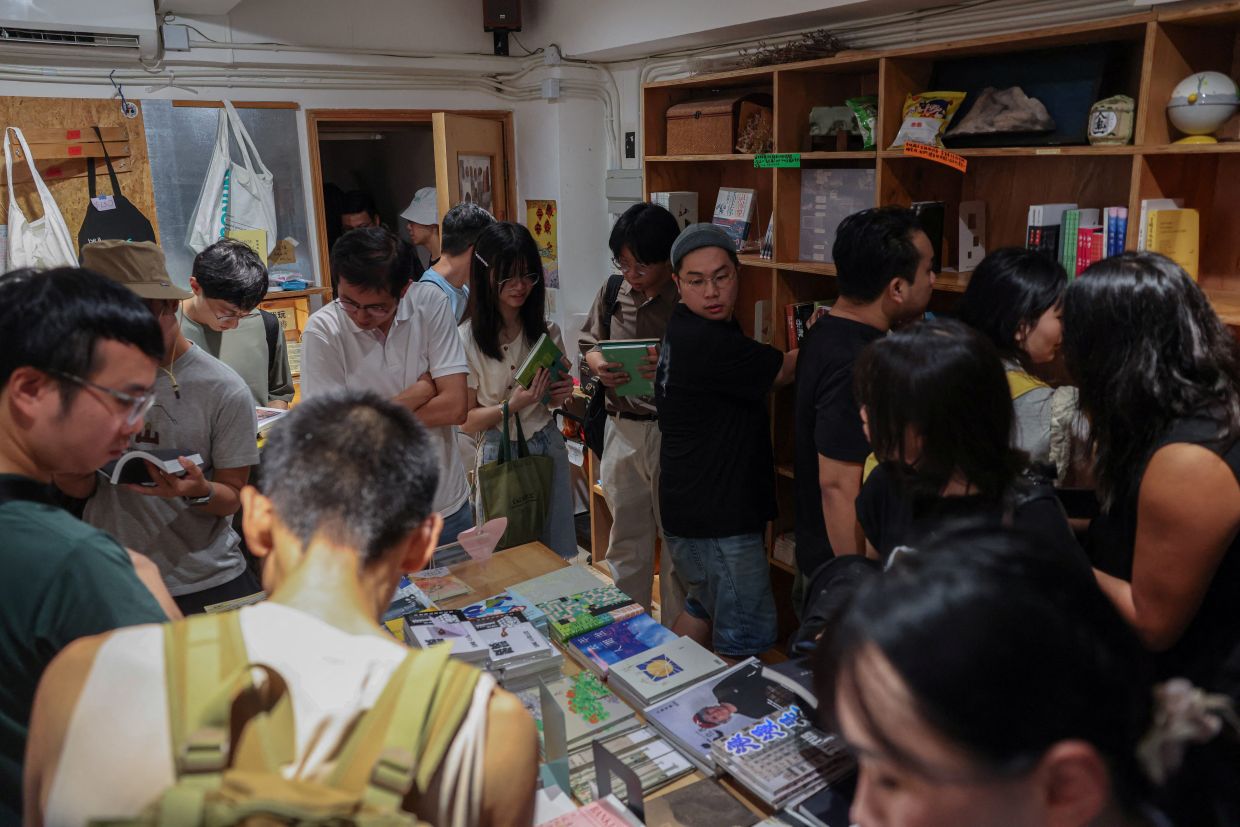
The disappearance of Hong Kong's independent bookstores represents far more than the closure of retail spaces—it signals the progressive erasure of one of Asia's last remaining windows into uncensored political discourse for mainland Chinese readers. When Fleming Cheng, a university student from China, walked into Greenfield Book Store last year, he encountered titles that had been invisible to him except as distant, tantalising cover images glimpsed through VPN circumvention of Beijing's internet controls. Inside that modest shop tucked away on Hong Kong streets, he discovered works offering unflinching critiques of Chinese governance and historical accounts of leaders punished for sympathising with the 1989 Tiananmen Square protesters—perspectives fundamentally at odds with the official narratives promoted across the mainland.
For decades, Hong Kong's scattered network of independent bookstores functioned as intellectual sanctuaries, offering mainland readers something their home market systematically denied: access to suppressed ideas and alternative viewpoints on contemporary Chinese politics. These establishments, often hidden within nondescript buildings rather than occupying prominent storefronts, have quietly served as conduits for knowledge that Beijing's censorship apparatus works relentlessly to restrict. The business model was never primarily about profit; it was about maintaining intellectual freedom in a city long celebrated as a bastion of publishing liberty and open expression within the Chinese-speaking world.
That precarious arrangement now faces systematic dismantling following a cascade of arrests targeting booksellers under sedition provisions within the 2024 national security law. The authorities have moved with striking swiftness, striking four separate bookstores within a compressed four-month window: Book Punch arrested staff members in March, Hunter Bookstore followed in June, and then both Greenfield and Have A Nice Stay faced police action in July. The charges center on allegations that these establishments peddled seditious publications intended to undermine support for the Chinese and Hong Kong governments. This latest enforcement wave represents an escalation of pressure that commenced after Beijing imposed its 2020 security law, which fundamentally reshaped Hong Kong's political and social landscape by precipitating mass arrests of activists, dissolution of civil society organisations, and systematic removal of politically sensitive titles from public library shelves.
The bookstore closures carry particular significance for Malaysian and broader Southeast Asian readers seeking to understand the trajectory of freedoms within greater China. Hong Kong's transformation from a publishing powerhouse into an increasingly restricted environment mirrors anxieties that dissidents and free-speech advocates across the region harbour regarding authoritarian encroachment. The sudden arrest of Lam Wing-kee and associates from Causeway Bay Books in 2015—later revealed to have been detained by Chinese authorities rather than Hong Kong police—functioned as an early warning signal that even Hong Kong's purported autonomy could not shield booksellers from mainland security apparatus reach. That incident precipitated a visible contraction in availability of gossipy or politically sensitive works about Chinese politics, yet many bookstores persisted in their operations throughout the subsequent years.
The vagueness surrounding enforcement creates a chilling effect more potent than explicit bans would generate. Secretary for Security Chris Tang has declined to specify which books constitute seditious material, offering only the opaque assertion that booksellers bear responsibility for ensuring their inventory does not threaten national security—comparing this obligation to food vendors ensuring their products cause no illness. This deliberately ambiguous standard forces booksellers into an impossible position: they cannot definitively know which titles will trigger prosecution, compelling them toward ever-greater self-censorship out of sheer survival instinct. Anonymous booksellers have acknowledged their growing wariness about stocking works addressing contemporary Chinese politics, while landlords, themselves fearing government harassment, increasingly decline to renew leases with bookstore operators.
The government maintains that its security legislation preserves freedoms of expression and publication, insisting that criticism of government policies receives explicit protection. Yet the pattern of enforcement contradicts these assurances, suggesting that the gap between official rhetoric and operational reality has widened considerably. Greenfield Book Store announced its closure at lease expiration despite bail being granted to arrested staff, indicating that even acquittal would not restore commercial viability. Have A Nice Stay, established by former journalists who presumably understood Hong Kong's media landscape intimately, shuttered its doors citing insurmountable financial pressures and indefinable regulatory "elusive red lines" that made continued operation untenable.
Mainland readers who discovered these spaces express profound dismay at their elimination. Fleming Cheng articulated a fear that many harbour: if Hong Kong deliberately aligns itself completely with mainland governance structures, erasing distinctions between the two systems, the loss extends beyond Hong Kong's borders to deprive mainlanders of any refuge for intellectual exploration. Iris Wang, a university student from neighbouring Guangdong province, viewed bookstores like Hunter as institutions that cultivated critical thinking rather than merely transacting merchandise like their mainland equivalents. Brian Leung, a Hong Kong resident who found community and individual character within various independent bookstores, experienced the arrest wave as personal violation—a rejection of something he had taken for granted as intrinsic to Hong Kong identity.
Taiwan has emerged as an unexpected alternative publishing centre, capturing market share as Hong Kong's restrictions deepened. Academic researcher Cheng Tsu-Bang documented that Taiwanese publishers released six times as many titles about Hong Kong between 2020 and 2024 compared to the preceding five-year period, establishing publication as a crucial medium of communication and mutual support between Taiwan and Hong Kong. However, even this lifeline faces potential severance; reports indicate that logistics firms have ceased accepting orders to ship Taiwanese books to Hong Kong bookstores under police investigation, while demanding comprehensive inventory disclosure before delivering to other Hong Kong locations.
The broader implications resonate across Southeast Asia, where several nations grapple with balancing economic integration with China against preservation of press freedoms and intellectual pluralism. Hong Kong's trajectory demonstrates how security legislation, even when clothed in nationalist rhetoric and stability justifications, can systematically dismantle the institutional scaffolding supporting open discourse. One Hong Kong author who relocated to Taiwan and now publishes there described independent bookstores as bridges connecting diaspora writers to their homeland and bringing works about Hong Kong's pro-democracy movement to readers within the city itself. The author compared civil society's collapse to a boulder rolling downhill, inexorably crushing everything in its path, while bookstores represented small refuges where people could still breathe and attempt preserving what remained of intellectual freedom.
The cascading closures signal that Hong Kong's "borrowed time" of relative autonomy may be decisively ending. For mainland Chinese seeking uncensored political perspectives, for regional readers monitoring authoritarianism's advance, and for publishers throughout greater China concerned about market access, the dismantling of Hong Kong's independent bookstore ecosystem represents a watershed moment. What once seemed a resilient cultural institution adapted to operating within constraints has proven vulnerable to coordinated enforcement action backed by ambiguous legal standards. The question now confronting regional observers is whether other Asian publishing hubs and civil society institutions can sustain themselves against similar pressures, or whether Hong Kong's contraction foreshadows broader suppression of intellectual freedom across the Chinese-speaking world.

