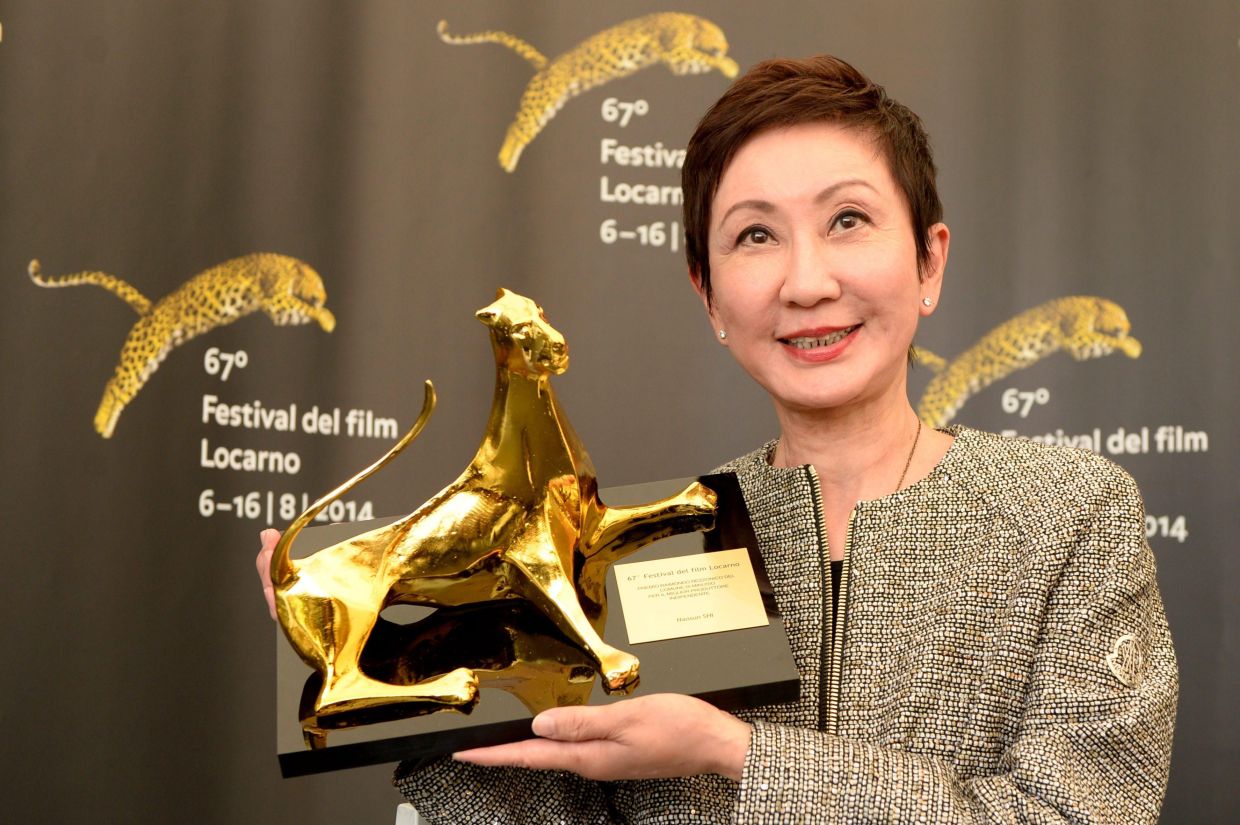
The Hong Kong film industry has lost one of its most formative architects with the death of producer Shi Nan-sun, who passed away Monday evening at the Hong Kong Sanatorium & Hospital at the age of 75. Her passing, attributed to multiple organ dysfunction stemming from a bacterial infection, marks the end of a seven-decade career that fundamentally reshaped how Asian cinema operated on the world stage. Film Workshop, the production company she established alongside celebrated director Tsui Hark, confirmed that Shi died peacefully with family members by her side, after her health had been deteriorating since 2022 due to immune system complications.
Shi's influence extended far beyond spreadsheets and contracts. Although her role as an executive producer and business administrator might suggest a purely administrative legacy, her contributions actually redefined what it meant to professionalize film production across Asia. She began her career in television before transitioning to cinema in 1981, when she joined Cinema City as an executive director. During her tenure there, she mastered the intricate mechanics of film financing, international rights negotiation, and distribution—skills that would prove revolutionary for the Hong Kong industry during its post-1997 transition. These capabilities transformed her into something rare: a business executive whose operational excellence became as celebrated as the creative vision of the filmmakers she supported.
The establishment of Film Workshop in 1984, followed by Distribution Workshop, represented a watershed moment for Hong Kong cinema's global ambitions. Before Shi's systematic approach to international distribution, Hong Kong films struggled to penetrate foreign markets with consistency or profitability. She created infrastructure and relationships that allowed locally-produced content to compete in European and American cinemas not as exotic curiosities, but as legitimate commercial and artistic products. This infrastructure proved invaluable throughout the 1980s and 1990s, when Hong Kong cinema experienced its golden age, with films reaching audiences across continents through channels she had painstakingly constructed.
Tributes poured in from the entertainment world's most recognizable figures, each emphasizing dimensions of her character beyond her business acumen. Actor Jackie Chan, posting on Weibo, described Shi as a "legendary figure" whose contributions would endure through the classic films she had shepherded into existence. Actress Carina Lau revealed a more intimate dimension, crediting Shi with imparting wisdom about personal conduct and integrity—suggesting that her mentorship extended into questions of character and ethics that transcended professional relationships. These testimonies collectively portray someone whose presence shaped not merely the financial viability of films, but the moral and artistic standards of those who worked within her orbit.
Hong Kong's Secretary for Culture, Sports and Tourism, Rosanna Law Shuk-pui, provided an official government perspective that underscored Shi's significance to the territory's cultural identity. Law described Shi as instrumental to the "long-term development" of the local film industry, language that implies she was essential to its structural evolution rather than merely one successful producer among many. The government's formal recognition acknowledged that Shi had helped establish Hong Kong cinema as a significant cultural export and source of regional soft power during decades when such prominence seemed far from assured.
Shi's marriage to Tsui Hark from 1996 to 2014, despite its eventual dissolution, became legendary within film circles for the apparent symbiosis it represented. Brigitte Lin Ching-hsia, Shi's close friend of over five decades, captured something profound in invoking Louis Cha's characterization of Shi as "the only wife who is completely infatuated with her husband." Rather than diminishing her professional standing, this portrayal—that she devoted herself entirely to supporting Tsui's artistic vision—somehow elevated her status among peers. The apparent contradiction reflects a distinctly Hong Kong perspective on professional women: that devotion to a partner's creative genius could coexist with, and indeed enhance, one's own formidable executive abilities. Even after divorce in 2014, the two maintained collaboration and mutual support, suggesting their connection transcended conventional relationship categories.
Shi's international recognition extended well beyond Hong Kong's boundaries, reflecting the global legitimacy she had earned through decades of skillful cultural diplomacy. She received the distinction of being made an officer of France's Ordre des Arts et des Lettres, an honor rarely bestowed on film industry professionals outside the creative roles. Her receipt of the best independent producer award at the Locarno International Film Festival demonstrated that European festival leadership recognized her contributions as equal to those of celebrated directors and cinematographers. Over subsequent years, she served as jury member or president for multiple major international festivals, positions that required peers to view her as an authoritative voice on cinema's artistic and commercial dimensions.
The trajectory of her professional honors culminated remarkably in 2025, when Shi and Tsui jointly received a lifetime achievement award at the Hong Kong Film Awards—an award that institutionalized their contributions as foundational to the territory's cinematic identity. This recognition, arriving just weeks before her death, offered a closing punctuation to a career that had witnessed and shaped profound transformations in how cinema was produced, financed, and distributed across Asia. For Malaysian and regional Southeast Asian audiences, Shi's legacy carries particular significance, as the distribution networks she pioneered and the professionalization strategies she championed became models adopted across the region's emerging film industries.
Shi's final public appearance in May, when she attended the funeral of fellow veteran producer Linda Kuk Mei-lai, had sparked health concerns among observers who noted her use of a walking stick. The appearance underscored that despite declining physical capacity, she maintained presence within industry circles until her final weeks. Her educational background—statistics and computing studies at the Polytechnic of North London—had equipped her with analytical frameworks that she deployed throughout her career, translating data and market signals into strategic decisions about which films to finance, produce, and promote internationally. This combination of rigorous analysis and creative sensibility distinguished her approach from purely artistic or purely commercial operators in the film world.
The broader implications of Shi's passing extend to questions about succession and institutional memory within Hong Kong's film industry. Her death removes from active circulation someone who possessed lived experience spanning the territory's entire post-war cinematic evolution. The networks she built, the relationships she cultivated with international distributors and festival programmers, and the institutional practices she established at Film Workshop and Distribution Workshop represent the accumulated wisdom of decades spent solving problems that contemporary Asian producers still encounter. Whether these structures and knowledge systems can be transmitted to the next generation of filmmakers and producers remains an open question facing Hong Kong cinema as it navigates the complexities of contemporary production, financing, and global distribution in an era of streaming platforms and changing audience demographics.

