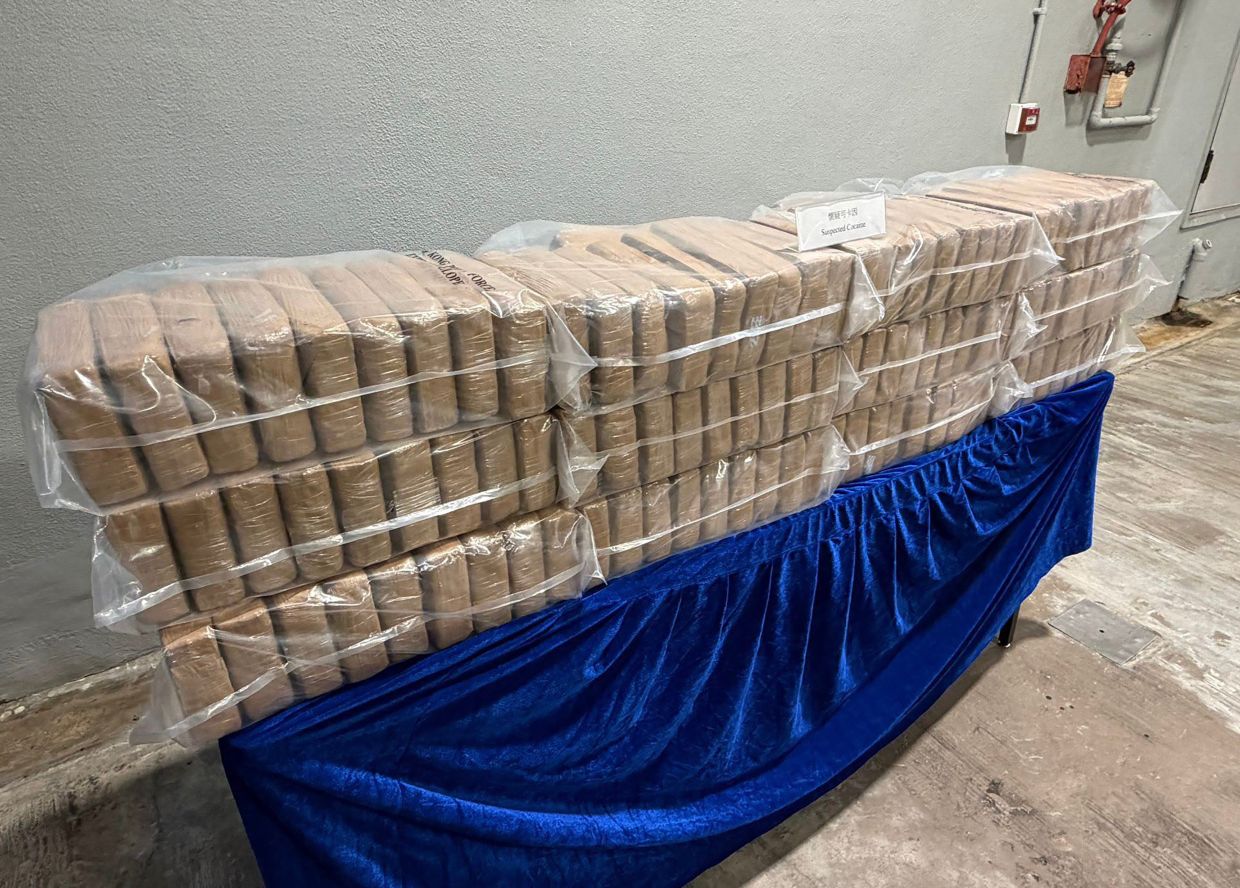
Hong Kong's narcotics enforcement apparatus has dismantled what appears to be a sophisticated international drug smuggling operation, recovering approximately 361 kilograms of cocaine in coordinated raids spanning just days. The discovery represents the most significant cocaine trafficking case the territory has recorded in the past twelve months and signals an escalating challenge posed by transnational organised crime networks operating across Asia's busiest maritime corridors.
The initial breakthrough came on Friday when officers executed a search of a vessel moored in Aberdeen Typhoon Shelter, recovering 241 kilograms of cocaine bricks from the yacht's hold. The scale of that seizure alone would have constituted a major enforcement victory, but investigators soon identified a connected vessel utilised by the same trafficking operation. Acting on this intelligence, narcotics bureau personnel returned to the same anchorage on Sunday to raid a second six-metre yacht, where they discovered an additional 120 kilograms of cocaine carefully packaged in identical bricks matching the earlier haul. The combined street value of both seizures reached approximately HK$270 million, representing a devastating financial blow to the criminal enterprise behind the operation.
The parallel characteristics of both seizures point to a methodical distribution strategy rather than isolated incidents. Law enforcement analysts believe the two yachts functioned as separate storage depots within a broader smuggling network, with the matching packaging, weight denomination, and vessel configuration suggesting the narcotics originated from the same source and were destined for division among multiple distribution channels. This modular approach to drug trafficking—utilising multiple moored vessels as floating warehouses—reflects the sophistication of modern transnational smuggling rings that recognise the enforcement advantages of dispersing their cargo across multiple locations to mitigate the impact of any single interdiction.
The investigation has already yielded several arrests and continuing intelligence-gathering operations. A 45-year-old local resident, identified as the registered owner of the second yacht raided on Sunday, was taken into custody on Monday and remains under police questioning. The woman's unemployment status, as documented in police records, raises questions about the financing mechanisms that enable individuals with limited visible means to maintain ownership of maritime assets. In the initial raid, authorities apprehended a suspected syndicate leader and two additional core members of the trafficking organisation, all of whom provided cover stories about unemployment or subsistence-level fishing operations to disguise their involvement in international narcotics distribution.
The deployment of yachts and small vessels for international drug trafficking capitalises on Hong Kong's unique geographic position as one of the world's busiest shipping hubs and its access to deeper waters that can accommodate transoceanic transfer operations. Aberdeen Typhoon Shelter, traditionally a fishing anchorage, has become an increasingly common transshipment point for contraband destined for distribution throughout the Asian region. The proximity to major international shipping lanes, combined with the high volume of maritime traffic that complicates enforcement surveillance, makes the harbour an attractive operational base for trafficking syndicates seeking to move cocaine from production zones in South America into consumer markets across East and Southeast Asia.
For Malaysian authorities and other regional law enforcement agencies, the Hong Kong seizures underscore the persistent vulnerability of maritime corridors to drug trafficking operations. Malaysia's own port facilities, coastal waters, and internal shipping routes face comparable pressure from international narcotics organisations leveraging maritime logistics for distribution. The sophistication demonstrated in Hong Kong—including the use of legitimate commercial vessels as cover and the careful compartmentalisation of drug stocks across multiple platforms—represents a operational model that could readily be adapted to Malaysian territorial waters and port infrastructure.
The timing of these discoveries arrives amid broader regional concerns about cocaine availability in Asian markets. Historically, cocaine trafficking has been concentrated along traditional routes through West Africa and the Middle East, but expanded production capacity in source countries and the emergence of direct maritime smuggling routes have increasingly brought South American product into Asian consumption centres. The HK$270 million street value attachment to the Hong Kong seizure demonstrates the substantial profit margins that motivate organised crime groups to undertake the logistical complexity of establishing transpacific supply chains.
The investigation continues to expand, with police indicating that further inquiries are underway regarding the precise origins of the cocaine, the intended distribution networks, and any international coordination with trafficking organisations in other jurisdictions. The modular nature of the operation—with multiple arrested individuals providing minimal information during initial questioning—suggests the syndicate was structured with cellular compartmentalisation specifically designed to prevent information cascade in the event of law enforcement intervention. This organisational resilience means that dismantling the operation entirely will require sustained investigation beyond the arrests and seizures already accomplished.
The case reflects the evolving geography of global drug trafficking, where traditional transit countries and consumption markets are increasingly blurred. Hong Kong's role as both a transhipment hub and an endpoint market for cocaine reflects its integration into international financial and commercial networks that criminal enterprises exploit for distribution purposes. For Southeast Asian neighbours including Malaysia, the implications are significant: if similar trafficking infrastructure is operating within the region's waters and ports, comparable enforcement operations may yield comparable discoveries, but only if narcotics agencies maintain the investigative intensity and maritime surveillance capacity that Hong Kong's police demonstrated in identifying and raiding the connected vessels. The cooperation and intelligence-sharing mechanisms between Hong Kong authorities and regional counterparts will prove essential to disrupting transnational trafficking networks before their product reaches consumer markets across Asia.

