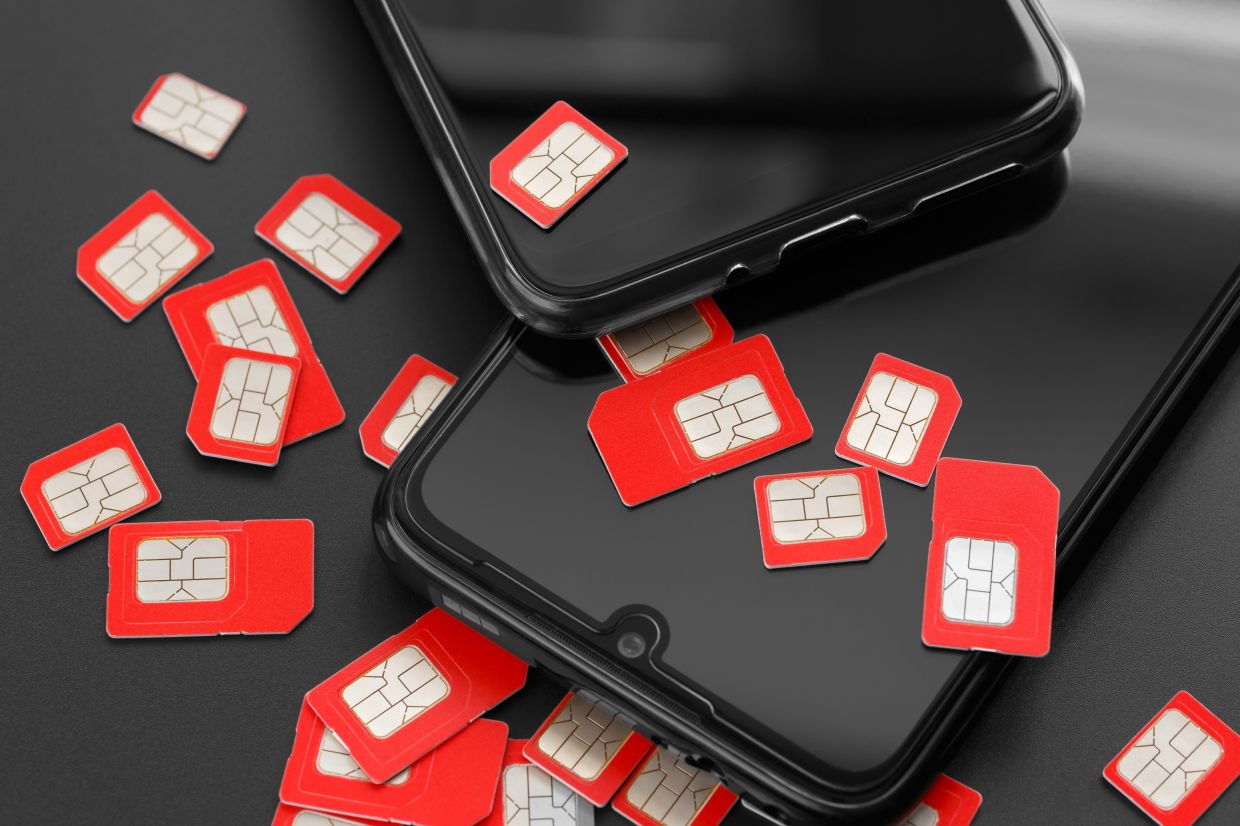
Hong Kong police have dismantled a sophisticated phishing operation targeting residents through fraudulent messages and fake customer service lines, resulting in the arrest of two men aged 31 and 44 on suspicion of conspiracy to defraud. The investigation revealed an operation that deployed 110 SIM cards from a hotel base to send more than 2,000 suspected scam messages, ultimately defrauding victims of at least HK$500,000 (approximately US$63,766). The arrests were made last Thursday, with authorities announcing the results on Saturday.
The fraudsters employed a two-pronged deception strategy that capitalised on consumers' anxieties about undelivered packages and financial obligations. In one variant, perpetrators posed as staff from courier companies, informing targets that parcels awaited collection but had not been successfully delivered. In another iteration, they impersonated representatives of online payment platforms, claiming that targets had inadvertently subscribed to insurance plans and faced fees unless they took immediate action to cancel. Both scenarios were designed to create urgency and bypass rational decision-making, compelling victims to contact what appeared to be legitimate customer service hotlines but were in fact controlled by the scammers themselves.
Once victims called the fraudulent hotlines, the criminals employed a further layer of social engineering. Operators instructed callers to transfer funds to designated bank accounts, employing various false justifications to justify the payments. The psychological manipulation extended throughout the entire transaction chain, ensuring that victims believed they were resolving legitimate financial or delivery matters rather than surrendering their money to criminals. This systematic approach, combined with the sheer volume of messages distributed, generated a substantial financial toll across Hong Kong's population.
The operational infrastructure uncovered by police illuminates the technical sophistication required to execute such schemes at scale. Officers discovered that the suspects had established a hotel room as their command centre, equipped with a modem pool—a specialised device enabling simultaneous management of multiple SIM cards—alongside nine mobile phones and the full complement of 110 SIM cards. The modem pool technology represented a significant escalation in capability, allowing the operation to automate message distribution and coordinate fraudulent communications across numerous phone lines simultaneously, dramatically expanding their reach without proportional increases in personnel.
A critical vulnerability in the criminal operation proved to be the SIM card acquisition strategy. Inspector Kwan Yat-hei of the fraud division under the commercial crime bureau explained that the suspects had purchased SIM cards in bulk, each registered to different individuals. This approach exploited personal relationships and financial incentives, effectively recruiting unwitting accomplices who sold or lent their genuine identity-verified SIM cards to the fraudsters. The investigation traced certain intercepted phone numbers to recently reported scam complaints, establishing the direct connection between the hotel operation and confirmed victim reports across multiple cases.
The discovery carries significant implications for telecommunications security in Hong Kong and the wider region. Since March 2022, all SIM card registrations in the territory have required real-name verification using official identification documents—a measure intended to prevent exactly this type of mass anonymous messaging operation. However, the criminals circumvented this safeguard by obtaining cards from numerous legitimate purchasers rather than attempting illegal acquisition. This adaptation demonstrates how regulatory frameworks, while establishing accountability in principle, can be undermined when enforcement relies on voluntary compliance from individuals who may not fully comprehend the consequences of selling or lending their cards.
Police warnings to the public addressed both immediate consumer behaviour and broader community complicity in such schemes. Inspector Kwan cautioned residents against calling numbers appearing in unsolicited messages, advice particularly relevant given how convincingly the fraudsters replicated legitimate business communications. More pointedly, he warned SIM card owners that lending or selling their cards to third parties—whether for apparent short-term financial gain or other inducements—constitutes assisting in crime and carries potential criminal liability. This message reflects a growing recognition that supply-side interventions targeting fraudsters themselves remain insufficient without corresponding demand-side reduction among those who facilitate the schemes through commercial distribution of identity-verified SIM cards.
The legal framework addressing such operations remains robust in Hong Kong, though the practical challenge of detection and prosecution continues to escalate. Conspiracy to defraud charges carry maximum penalties of 14 years' imprisonment, representing serious criminal sanctions that should theoretically deter participation. Yet the profitability of fraud operations and the relative ease of recruiting SIM card suppliers suggests that legal penalties alone may inadequately address the underlying economic incentives driving such schemes. The suspects remained in custody pending further investigation, with authorities indicating that additional arrests remained probable as the investigation expanded beyond the two apprehended men.
The sophistication and scale of this operation reflects broader trends in cybercriminal activity across Southeast Asia, where organised fraud syndicates increasingly target middle-income populations through highly personalised deception rather than generic mass phishing campaigns. The Malaysian financial sector and telecommunications infrastructure warrant similar vigilance, as regional criminal networks often operate across multiple jurisdictions exploiting subtle variations in regulatory regimes and enforcement capabilities. The hotel-based operations centre model has proven replicable across the region, with similar configurations detected in neighbouring territories, suggesting that this particular criminal methodology may have already migrated beyond Hong Kong. Malaysian authorities and telecommunications providers should anticipate comparable operations adapting to the local context, employing culturally relevant deception narratives while maintaining the technical infrastructure innovations demonstrated in the Hong Kong case.

