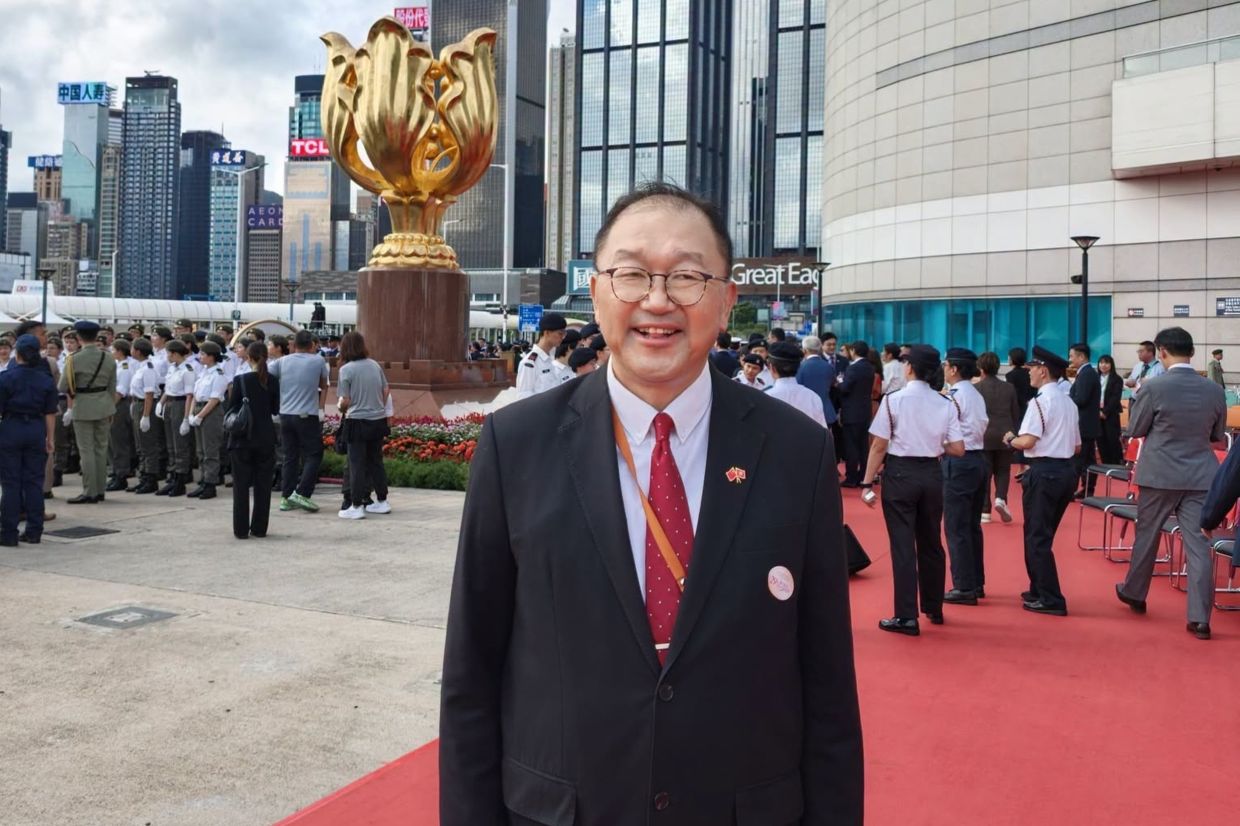
Hong Kong's Legislative Council experienced a significant political moment on Friday when lawmaker William Wong Kam-fai announced his resignation, becoming the first legislator to step down over a scandal in more than 26 years. The 66-year-old lawmaker's departure follows his arrest on Monday evening after police say his vehicle collided with two parked cars on a university campus. The incident has triggered broader discussion about accountability standards for public officials and the future direction of Hong Kong's legislature under its reformed governance structure.
Wong's decision to relinquish his Legco seat came swiftly after the traffic incident. In a prepared statement, he expressed remorse for the distress caused to both society and the legislature itself. He explained that his resignation was motivated by a desire to shield the functioning of the Legislative Council from further disruption, emphasising that careful deliberation had led him to step down from all his positions within the chamber effective immediately. Wong also requested public understanding regarding his inability to provide additional commentary, citing the ongoing police investigation into the matter.
The lawmaker's resignation letter was formally submitted to Legco President Starry Lee Wai-king, who acknowledged his decision with appreciation for his years of service. Lee's measured response reflected the institutional acceptance of Wong's departure, with the president noting his contributions to both the legislature and Hong Kong more broadly. This official recognition underscores how Wong's proactive resignation has been received as a responsible course of action within establishment circles.
Beyond his Legco responsibilities, Wong holds membership in the Chinese People's Political Consultative Conference, China's premier political advisory body at the national level. This dual role means his resignation has implications extending beyond the Hong Kong legislature into China's broader governance apparatus. Political observers expect that Wong will likely step down from this CPPCC position as well, given the severity of the circumstances surrounding his departure.
Political analysts have largely commended Wong's decision to resign rather than cling to his seat. Lau Siu-kai, a researcher with the Chinese Association of Hong Kong and Macau Studies, characterised the resignation as strategically optimal for minimising reputational damage to both Wong personally and the legislature as an institution. Lau argued that remaining in position could have opened the door to criticism targeting the "patriots administering Hong Kong" principle that underpins the current political system, potentially destabilising the consensus around which the reformed Legco operates. From this perspective, Wong's swift exit represents the path of least resistance for all stakeholders involved.
Tam Yiu-chung, a former Hong Kong representative to the National People's Congress Standing Committee, similarly endorsed the resignation as appropriate given the elevated conduct standards demanded of legislators. Tam stressed that the severity of drink-driving allegations warranted such action, reflecting a broader understanding that public officials must maintain impeccable personal conduct. However, Tam also noted a practical dimension to Wong's departure: as a representative from the Election Committee constituency rather than a functional constituency, his loss would not materially disrupt the legislature's operations or representational balance.
The question of whether Wong's seat will be filled through a by-election remains unresolved and rests with the Hong Kong government. Notably, there is no legal obligation to hold a by-election, a principle illustrated by precedent. When Stephen Wong Yuen-shan, another Election Committee constituency legislator, departed Legco to lead a government think tank in late 2022, his seat remained vacant for approximately three years without a by-election being held. Constitutional Affairs Minister Erick Tsang Kwok-wai previously indicated that financial prudence would factor into such decisions, suggesting that cost considerations alongside the time remaining in the legislative term may influence whether a replacement election proceeds.
Wong's resignation marks a watershed moment in Hong Kong's legislative history. The last lawmaker to depart amid scandal was Gary Cheng Kai-nam, who resigned in September 2000 shortly after winning his seat when financial disclosure violations came to light. Cheng's case proved far more serious, involving concealed business relationships, improper handling of government documents, and personal infidelity. He subsequently served an 18-month prison sentence after conviction on charges including bribery, misconduct in public office, false accounting, and theft. The quarter-century gap between Cheng's departure and Wong's resignation reflects the changing political environment in Hong Kong and shifting standards around official accountability.
The incident has also drawn attention to Wong's professional standing beyond politics. As a member of the academic community, Wong faced immediate consequences when his affiliated university suspended him from administrative duties while expressing deep concern about the incident. A university spokeswoman emphasised the institution's commitment to ethical standards among its staff, though the university appropriately refrained from further commentary pending the police investigation's outcome. This demonstrates how the scandal extends beyond Wong's political career into his professional life.
For Malaysian and Southeast Asian observers, Wong's situation illuminates broader questions about governance standards and accountability within the region's political systems. Hong Kong's move toward what Beijing terms "patriots administering Hong Kong" represents a significant shift in governance philosophy, and Wong's resignation suggests that even under this reformed framework, mechanisms exist for removing officials whose conduct falls below expected standards. The incident also demonstrates how quickly reputational concerns can trigger decisive action from political figures, a dynamic that varies considerably across Southeast Asian democracies and authoritarian systems.
The implications for Hong Kong's Legislative Council remain to be fully seen. Wong's departure will reduce the chamber's membership, though as Tam noted, the practical legislative impact appears minimal. More significantly, the resignation validates a principle that personal conduct scandals involving serious allegations warrant removing oneself from public office rather than fighting to retain one's seat. This sets a precedent that may shape how future Legco members respond to similar crises, potentially establishing higher informal standards even as the formal legal mechanisms for removal remain unchanged.
Police investigations into Wong's traffic incident continue, with the full circumstances and legal outcome still pending. The case serves as a reminder that elected officials in Hong Kong, regardless of their political allegiances or roles within the reformed governance structure, face scrutiny and consequences for behaviour deemed incompatible with high public office. Wong's swift resignation, while personally costly, has allowed him to exit the political stage on somewhat controlled terms before legal proceedings potentially deliver harsher judgments on his conduct.

