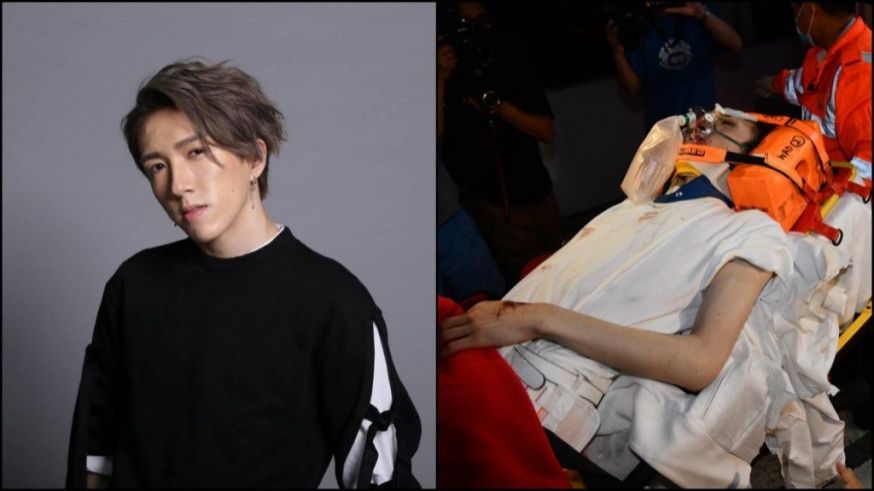
A Hong Kong court has ordered substantial compensation for a dancer whose life was forever altered when a massive LED panel crashed down on him during a high-profile concert in 2022. Mo Li Kai-yin, 31, was awarded HK$6.29 million (approximately RM3.32 million) in damages after the District Court determined on June 15 that his employer, Studiodanz, was liable for the catastrophic injuries he sustained. The four-by-four-meter screen fell from above during the fourth performance of a 12-show run by Mirror, a popular Cantopop boy band, at Hong Kong Coliseum on July 28, 2022.
The court's decision represents a landmark ruling in occupational safety within Hong Kong's entertainment industry, underscoring the profound consequences when venue operators and production companies fail to implement adequate protective measures. The judge awarded Mo the maximum compensation across multiple categories, acknowledging the permanence and severity of his condition. These encompassed payments for permanent total incapacity, lifetime caregiving expenses, ongoing medical treatment, and periodic maintenance costs. The ruling sent a clear signal that negligence in stage safety comes with substantial financial accountability.
Mo's injuries are irreversible and devastating in scope. The falling screen caused a cervical spine dislocation that left him completely paralysed from the neck downward. He underwent emergency surgery and intensive treatment at Queen Elizabeth Hospital, followed by extended rehabilitation at private institutions in Hong Kong and abroad. The court's findings paint a bleak picture of his prospects: the judge stated that Mo "has suffered catastrophic disabilities and permanent total incapacity, and will require lifetime constant care and attention. He is incapable of ever leading or appreciating an independent adult life." This clinical assessment translates to an existence entirely dependent on others for every basic function, from eating and hygiene to mobility and medical management.
The burden of caregiving has fallen heavily on Mo's family, illustrating the ripple effects of such accidents beyond the injured person. His father, Reverend Derek Li Shing-lam, made the extraordinary decision to resign from his pastoral position in Canada and return to Hong Kong to become his son's full-time caregiver. This sacrifice underscores how industrial accidents can upend entire families' lives and trajectories. Tragically, the reverend passed away on April 25, leaving Mo without his primary source of familial support. The court acknowledged this reality by awarding compensation specifically for professional caregiving, recognising that Mo requires three full-time caregivers to manage his personal care and daily activities.
Before the accident, Mo had established himself as a working dancer and instructor with a diverse career portfolio. He discovered his passion for dance while studying at university between 2015 and 2019, and transitioned to full-time performance in 2019. In the three years preceding the accident, he had built a respectable career comprising concert performances, television appearances, commercial advertisements, and music videos. Simultaneously, he maintained teaching positions at four dance studios, including Studiodanz, the very company whose negligence would transform his life. This multifaceted career demonstrates that Mo was not a peripheral figure in the entertainment ecosystem but an engaged, professional contributor with genuine prospects for continued advancement.
The accident's impact extends beyond individual tragedy to highlight systemic failures in occupational safety standards. Studiodanz itself faced separate regulatory penalties, fined HK$132,000 for violations of occupational safety regulations, suggesting that workplace safety protocols at the studio were already compromised. Notably, the company declined to participate in the trial, effectively accepting liability without contesting the claims. This absence during proceedings may reflect either an acknowledgment of indefensible negligence or an unwillingness to subject their safety practices to public scrutiny. The court also ordered Studiodanz to pay interest on the compensation award and cover all legal costs, further amplifying the financial burden of their negligence.
Mo's ongoing medical journey demonstrates both the advances and limitations of modern medicine in treating spinal injuries. He has enrolled in intensive rehabilitation programs employing cutting-edge technologies, including regenerative medicine approaches and implantable microstimulation devices designed to facilitate nerve regeneration. While these interventions have produced modest gains—he has regained some movement in his right arm and recovered sensation in bladder and bowel functions—they have not restored the fundamental ability to walk or achieve independence. In March, a video posted on his Instagram account showed him operating an electric wheelchair using his right hand, a small but significant achievement that testifies to his determination and the potential of advanced rehabilitation technology.
The compensation awarded carries particular significance for Malaysian and Southeast Asian readers, as it reflects international standards for industrial accident liability that extend beyond the region. Hong Kong's legal framework has established clear precedent that permanent disability arising from workplace negligence warrants substantial financial remediation, particularly when the injured party is young and would have had decades of earning potential ahead. The scale of the award—effectively covering multiple decades of professional caregiving and medical management—provides a benchmark for how courts in neighbouring jurisdictions might approach similar cases.
This case also raises questions about the entertainment industry's broader approach to stage safety across Southeast Asia. Concert and theatre production, increasingly popular in Malaysia, Singapore, and other regional markets, operates under varying safety standards and regulatory oversight. The Mirror accident serves as a cautionary tale about the consequences of inadequate equipment maintenance, insufficient safety protocols, and inadequate rehearsal of emergency procedures. For venue operators and production companies throughout the region, the Hong Kong judgment underscores that cutting corners on safety infrastructure carries not only moral weight but severe financial consequences.
Mo's situation invites reflection on how entertainment industry workers are protected in our region. Unlike workers in regulated industries with robust occupational safety frameworks, performers and stage crew often operate in a patchwork of standards and oversight mechanisms. The substantial compensation awarded in Hong Kong might not be replicated in jurisdictions with less developed legal protections for workers, creating disparities in how injuries are remedied. For Malaysian entertainment workers, the case highlights the importance of advocating for comprehensive safety standards and adequate insurance coverage, ensuring that accidents do not leave performers and their families financially devastated.
Moving forward, Mo's case will likely influence how entertainment venues throughout East and Southeast Asia approach stage design, equipment maintenance, and worker safety protocols. The financial liability established by the Hong Kong court provides powerful incentive for operators to invest in proper engineering assessments, regular inspections, and comprehensive safety training. For an industry that has historically prioritised spectacle and production value, the judgment affirms that protection of human life and long-term wellbeing must be non-negotiable priorities. The compensation, while substantial, can never restore what Mo has lost—his mobility, his career, and his independence—but it does acknowledge the permanence of his condition and the lifetime support he requires.