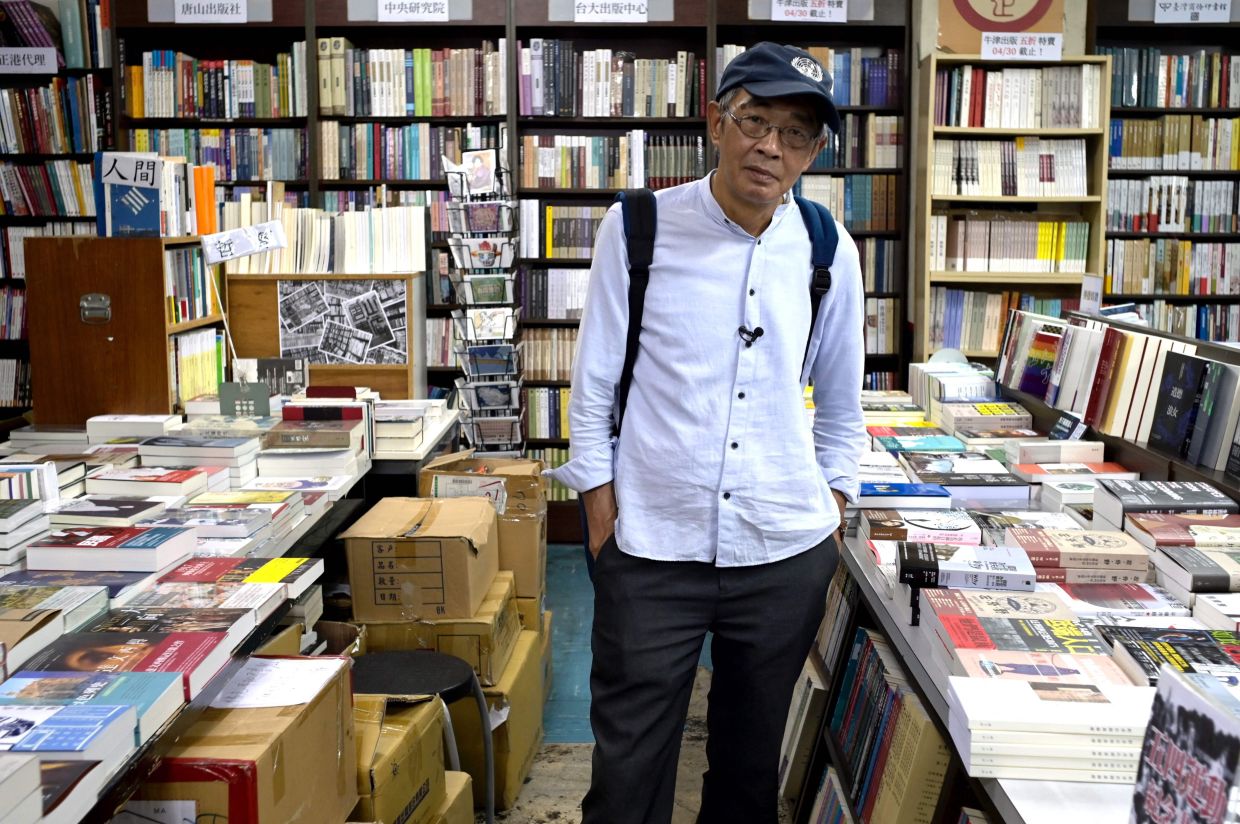
Lam Wing-kee, the former manager of Causeway Bay Books in Hong Kong who became an international symbol of resistance against Beijing's suppression of free speech, has died in Taiwan at the age of 70. Taiwan's Central News Agency confirmed his death, reporting that the bookseller passed away on Thursday evening at MacKay Memorial Hospital in Taipei following a cancer relapse. He had been hospitalised on Tuesday and slipped into a coma on Wednesday, marking the end of a life defined by his willingness to speak openly about the persecution he endured at the hands of Chinese authorities.
Lam's death represents a significant moment in the ongoing saga of Hong Kong's rapidly eroding freedoms and the broader struggle for democratic values across Greater China. His case became emblematic of the Chinese government's capacity and willingness to reach beyond its borders and into Hong Kong's semi-autonomous territory to silence voices critical of its interests. The bookseller's journey—from disappearance and detention to exile and eventual death in self-imposed refuge—encapsulates the personal toll exacted by authoritarian crackdowns on individuals unwilling to compromise their principles.
The events that thrust Lam into the international spotlight began in late 2015 when he and four others associated with Causeway Bay Books vanished under mysterious circumstances. The bookstore specialised in publications unavailable on mainland China, including titles that purported to expose the private lives and alleged misconduct of China's political leadership. These disappearances sent shockwaves through Hong Kong's civil society and raised urgent questions about the limits of the "one country, two systems" arrangement that theoretically protected the territory's separate legal framework and freedoms.
When Lam reappeared, he provided a harrowing first-hand account that directly contradicted official Chinese narratives about what had transpired. Speaking at a crowded press conference in Hong Kong in 2016, he detailed his ordeal: Chinese authorities had apprehended him in October 2015 as he crossed from Hong Kong into Shenzhen, subsequently blindfolding him for a gruelling 13-hour train journey to Ningbo in eastern China. There, he was confined to a single room under constant surveillance by teams of two officers rotating in shifts, an ordeal that lasted five months. He also revealed that he had been coerced into confessing to fabricated crimes on Chinese state television, a form of psychological manipulation designed to discredit him and validate the authorities' actions.
Lam's courage in breaking his silence stood in sharp contrast to the fates of some of his fellow detainees. Gui Minhai, a publisher and part-owner of Causeway Bay Books who had been seized from his holiday home in Thailand, was subsequently sentenced to ten years imprisonment in China on charges of illegally providing intelligence to foreign entities. This divergent outcome underscored the unpredictability and severity of China's approach to those it considers threats to its interests, and highlighted Lam's own fortunate ability to eventually escape the machinery of state detention.
Feeling the weight of legal jeopardy in Hong Kong, Lam made the consequential decision to relocate to Taiwan in 2019. The move reflected a calculated assessment that the political landscape in his homeland had become untenable for someone of his profile and convictions. In 2020, demonstrating both resilience and a commitment to his original mission, he reopened Causeway Bay Books in Taipei, attempting to recreate the independent publishing space he had lost. However, his health difficulties in recent years curtailed these efforts; last month he informed the Central News Agency that he had temporarily shuttered the bookstore due to his deteriorating condition and could not predict when operations might resume.
Taiwan's President Lai Ching-te released a statement acknowledging Lam's passing, framing his life as a testament to the fragility and value of democratic freedoms. In his Facebook tribute, Lai noted that while Lam's death was deeply sorrowful, the courage he had demonstrated would endure as a legacy. The President emphasised that through Lam's quiet yet resolute actions, Taiwan and the world had been reminded of democracy's essential worth and the necessity for successive generations to actively defend such precious rights against encroachment. This official recognition from Taiwan's highest office underscored the geopolitical dimensions of Lam's struggle and his symbolic importance to those resisting authoritarian governance in Asia.
The broader context for Lam's life and death reflects the dramatic transformation of Hong Kong over the past decade. The 2019 pro-democracy protests, which mobilised millions of residents and captured global attention, prompted an increasingly aggressive response from Beijing and its Hong Kong representatives. In response, authorities implemented sweeping national security legislation in 2024 that effectively criminalised virtually all forms of dissent and political opposition. The law has been wielded to arrest and prosecute individuals suspected of sedition, subversion, or collusion with foreign powers—charges deliberately vague enough to encompass legitimate political expression and criticism.
The climate of suppression has extended even to Hong Kong's bookselling community, demonstrating that concerns first raised by Lam's case have only intensified. In June, Hong Kong police acting under the 2024 national security law arrested two individuals who allegedly operated a bookstore suspected of selling seditious publications and accepting financial support from foreign political organisations. These arrests vindicated Lam's warnings about the government's determination to control information flow and punish those who dare distribute materials it deems threatening to its authority.
For Malaysian and Southeast Asian observers, Lam's story carries particular relevance as a cautionary tale about the mechanisms through which authoritarian governments extend their influence and suppress dissent. The cross-border abduction, the use of coerced confessions, the strategic deployment of legal frameworks to criminalise speech—these tactics represent a playbook that has troubling implications for the region. Lam's decision to seek refuge in Taiwan also highlights the role democratic societies must play as sanctuaries for those fleeing persecution, a responsibility that carries both moral and strategic weight.
The symbolism of a solitary white rose left outside the Causeway Bay Books storefront in Taipei on Monday—placed by an unnamed Hong Konger—captures the quiet but persistent nature of memorial and resistance in the face of overwhelming state power. Lam Wing-kee's life, marked by both vulnerability and defiance, will likely be remembered as embodying a crucial historical moment when Hong Kong's autonomous status began its terminal decline and individual conscience became an act of political rebellion.

