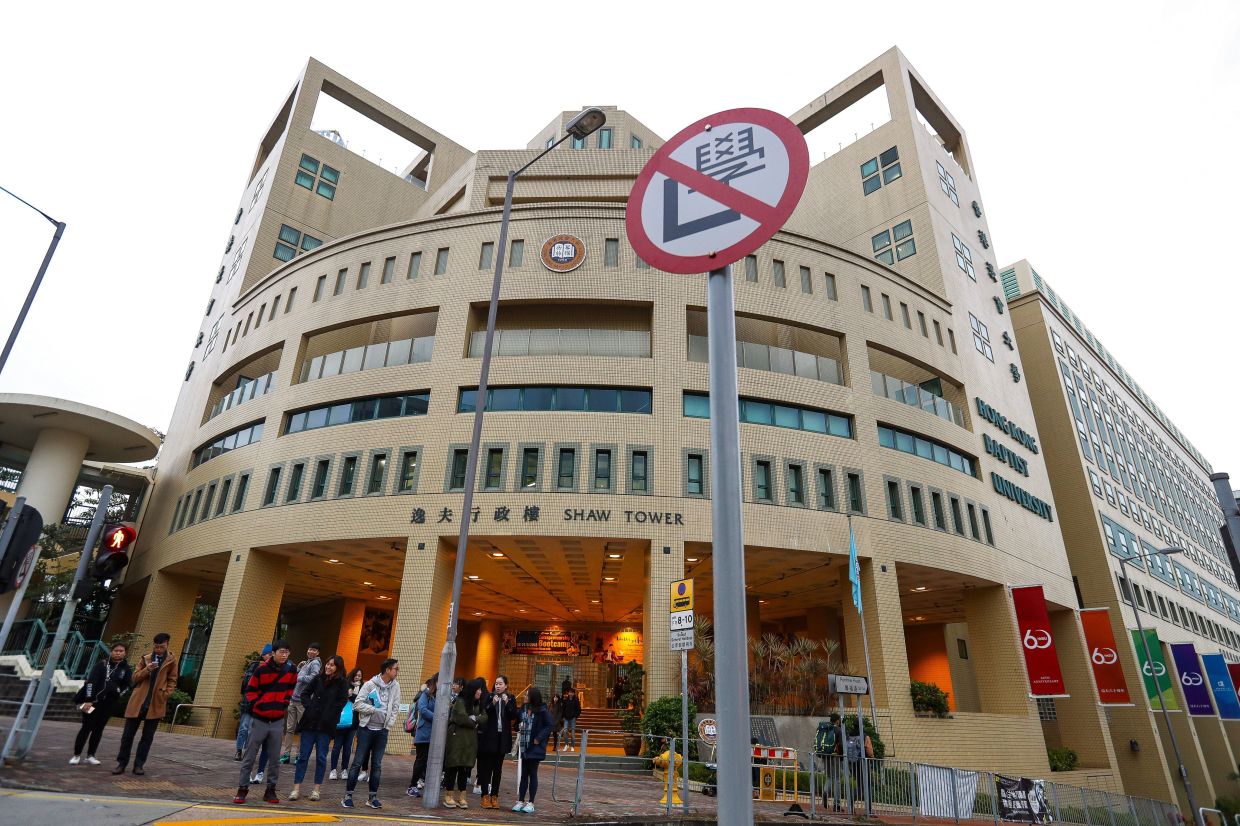
Hong Kong Baptist University has launched an urgent review of its information technology infrastructure following claims by an advanced ransomware operation that it has illegally accessed the institution's sensitive data. The allegations emerged from "The Gentlemen," a sophisticated cybercrime syndicate that gained prominence in mid-2023 and has since become one of the more prolific extortion-based threat actors operating across global digital networks.
Cybersecurity tracking services have identified approximately 1,900 user credentials potentially compromised in the breach. This tranche of stolen access details spans multiple categories within the university's digital ecosystem: roughly 130 staff member accounts, approximately 1,770 other user credentials belonging to students or auxiliary personnel, and around 260 third-party contractor credentials. The diversity of affected account types suggests the breach penetrated multiple layers of the institution's network infrastructure, raising concerns about the potential scope of exposed institutional data.
The Gentlemen represents a particularly troubling evolution in ransomware economics. Unlike earlier generations of cybercriminals who developed and deployed their own extortion tools, this group operates through a software-as-a-service model, essentially leasing its ransomware capabilities to other threat actors in exchange for a share of extortion proceeds. This business model has enabled rapid proliferation and specialisation within the cybercriminal ecosystem, allowing the group to expand its operational reach across continents while maintaining plausible deniability for individual attacks. Security researchers monitoring the group's activities have documented its accelerating expansion throughout corporate and institutional networks globally.
Baptist University's formal response came through a statement released Tuesday evening acknowledging the allegations and committing to a thorough security review. The institution indicated it would pursue remediation through its established incident-response protocols and maintain ongoing coordination with Hong Kong's regulatory authorities and law enforcement agencies. However, the university did not disclose specific details about discovery timelines, immediate containment measures, or preliminary findings from its investigation—information privacy advocates and cybersecurity experts typically expect institutions to communicate more comprehensively during active breach investigations.
The Hong Kong Office of the Privacy Commissioner for Personal Data has assumed an active monitoring posture, though as of the initial reporting, the office had not received formal breach notification from Baptist University as required under local privacy legislation. A spokesperson disclosed that the regulator had independently reached out to the institution to gather details about the incident, suggesting regulatory bodies are not waiting passively for institutional self-reporting. This proactive stance underscores heightened concern among Hong Kong authorities about the adequacy of institutional breach response protocols and the potential for delayed or incomplete disclosure.
Francis Fong Po-kiu, who leads the Hong Kong Information Technology Federation in an honorary capacity, has articulated a detailed remediation roadmap that extends significantly beyond conventional breach response. Fong emphasised that Baptist University should immediately escalate notification to the privacy commissioner, initiating formal regulatory engagement rather than relying on informal coordination. He further stressed the urgency of comprehensive forensic investigation and system-wide security audits designed to determine whether the compromised credentials have already been weaponised for deeper network infiltration or lateral movement within institutional systems.
A critical concern Fong highlighted involves verification of actual damage from the breach. Stolen credentials do not automatically translate into successful system compromise; threat actors must utilise these credentials to gain meaningful access and exfiltrate or encrypt valuable data. The distinction between credential exposure and functional system breach carries significant implications for damage assessment and notification obligations under privacy legislation. Baptist University must therefore determine whether the breach represents merely credential theft or whether attackers have leveraged these credentials to access protected personal information or institutional intellectual property.
Fong's recommendations encompass immediate technical responses including a campus-wide password reset mandate and implementation of multi-factor authentication across all institutional accounts. These measures, whilst operationally disruptive, significantly raise the barrier to attack by ensuring that stolen credentials alone cannot grant system access. Multi-factor authentication has become the gold standard in institutional cybersecurity defences, yet adoption across universities—particularly in Asia—remains inconsistent and often incomplete.
Beyond technical remediation, Fong stressed transparent communication with the university community as a critical breach response element. Staff and student notification regarding investigation progress serves dual purposes: it fulfils regulatory and ethical transparency obligations whilst simultaneously reducing susceptibility to follow-on social-engineering attacks. Threat actors frequently leverage legitimate-seeming breach-related communications to further compromise institutional members, a technique particularly effective when official information flows remain opaque or delayed.
This incident resonates across Asian higher education and research institutions that increasingly find themselves targeted by sophisticated ransomware operations. Universities represent particularly attractive targets for extortion campaigns due to their valuable intellectual property, research data, and student information, combined with institutional cultures that typically prioritise operational continuity and may demonstrate relative patience with ransom negotiations. The Baptist University breach underscores that no institution, regardless of size or sector, possesses complete immunity from advanced cybercriminal operations.
The broader context involves regulatory frameworks across Asia that are still maturing in response to sophisticated ransomware threats. Hong Kong's privacy commission possesses authority to investigate and enforce compliance, yet questions persist regarding whether institutional cybersecurity standards adequately reflect contemporary threat realities. Baptist University's breach may catalyse additional scrutiny and potentially inspire more stringent cybersecurity requirement implementations across Hong Kong's institutional sector.
The incident also illuminates the escalating sophistication of threat actor business models. The Gentlemen's rental-based approach has democratised access to effective extortion tools, enabling lower-capability criminals to launch professional-grade attacks. This model contrasts sharply with earlier cybercrime economics and suggests that institutional defenders must anticipate an expanding array of threat actors with varying sophistication levels but access to comparable technical capabilities.
Moving forward, Baptist University's response trajectory will likely establish informal benchmarks for how peer institutions should address comparable incidents. The university's willingness to engage transparently with regulators, undertake thorough forensic investigation, and implement comprehensive remediation measures may either reinforce institutional confidence in Hong Kong's breach response ecosystem or expose gaps that require policy attention and legislative refinement.

