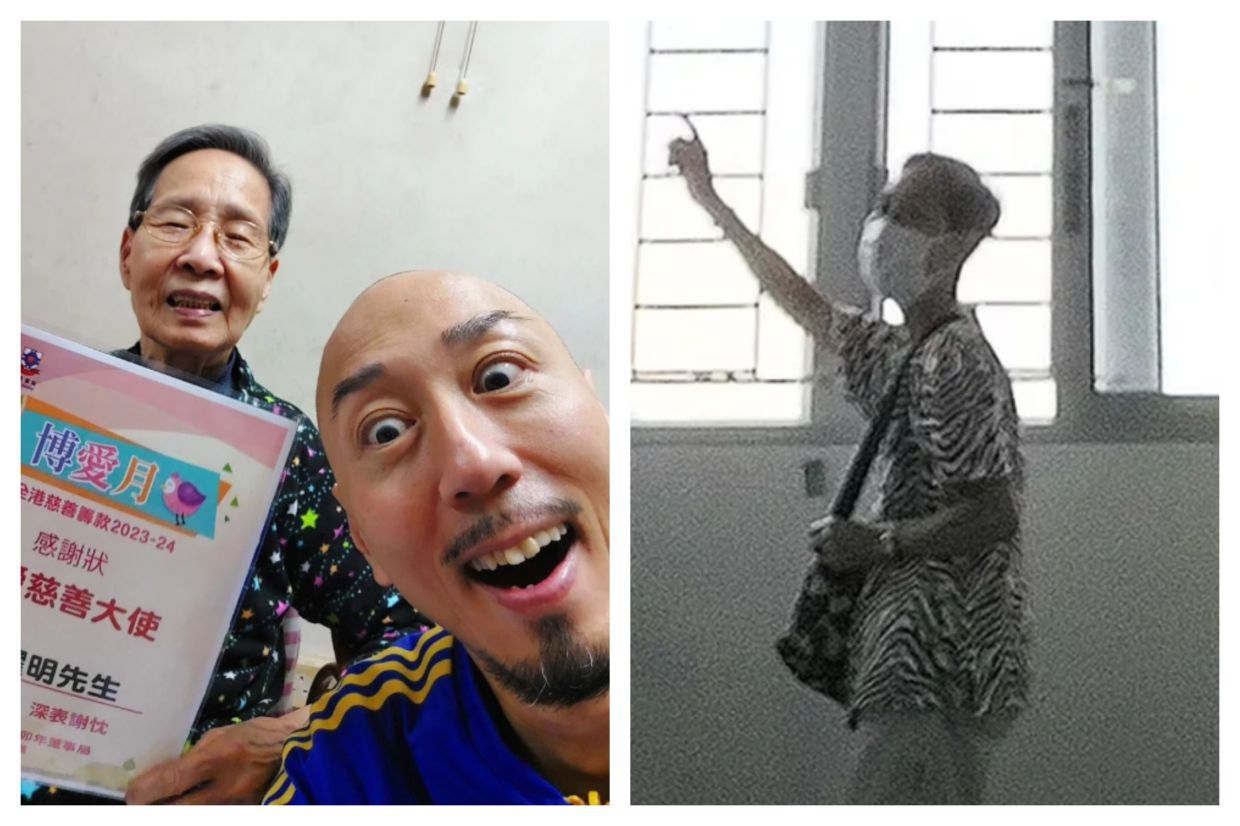
Hong Kong television actor Dai Yiu Ming has realised a long-cherished personal goal by acquiring his first residential property, which he has dedicated to his elderly mother following years of dedicated labour and meticulous financial management. The 54-year-old performer recently documented the milestone on Instagram, sharing images of his new dwelling including photographs capturing the vista from the residence, marking a tangible achievement in his career trajectory and family obligations.
The property acquisition represented a substantial financial commitment for the actor, who openly acknowledged the considerable expense involved in the purchase decision. Despite the hefty price tag, Dai expressed no regret about the investment, offering a philosophical reflection on the finite nature of human relationships and the importance of seizing present opportunities with loved ones. His accompanying social media post carried an emotional resonance that extended beyond mere property ownership, touching on deeper themes of mortality and the irreplaceable value of time spent with family members.
Dai's mother, now in her eighties, has experienced the arc of Hong Kong's modern history through profound poverty and institutional housing constraints. Throughout most of her life, she inhabited makeshift structures and successive public housing quarters, never establishing stable residential footing until her son's recent purchase. The actor honoured her fortitude by recounting her harrowing experiences during wartime, when she endured confinement in an air-raid shelter and sustained herself through the bare subsistence of harvested sweet potato leaves—a visceral detail that underscored both her suffering and her indomitable will to survive.
In his inscription accompanying the photographs, Dai articulated the limitations he perceived in his own earning capacity, emphasising that his modest income necessitated stringent financial discipline over an extended period to accumulate sufficient capital for homeownership. He framed the property acquisition not as a testament to personal wealth accumulation but rather as the culmination of austere living practices and persistent effort. The actor's candid acknowledgement of his financial constraints provides an authentic counterpoint to narratives of effortless celebrity affluence, instead positioning home acquisition as an aspirational outcome achievable through sustained sacrifice and prudent resource allocation.
The public disclosure of this personal achievement resonated powerfully throughout Hong Kong's online communities, where commentators celebrated Dai's evident commitment to his maternal filial obligations. Social media users marshalled traditional Confucian concepts of filial piety—the ethical responsibility of children toward ageing parents—as a framework for praising the actor's life choices and priorities. Many respondents explicitly recognised the actor's choice to prioritise family relationships over career advancement or personal consumption, interpreting his decision to restrict his earning potential by remaining geographically proximate to his mother as a profound statement of values alignment.
Dai's entertainment career trajectory reflects the competitive instability characterising Hong Kong's broadcasting landscape during the 1990s and beyond. He initially pursued formal training through ATV's artiste development programme in 1991, subsequently debuting in dramatic programming during 1993. However, his early tenure at the broadcaster proved unsatisfying, with Dai concluding that his contributions to the network lacked adequate recognition and appreciation. This recognition gap prompted his departure from ATV in 1994, initiating a transitional period during which he shifted his professional focus entirely, securing employment as a computer repair technician before eventually securing a contractual position with rival broadcaster TVB later that same year.
Over subsequent decades, Dai cultivated a respectable professional reputation within TVB's production ecosystem, establishing himself as a reliable supporting performer rather than pursuing lead protagonist roles. This positioning within the industry hierarchy—solid, dependable, but peripherally prominent—has provided stable employment spanning multiple decades without delivering the superstar status or accompanying remuneration that might have facilitated more rapid property accumulation. His acceptance of supporting roles reflects pragmatic adaptation to industry realities while simultaneously allowing him to maintain the geographic stability necessary for sustained parental caregiving.
The actor's career development subsequently extended into mainland China's entertainment market during 2017, when he pursued expanded professional opportunities beyond Hong Kong's comparatively restricted broadcasting landscape. This geographical expansion represented a calculated career gambit designed to augment his earning potential and broaden his professional portfolio. However, this mainland venture proved personally untenable, as geographic separation from his mother created emotional and psychological strain that outweighed the professional and financial benefits associated with expanded opportunities. His decision to repatriate himself to Hong Kong within a relatively compressed timeframe demonstrated the precedence he granted to familial proximity over individual career advancement, a choice that necessarily constrained his income generation capacity but affirmed his relational commitments.
The contextual backdrop to Dai's property acquisition includes the premature death of his father more than a decade prior, an event that transformed the relationship between mother and son into a primary familial dyad characterised by mutual interdependence. The loss of his father eliminated any alternative source of household income or emotional support for his ageing mother, placing the responsibility for her welfare squarely upon Dai's shoulders. This circumstance necessarily shaped his career decision-making calculus, prioritising geographic accessibility and reliable income stability over the volatile opportunities potentially available through career expansion or geographic mobility. The father's absence thus becomes an invisible but consequential factor in understanding the financial discipline and life choices that eventually enabled homeownership.
For Malaysian and broader Southeast Asian readers, Dai's narrative articulates themes that resonate across regional cultural contexts where filial obligation and multigenerational family support structures remain normative expectations rather than exceptional commitments. The actor's deliberate choice to subordinate individual career ambition to parental welfare reflects values alignments common throughout Confucian-influenced societies, where elder care constitutes both a moral imperative and a practical family responsibility. However, his story simultaneously highlights the economic constraints that render such familial care increasingly challenging within contemporary urban contexts characterised by expensive housing markets, precarious employment conditions, and compressed earning trajectories that delay wealth accumulation for workers in entertainment and service sectors.

