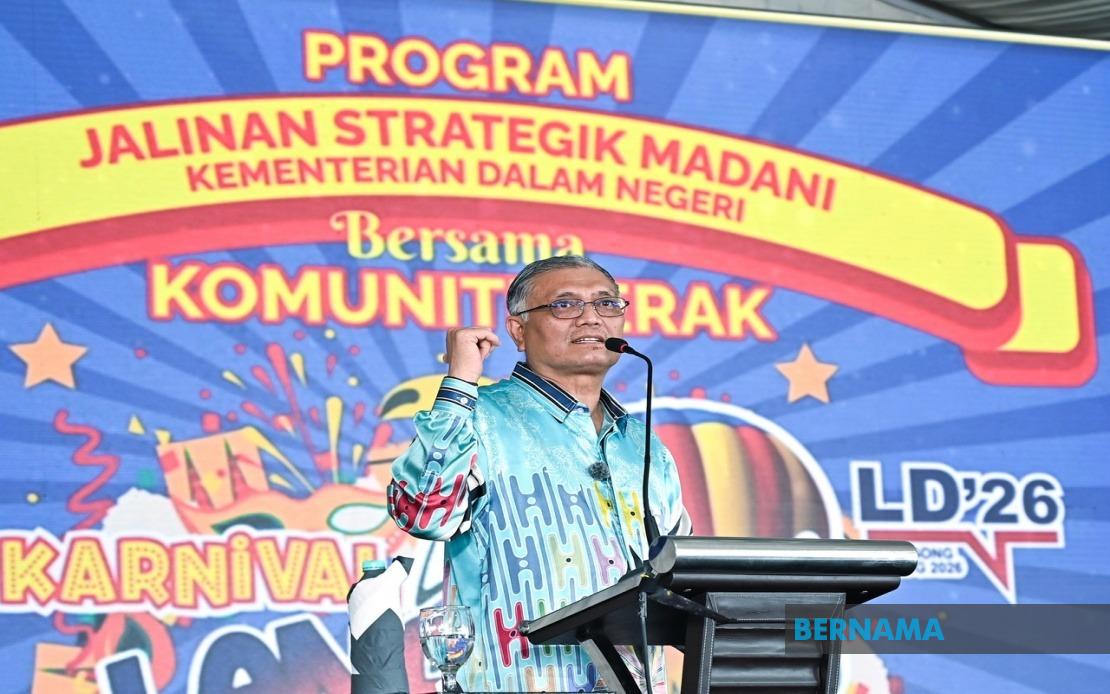
The Home Ministry has rolled out an ambitious initiative aimed at dismantling the traditional barriers between citizens and government agencies, bringing essential services and security expertise directly into the heart of Perak's Lenggong district. The MADANI Strategic Partnership Programme, which commenced at Dataran Lenggong in mid-July, represents a shift toward community-centred governance, where residents no longer need to travel to distant offices to interact with official bodies or update their records.
Deputy Home Minister Datuk Seri Dr Shamsul Anuar Nasarah underscored the programme's dual purpose during its launch. Beyond mere service delivery, the initiative creates a structured dialogue between security agencies and grassroots communities, enabling residents to voice concerns about local crime, drug trafficking, and public safety in an informal setting. This two-way engagement model acknowledges that effective governance requires listening posts at the neighbourhood level, where citizens can articulate their experiences and where security personnel gain ground-truth insights into emerging threats or vulnerabilities within their jurisdictions.
The Lenggong event integrated practical access to government infrastructure with activities designed to foster social cohesion and civic pride. Service counters operated by the Royal Malaysia Police, the Immigration Department of Malaysia, and the National Anti-Drugs Agency fielded enquiries, processed applications, and addressed complaints throughout the two-day programme. Residents seized the opportunity to update personal records, obtain official advice, or formally lodge grievances without bureaucratic friction. This accessibility has immediate utility for those unable to navigate the typical office hours or complicated administrative procedures that often deter public engagement with state institutions.
The choice to locate the programme in Lenggong carries particular significance for Malaysia's broader development narrative. The Lenggong Valley, designated a UNESCO World Heritage Site, carries immense archaeological and cultural value, yet its communities sometimes feel peripheral to national administrative and economic networks. By bringing the full apparatus of the Home Ministry's agencies to this heritage-rich region, the government signalled that even areas celebrated for their historical importance deserve contemporary institutional attention and investment in citizen services.
Complementing the administrative dimension, the programme featured recreational and educational components that expanded its social reach. Approximately 1,190 participants engaged in a Fun Ride and Fun Run organised jointly by the People's Volunteer Corps and the National Anti-Drugs Agency, traversing villages throughout the Lenggong area. These activities transcended mere exercise; they functioned as public health messaging platforms and community-building exercises. Participants experienced firsthand the region's natural beauty while absorbing anti-drugs awareness campaigns and observing the visible presence of volunteer and state security bodies in their neighbourhoods.
The integration of children's activities, creative performances, and religious talks into the programme's schedule reflects a sophisticated understanding of institutional legitimacy. Governments that engage children and families create positive associations between state agencies and daily life, potentially fostering greater compliance with laws and regulations in future generations. Religious discussions, meanwhile, acknowledge Malaysia's cultural and spiritual values while positioning security and governance as compatible with Islamic principles and community norms.
For Malaysia's broader security architecture, the MADANI model addresses a persistent challenge: how to build public confidence in and cooperation with law enforcement and immigration bodies, particularly in communities where trust may have eroded or where citizens view official agencies as distant and unresponsive. By breaking down physical and psychological barriers, the programme creates opportunities for citizens to understand the constraints and capacities of security agencies while enabling those agencies to calibrate their approaches to local contexts and concerns.
The exhibition components showcasing the assets and capabilities of the police, immigration, and anti-drugs agencies served an equally important function. Public visibility of state capacity—from vehicle fleets to detection equipment to personnel training standards—reinforces the legitimacy of these institutions and their authority to maintain order and security. This transparency also counters misinformation or conspiracy theories that sometimes circulate in communities about government capabilities or intentions.
From a regional perspective, Malaysia's approach here mirrors efforts in other Southeast Asian democracies to deepen institutional connectivity with citizens. As challenges ranging from transnational drug trafficking to irregular migration to emerging cyber-threats become more complex, security agencies increasingly recognise that solutions require genuine partnership with communities. The MADANI programme embodies this principle by positioning citizens not as passive recipients of state services but as active participants in identifying and addressing security challenges.
The Lenggong initiative also demonstrates how heritage sites and tourism attractions can serve as platforms for governance innovation. By anchoring a major service and engagement programme in a UNESCO-recognised location, the government reinforced the significance of the area to national identity while simultaneously addressing the practical governance needs of its residents. This fusion of cultural preservation and contemporary service delivery offers a model potentially applicable to other heritage communities across Malaysia.
Looking forward, the success metrics for programmes like MADANI extend beyond attendance figures or services delivered. The deeper question concerns whether sustained engagement genuinely shifts public perception of government institutions, whether it reduces barriers to accessing essential services, and whether it generates actionable intelligence for security and administrative agencies. If communities develop greater willingness to report crimes, provide immigration-related information, or participate in drug prevention initiatives, the MADANI programme will have achieved its underlying strategic objective: transforming abstract state institutions into trusted partners in collective wellbeing.
As Malaysia continues navigating complex security and governance challenges—from cybercrime to transnational organised crime to maintaining social cohesion amid demographic change—initiatives like the MADANI Strategic Partnership Programme represent an investment in foundational institutional legitimacy. By demonstrating responsiveness, accessibility, and genuine interest in community concerns, the Home Ministry works toward the genuine partnership that effective security governance requires in the contemporary era.

