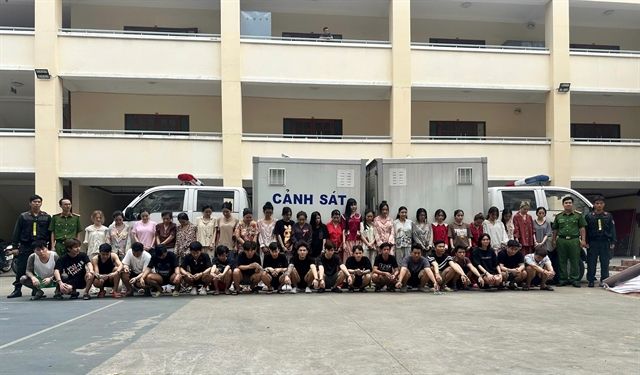
A major law enforcement operation in Ho Chi Minh City has exposed a sprawling network distributing illegal anaesthetic substances through vaping devices, resulting in the arrest of 49 individuals including four foreign nationals. The drug-related crime investigation division revealed the operation on Wednesday, highlighting the sophisticated methods organised crime groups are employing to circumvent detection and target young people across the region. The seizure of 1,670 vape pods alongside hundreds of grams of ketamine and methamphetamine underscores the scale and complexity of the trafficking operation uncovered by authorities.
At the heart of the trafficking scheme was etomidate, a potent short-acting surgical sedative legally restricted to medical settings under specialist supervision. Vietnamese authorities added the substance to the national controlled substances list in January, criminalising its manufacture, sale and distribution. The drug was ingeniously concealed in e-cigarette sweetener solutions and sold under deceptively appealing product names such as "chill pod", "relaxation pod", "sleep-well pod" and "fly pod". These marketing tactics were deliberately designed to attract younger consumers who might view vaping as a trendy and relatively safer alternative to traditional smoking.
The investigation originated from intelligence about a street-level dealer operating under the alias Ba Giá, later identified as 28-year-old Nguyen Huu Huan from Dong Thap Province. Huan and his wife Ngo Thi Kim Chi, 30, were apprehended on June 25 after selling etomidate-laced pods to a Ho Chi Minh City resident. Their detention proved pivotal, as subsequent inquiries unravelled two distinct supply networks that had been channelling products through the city. The discovery revealed the operation's transnational dimensions, with smuggling routes extending into Cambodia and international involvement from Asian nationals.
One of the primary supply networks was managed by Huynh Ngoc Thuy Nhu, 26, and Hua Tuong Vy, 20, both based in Ho Chi Minh City. A second significant operation was controlled by 40-year-old Le Quoc Duy from An Giang Province, who orchestrated cross-border smuggling through remote customs checkpoints before transporting contraband northward to the city. Police recovered 37 vape pods from Duy's premises along with 200 grams each of ketamine and methamphetamine, indicating his group's involvement in broader drug trafficking beyond the vape network. The third identified cluster involved Cambodian national Han Kiat and three additional foreign associates who specifically targeted expatriate communities resident in the metropolis.
The pharmacological danger posed by etomidate vapour distinguishes this threat from conventional drug dangers. When inhaled through vaping, etomidate bypasses normal ingestion pathways and travels directly from the lungs into the bloodstream, reaching the brain within seconds. Initial effects manifest as lightheadedness and gentle hallucinations, sensations that may appeal to recreational users seeking novel experiences. However, the substance carries severe acute risks including neurological damage, extreme drowsiness, involuntary muscle contractions and complete loss of consciousness. Most alarmingly, combining etomidate with alcohol or other depressants can trigger sudden respiratory failure and fatality.
The deliberate marketing strategy surrounding these products exploited regulatory gaps and consumer naïveté. Traffickers promoted etomidate as "undetectable" or "100 per cent negative" on rapid drug screening tests, leveraging legitimate scientific facts about the substance's unique chemical composition. Standard field testing kits available commercially can identify traditional narcotics including heroin, cannabis and methamphetamine, but lack sensitivity to etomidate. Only sophisticated forensic laboratory equipment operated by specialist agencies possesses the capability to identify and analyse etomidate samples. This detection disparity created an illusion of risk-free consumption among unsuspecting users.
The geographic distribution points to deliberate targeting of venues frequented by younger demographics. Police believe the pods were strategically marketed to bars, karaoke establishments, and short-term rental accommodations where young people congregate. The pricing structure reflected premium positioning, suggesting the operation generated substantial profits while maintaining an air of exclusivity and desirability. The transnational composition of the arrested individuals, including South Korean, Chinese and Cambodian nationals alongside Vietnamese organisers, indicates integrated criminal networks operating across Southeast Asian borders with established distribution and financial infrastructure.
This case resonates beyond Vietnam's borders, carrying implications for drug enforcement throughout Southeast Asia. The sophistication of the operation, spanning international sourcing, chemical modification, elaborate marketing and coordinated distribution, demonstrates how organised crime has evolved in response to conventional narcotics enforcement. The targeting of young people through trendy packaging and appealing product nomenclature reflects calculated grooming strategies that exploit generational preferences for e-cigarettes and vaping culture. The involvement of foreign nationals suggests established networks with resources to coordinate regional operations and manage substantial contraband flows.
For Malaysian and Southeast Asian authorities, the case presents a cautionary illustration of emerging drug trafficking methodologies exploiting regulatory blind spots. Etomidate's recent scheduling in Vietnam occurred only in January, suggesting other jurisdictions may not yet have comprehensive controls. The chemical innovation of mixing scheduled substances into vaping devices circumvents conventional trafficking detection methods, as field-deployed screening equipment remains unreliable. Law enforcement agencies across the region face the prospect of similar operations targeting major urban centres with significant youth populations and international expatriate communities.
The health education dimension also merits urgent attention. Young people attracted to vaping culture may not perceive etomidate-laced products as genuinely dangerous, particularly when marketed with lifestyle-oriented branding and promoted as undetectable alternatives. The rapid onset and severe potential consequences of overdose present significant public health risks requiring proactive community awareness campaigns. Ho Chi Minh City police have advised citizens, particularly young adults, to reject e-cigarettes from unverified sources and avoid engaging with unregulated black market products, though enforcement education alone cannot address demand-side factors driving consumption.
The arrests represent substantial progress in disrupting one syndicate, yet authorities acknowledge that similar networks likely continue operating. The ease with which trafficking organisations adapt their methods, switch supply routes and modify product formulations suggests that enforcement must evolve equally rapidly. Cooperation between Vietnamese and neighbouring Southeast Asian authorities on cross-border intelligence sharing and coordinated enforcement actions becomes essential for disrupting transnational criminal infrastructure. The operation's success ultimately depended on initial community tip-offs and patient investigative work following street-level dealers upstream to international suppliers.

