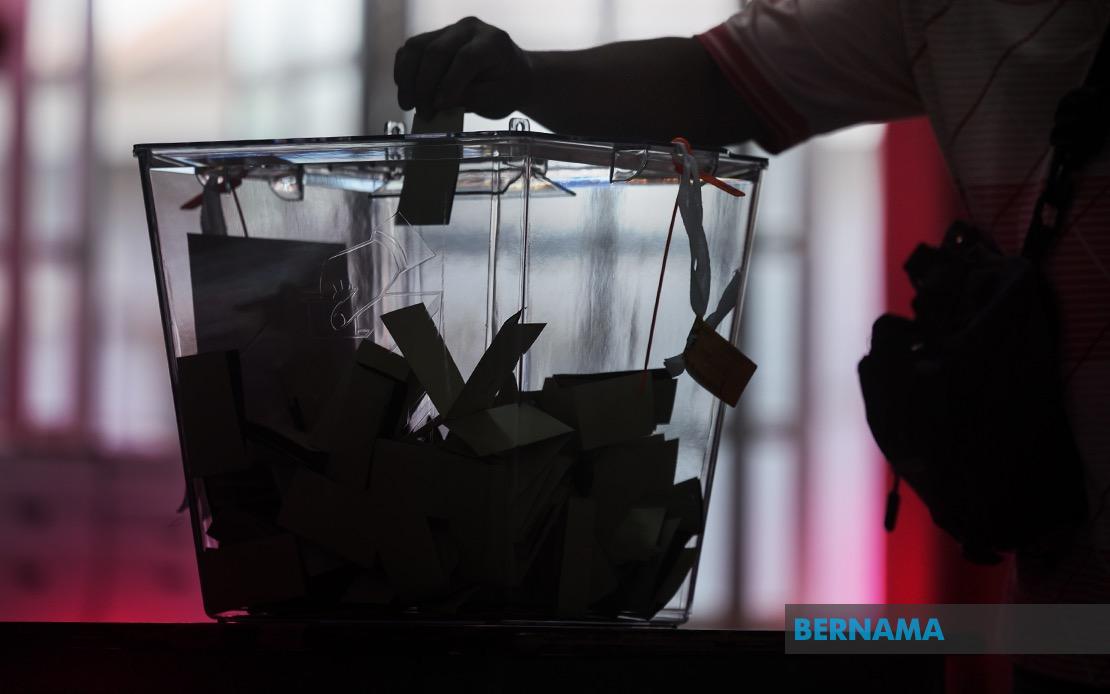
The outcome of Johor's 16th state election this Saturday may hinge significantly on how many voters actually cast ballots, according to political analyst Associate Professor Dr Mazlan Ali. A surge in participation, particularly among outstation voters returning to their home state, could substantially improve Pakatan Harapan's prospects across urban and semi-urban constituencies where younger, mobile, and undecided voters concentrate. Dr Mazlan, director of the Faculty of Social Sciences and Humanities at Universiti Teknologi Malaysia's Kuala Lumpur Campus, suggests that federal-level political stability, strengthening economic indicators, and government welfare measures—especially fuel subsidies—may motivate PH's supporters to prioritise returning home to vote rather than sitting out the election.
The analyst's reasoning draws from comparing two elections held in Johor during 2022. The May state election that year recorded barely 50 per cent turnout, a result that substantially advantaged Barisan Nasional. The ruling coalition's deep-rooted local organisation and extensive network of core supporters in Johor enabled it to capture 40 seats despite a lower absolute vote count. Conversely, when the 15th General Election occurred later that November with turnout climbing to approximately 75 per cent, the electoral dynamics shifted dramatically in PH's favour. The coalition's vote tally skyrocketed from roughly 350,000 votes in the state election to approximately 830,000 in the parliamentary contest, translating into 14 parliamentary wins. This more than doubling of support reveals how sensitive Johor's electoral outcome remains to participation rates among geographically dispersed voters.
Dr Mazlan emphasises that this year's contest operates under markedly different conditions compared to the pandemic-constrained 2022 state election. With COVID-19 restrictions no longer constraining movement and travel, outstation voters face fewer practical obstacles to returning home for polling day. This fundamental change in circumstances, combined with what appears to be growing inclination among voters living outside Johor to participate in state-level democracy, creates a plausible pathway for PH to exceed its previous performance. The analyst contends that if outstation voter participation approximates the 75 per cent turnout achieved during GE15, translating that support into state assembly constituencies rather than parliamentary ones would logically produce PH gains across multiple seats currently held by opposition parties.
Urban and semi-urban areas emerge as the critical battlegrounds where this turnout dynamic will determine seat allocations. According to Dr Mazlan, voters in these constituencies demonstrate greater responsiveness to contemporary policy debates, government performance metrics, and economic platforms than their rural counterparts. They engage seriously with platforms centred on governance quality and social justice framing. The analyst characterises typical PH supporters as outstation-based, young, educated, technologically engaged through social media, and attracted to narratives emphasising fairness and equitable treatment. This demographic profile contrasts sharply with voters primarily motivated by communal and religious considerations, who tend to anchor themselves more firmly to established parties with traditional support bases.
The composition of PH's electoral coalition creates specific vulnerabilities and opportunities regarding turnout. Because a disproportionate share of PH's support originates from voters residing outside Johor—including professionals working in Kuala Lumpur, Selangor, and other states—the coalition's performance remains contingent upon whether these individuals prioritise state elections sufficiently to justify travel and voting costs. Young voters, particularly university students and early-career professionals, must overcome inertia and logistical inconvenience to participate. Conversely, Barisan Nasional's traditional advantage stems from concentrated local support and extensive machinery reaching voters already embedded in Johor's communities. A high-turnout scenario that mobilises outstation voters effectively dilutes BN's structural advantage, whereas low participation would replicate the 2022 dynamic favouring the incumbent coalition.
Dr Mazlan identifies government stability at the federal level and improved economic conditions as psychological motivations driving voter behaviour. Citizens who feel their material circumstances have improved under PH governance—whether through subsidy programmes, employment stability, or general economic confidence—develop stronger incentives to protect that administration through electoral participation. This psychological mechanism may prove particularly powerful among younger and educated voters who track policy implementation and economic indicators closely. Conversely, voters facing persistent economic hardship or who perceive governance failures would less likely make efforts to participate unless substantially motivated by opposition narratives about necessity for change.
The analyst cautions that PH faces a crucial organisational challenge in these final campaign days: ensuring that supporters actually vote rather than remaining passive. Registration status matters critically—outstation voters must maintain valid voter registration in their home constituencies to participate, and many may be unaware of requirements or deadlines. PH must therefore invest heavily in identifying, contacting, and mobilising its dispersed support base, overcoming the structural disadvantage of having supporters scattered across multiple states. This logistical complexity contrasts with BN's capacity to mobilise compact, locally-rooted constituencies through established community networks and trusted intermediaries.
Historical patterns suggest vulnerability in PH's mobilisation strategy. Despite commanding substantially larger popular votes in GE15, PH's organisational capacity to convert votes into seat wins remains constrained relative to BN's efficiency in first-past-the-post contests. Electoral boundaries drawn to favour rural and semi-rural constituencies—where BN's support concentrates—structurally advantage the incumbent coalition even when nationwide vote shares approach parity. A moderate turnout increase benefiting PH might not suffice to translate into proportional seat gains, particularly if constituency-level distribution remains uneven. Only sustained momentum in urban and semi-urban areas, reinforced by genuine outstation voter mobilisation, could generate the seat multiplication that would constitute a genuine upset against an entrenched incumbent.
The timing of Johor's election relative to federal political developments also influences voter psychology. Occurring amid federal PH governance marked by coalition stability rather than the fractious infighting of previous years, voters may perceive reduced urgency for change compared to the GE15 context when political chaos dominated national discourse. This stability argument cuts both directions—voters satisfied with current governance become complacent, potentially depressing participation unless effectively mobilised, while those concerned about opposition governance require convincing that returning BN represents superior outcomes. Federal government performance therefore becomes an implicit factor in state electoral calculus, with PH best-positioned if economic conditions remain stable while opposition parties struggle to articulate compelling alternative governance visions.
The analyst's framework suggests that Monday's results will reveal whether Malaysian electoral patterns are genuinely shifting toward prioritising policy performance and governance quality over traditional communal voting patterns, or whether structural advantages conferred by geography and local organisation continue determining outcomes. If turnout substantially exceeds 2022 levels and urban constituencies swing decisively toward PH, it signals that mobile, educated Malaysian voters are emerging as swing constituencies capable of overriding traditional party machines. Conversely, if turnout remains modest or if urban gains fail to materialise despite improved participation, it indicates that Malaysia's electoral landscape remains bifurcated between cosmopolitan progressives and community-anchored conservatives, with institutional factors limiting the former's capacity to convert numerical support into seat allocations.

