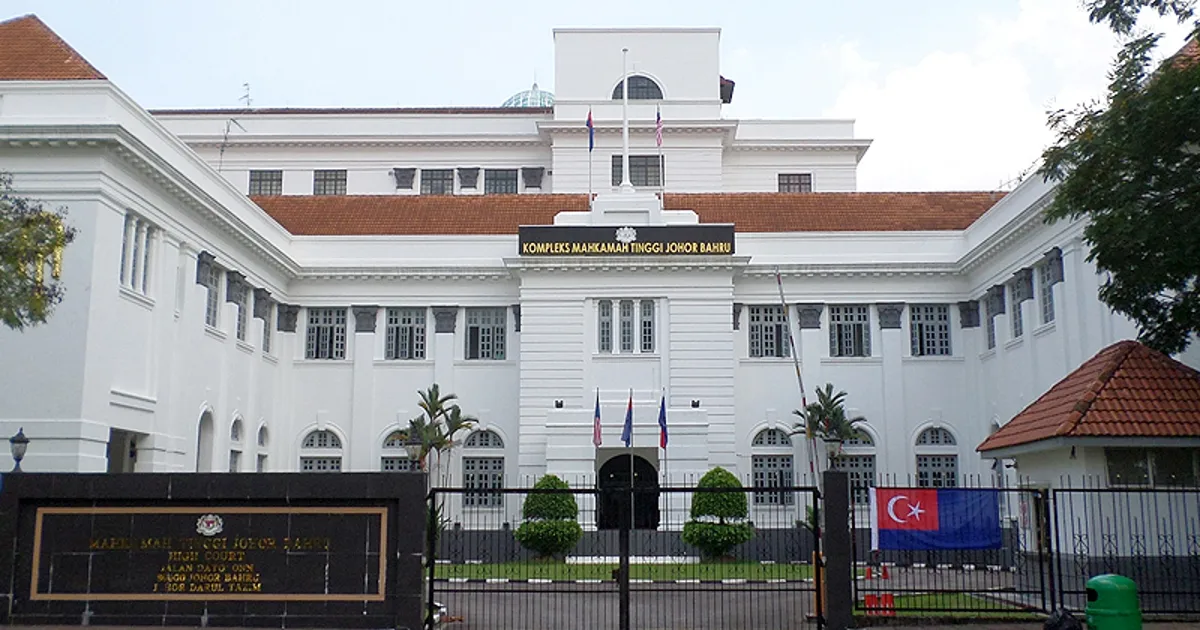
The acquittal of an instructor employed at a government training institute on sexual assault charges marks another instance where Malaysia's judicial system has found fault with investigative procedures, raising fresh questions about police competency in handling serious criminal allegations. The High Court's decision to discharge the accused followed what the presiding judge characterised as an investigation that deviated substantially from recognised standards of proper procedure, a finding that extends beyond mere technical shortcomings to suggest systemic weaknesses in how such sensitive matters are examined.
The court's criticism carries particular weight given that sexual assault allegations demand meticulous handling. Flawed investigations risk not only wrongfully destroying the reputation of the innocent but also undermining the credibility of legitimate victims seeking justice. The judge's observation that the police inquiry fell "markedly short" of appropriate standards indicates that investigators may have neglected fundamental protocols, overlooked critical evidence, or failed to adequately corroborate witness statements. Such lapses in a case involving a government institution are especially concerning, as public agencies bear heightened responsibility to maintain investigative integrity.
Government training institutes occupy a significant position within Malaysia's institutional framework, tasked with developing skilled workers across various sectors. Accusations against staff members at such facilities inevitably attract scrutiny not only from the criminal justice system but also from the broader public, particularly those enrolled in or considering such programmes. The acquittal, coupled with the court's rebuttal of police methodology, may restore confidence in the instructor's professional standing while simultaneously highlighting vulnerabilities in how serious crimes within educational and training environments are investigated.
The High Court's detailed observations about investigative failures provide valuable guidance for future cases. When judges explicitly document departures from proper procedure, they create a record that can inform policy improvements and training initiatives within law enforcement agencies. Malaysian courts have increasingly felt compelled to comment on investigative quality in recent years, suggesting a pattern rather than isolated incidents of substandard police work on serious criminal matters.
For the accused instructor, the acquittal represents vindication and potential relief from the substantial personal and professional consequences that follow any sexual assault allegation. However, the judicial process itself—from accusation through trial to acquittal—inevitably leaves psychological and reputational marks. The instructor's ability to resume duties and rebuild standing within the institution will depend partly on whether management and peers distinguish between the allegation and the court's finding of insufficient evidence.
The judgment also carries implications for victims and potential complainants within similar institutional settings. While false allegations remain statistically uncommon, high-profile acquittals accompanied by judicial criticism of police may discourage some genuine victims from coming forward, fearing either dismissal or inadequate investigation. The challenge for Malaysian law enforcement lies in conducting thorough, evidence-based inquiries that simultaneously protect the innocent and serve justice for those who have genuinely experienced wrongdoing.
Government training institutes typically enrol working-class Malaysians seeking to advance their skills and employment prospects. Any disruption to institutional stability or confidence—whether triggered by genuine scandals or, as in this case, unsubstantiated allegations—affects individuals dependent on these programmes for career progression. The acquittal thus carries broader significance for Malaysia's vocational and skills development ecosystem, suggesting that institutional leadership must balance safeguarding against reassuring both staff and students that unfounded accusations will not destroy careers.
The case underscores the need for specialised training within the police force regarding sexual assault investigation. These inquiries demand different protocols than other criminal investigations: they require sensitivity to trauma-informed interviewing, careful handling of forensic evidence, proper documentation of witness statements, and understanding of dynamics that distinguish true allegations from fabrications. The High Court's criticism suggests that investigating officers in this matter may have lacked such specialisation or that procedural guidelines were inadequately applied.
From a regional perspective, Malaysia joins several Southeast Asian jurisdictions grappling with police investigation quality across serious crimes. Neighbouring countries have similarly documented instances where investigative shortcomings have led to wrongful prosecutions or dismissals of cases. The High Court's explicit commentary on these failings contributes to a developing jurisprudence that holds investigative bodies accountable to public scrutiny, establishing that mere procedural compliance is insufficient—investigations must demonstrate substantive rigour.
Moving forward, the case presents an opportunity for Malaysia's law enforcement leadership to undertake comprehensive review of sexual assault investigation protocols. Such review should encompass training requirements, investigator qualification standards, quality assurance mechanisms, and collaboration with prosecution services to ensure that cases reaching court rest on evidentiary foundations solid enough to withstand judicial scrutiny. The instructor's vindication, while just, comes at significant human cost; preventing similar instances requires systemic commitment to investigative excellence from the outset.

