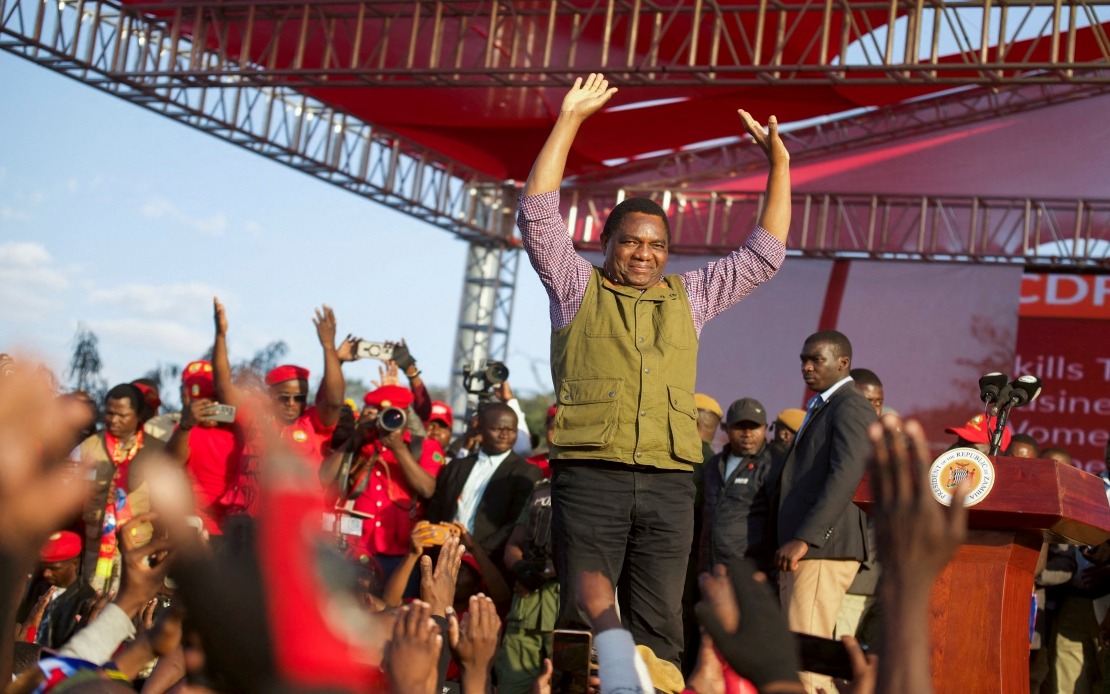
Zambian President Hakainde Hichilema is heading decisively towards securing a second term in office following impressive results announced Sunday in the nation's latest presidential election. With counting progressing across the country, Hichilema has accumulated 1,544,140 votes from 135 of the 226 constituencies tallied so far, establishing a substantial buffer over his nearest competitor. The Electoral Commission of Zambia disclosed these consolidated figures at the National Election Results Centre in Lusaka, signalling a trajectory that appears increasingly favourable for the 64-year-old incumbent seeking re-election under the United Party for National Development banner.
The political landscape in Zambia suggests a preference for continuity in leadership at a time when the Southern African nation navigates complex economic and structural challenges. Hichilema's margin over Brian Mundubile, the 55-year-old lawyer representing the National Reconciliation Party for Unity and Prosperity, currently stands at more than 500,000 votes. This gap reflects deeper voting patterns and regional preferences that have crystallized during the campaign period. The presence of 12 other candidates in the race has diluted opposition support, preventing any unified counter-movement against the sitting president's bid for another five-year term.
Hichilema's political journey represents a remarkable turnaround for a leader who previously endured considerable struggle before reaching the presidency. His victory in 2021 marked a watershed moment when Zambian voters decisively rejected the incumbent Edgar Lungu, delivering a margin exceeding one million votes. That landslide mandate reflected popular desire for economic reform and fresh governance approaches. Now, with partial election results showing strong support across multiple regions, voters appear to be affirming their earlier choice and endorsing the direction Hichilema has pursued during his opening term in office.
The economic achievements cited by Hichilema's administration centre on three interconnected areas that resonate with Zambian concerns. The restructuring of the country's debt burden—long a constraint on fiscal flexibility and development spending—represents a technical accomplishment with immediate implications for ordinary citizens through improved service delivery capacity. Simultaneously, revitalization efforts in the mining sector have targeted the revival of this backbone industry, which has historically provided employment, tax revenue, and foreign exchange earnings critical to the nation's stability. Beyond these wealth-generation measures, the administration has expanded social investment, particularly through the free education programme covering primary and secondary schooling in public institutions, a populist initiative that directly touches millions of families across urban and rural areas.
These substantive policy achievements create a foundation for Hichilema's electoral appeal, distinguishing his campaign narrative from merely personality-driven or oppositional messaging. For Malaysian and Southeast Asian observers, the Zambian experience illustrates how developing nations grappling with debt sustainability, resource sector volatility, and social service deficits attempt to balance competing priorities. The emphasis on education provision particularly parallels broader regional trends where governments increasingly recognize human capital development as essential for long-term competitiveness and social stability.
Mundubile's competitive showing, while trailing significantly in overall vote share, demonstrates that opposition dynamics in Zambia remain geographically textured rather than nationally uniform. His alliance has captured meaningful parliamentary representation, particularly across urban and Copperbelt constituencies where population density and economic activity concentrate. This regional strength, though insufficient to challenge Hichilema's national advantage, illustrates how Zambian electoral competition distributes unevenly across the country's geography. The Copperbelt's significance as a mining region makes its political orientations consequential for any governing coalition, suggesting that future administrations must remain attentive to these constituencies regardless of presidential election outcomes.
Zambia's constitutional framework establishes a 50 per cent threshold that presidential candidates must surpass to secure outright victory in the initial ballot count. This mechanism distinguishes Zambian elections from simple plurality systems and creates potential pathways for electoral disputes or second-round contests when fragmentation prevents any candidate from reaching the majority requirement. Based on current trajectories, Hichilema appears positioned to clear this constitutional hurdle definitively, avoiding the complications and divisiveness that would accompany a runoff scenario. The straightforward path to victory consolidates his mandate and provides institutional legitimacy for continuing his policy agenda.
The broader regional context adds significance to Zambia's electoral outcome. Southern Africa confronts interconnected challenges spanning debt sustainability, energy security, agricultural climate vulnerability, and governance transformation. Zambia's management of these issues influences not only domestic stability but also regional economic integration through SADC frameworks and bilateral relationships with neighbours including Malawi, Zimbabwe, Tanzania, and the Democratic Republic of the Congo. Hichilema's re-election signals to regional partners and international creditors that Zambian voters endorse the direction of macroeconomic stabilization and resource sector revitalization efforts, potentially facilitating continued cooperation on infrastructure, trade, and investment initiatives that benefit the broader Southern African economic ecosystem.
For investors and development partners monitoring Zambia's trajectory, the election results provide valuable data about political durability and public confidence in the current administration's reform agenda. The commanding lead secured by Hichilema suggests that despite economic headwinds and structural adjustments that often impose short-term costs, sufficient electoral majorities view the government's policy direction as legitimate and preferable to alternatives. This public validation potentially strengthens Hichilema's hand in pursuing additional reforms that might prove unpopular in the immediate term but yield medium-to-long-term benefits, from further debt restructuring to mining regulation modifications to public enterprise rationalization.
Looking ahead, Hichilema's anticipated second term will likely intensify implementation of the development priorities established during his first administration while attempting to expand into new policy domains. The administration may face increased pressure to demonstrate tangible improvements in living standards, particularly regarding employment generation and wage growth, as earlier austerity measures and structural adjustments transition into growth-oriented outcomes. Regional dynamics, including engagement with larger continental powers and integration into African trade frameworks, may also feature more prominently as Hichilema consolidates his political capital and leverage. The coming years will test whether the economic foundations laid in his first term—debt restructuring, mining sector recovery, and social investment—translate into the sustained prosperity and development that Zambian citizens expect from their renewed mandate.

