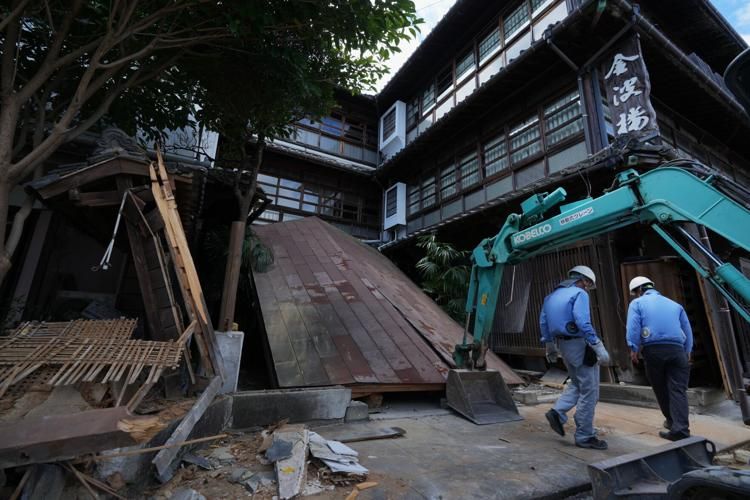
A tragic death in a parked car underscores the mounting humanitarian challenge facing Japan's Kumamoto Prefecture in the aftermath of a devastating 7.1 magnitude earthquake that struck the southern Kyushu region last Tuesday. An elderly woman in her 70s, who had sought refuge inside a vehicle without air-conditioning fuel, succumbed to heat stroke on Thursday, bringing the confirmed death toll from the natural disaster to 36. The fatality represents precisely the scenario that disaster management officials and public health experts had warned about as the quake-ravaged area grapples simultaneously with record-breaking heat and critical infrastructure failures.
Kumamoto Governor Takashi Kimura expressed deep distress over the woman's death while appealing to thousands of evacuees currently sheltering in vehicles to either maintain fuel supplies to keep their cars running or relocate to designated cooling centres. The governor's plea reflects the stark reality confronting disaster survivors: many face an impossible choice between crowded, poorly-ventilated shelters that offer communal support or the relative privacy and isolation of vehicles that rapidly become dangerous ovens in the oppressive heat. The prefecture's meteorological authority recorded temperatures reaching 36.6 degrees Celsius in Kumamoto city on Saturday, with forecasts suggesting further increases, transforming the post-quake environment into a secondary health emergency.
The infrastructure damage underlying this crisis remains extensive and multifaceted. Nearly 47,000 households still lack access to fresh water supplies, creating sanitation and drinking water challenges that compound heat-related health risks. Simultaneously, fuel shortages have paralysed the region's ability to maintain transportation and power-generation systems, with vehicles queuing for hours at reopened petrol stations awaiting gradual fuel deliveries. Over 180 homes have been destroyed entirely, while more than 3,800 structures sustained varying degrees of damage, fundamentally disrupting normal living patterns for hundreds of thousands of residents.
Evacuation shelter conditions have become increasingly untenable as temperatures soar. More than 9,000 people currently occupy crowded facilities including converted community centres, school gymnasiums, and classroom spaces, the majority of which lack adequate air-conditioning systems. Many buildings were never designed for extended emergency accommodation, meaning ventilation systems prove inadequate for both cooling and maintaining sanitation standards. This clustering of vulnerable populations in poorly ventilated spaces creates ideal conditions for heat illness, disease transmission, and psychological stress—challenges that disaster response experts have long identified as systemic weaknesses in Japan's emergency preparedness infrastructure.
The provincial government has initiated a public awareness campaign targeting evacuees, distributing leaflets encouraging those in vehicles to maintain regular fluid intake, exercise cautiously to prevent deep vein thrombosis from prolonged immobility, and seek air-conditioned refuge. Prime Minister Sanae Takaichi announced that the national government would prioritise delivery of essential supplies including portable water containers, food, sanitation facilities, air-conditioning units, and privacy partitions to evacuation centres. This commitment represents an acknowledgment that the initial disaster response, while well-intentioned, has not adequately addressed the particular vulnerabilities facing disaster survivors during an extreme heat event.
One of the earthquake's most catastrophic incidents occurred at an Aeon shopping mall in the town of Kashima, where a gas explosion following the initial quake triggered structural collapse. Authorities have concluded a protracted search-and-rescue operation at the site, extracting five survivors and recovering seven bodies, though the final casualty count for this location remains uncertain. The second floor of the commercial complex collapsed entirely after approximately 3,000 shoppers had been evacuated to an outdoor parking lot, but some employees remained inside when the explosion occurred. The incident exemplifies how secondary hazards following major seismic events can dramatically amplify casualties beyond those caused by ground movement alone.
A separate industrial tragedy unfolded at a Nippon Paper Industries factory in Yatsushiro city, where a chimney structure collapsed during the initial earthquake. Eleven employees became trapped in the facility, with rescue teams ultimately extracting two survivors while confirming nine fatalities. These industrial casualties illustrate how manufacturing complexes, often located in geologically vulnerable regions for economic reasons, face particular risks during seismic events. The factory collapse also highlights gaps in workplace earthquake preparedness, particularly regarding structural reinforcement of large industrial installations.
Search and rescue operations continue across the prefecture despite the conclusion of the Aeon Mall operation, with thousands of personnel including Self Defence Force troops, police officers, rescue specialists, and trained search dogs deployed across affected areas. Official records indicate that two additional deaths are currently under investigation to determine whether they should be classified as earthquake-related, potentially raising the eventual death toll further. The complete tally of missing persons remains unknown, reflecting the ongoing difficulty in accounting for all individuals affected by the disaster.
Medical authorities have recorded 105 injury cases within Kumamoto Prefecture directly attributable to the earthquake, ranging from crush injuries during structural collapse to trauma from falling debris. Infrastructure restoration has progressed unevenly, with power outages now affecting fewer than 900 households compared to far more extensive losses immediately following the quake. However, the restoration of electricity supply, while welcome, offers only partial relief given the simultaneous challenges of water shortages, fuel unavailability, and extreme temperatures that continue to threaten evacuee welfare.
The Kumamoto earthquake exposes enduring vulnerabilities in Japan's disaster response architecture, particularly regarding the intersection of natural hazards and climate stressors. Southeast Asian nations facing similar seismic risks and increasing heat exposure would benefit from Kumamoto's experience, which demonstrates that earthquake preparedness protocols developed during cooler seasons may prove inadequate when disasters coincide with extreme heat. The case of the woman who died in her parked car serves as a sobering reminder that post-disaster mortality extends beyond the immediate impact of ground movement, encompassing secondary hazards created by infrastructure collapse, resource scarcity, and environmental conditions that transform displacement shelters into sources of additional danger rather than safety.

