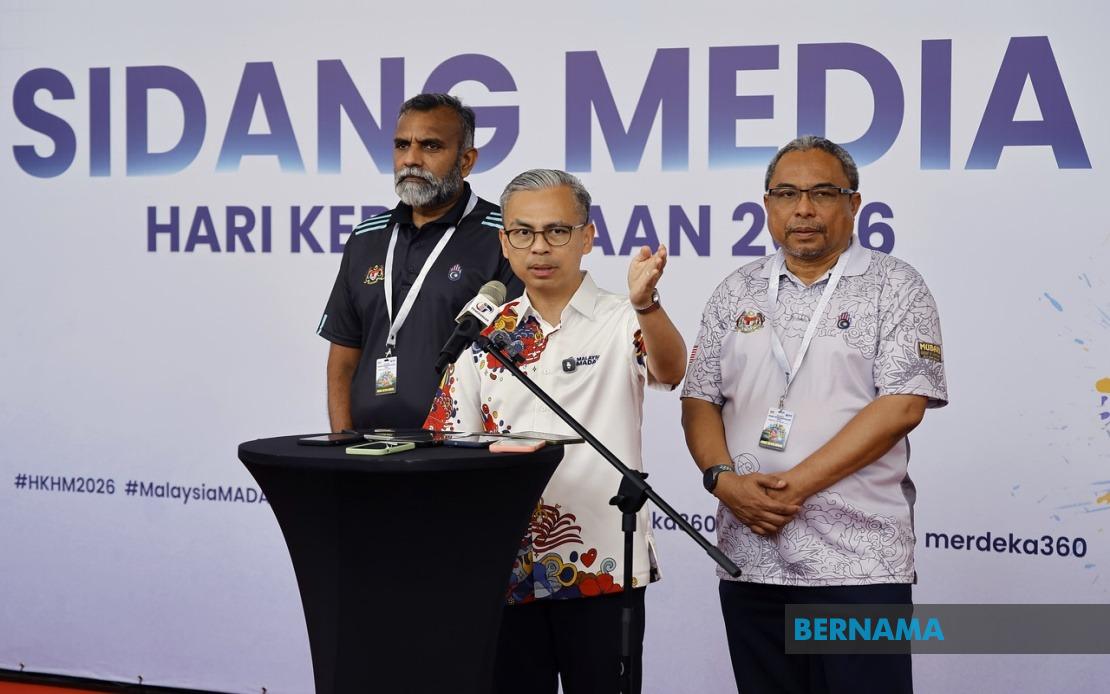
Organisers of Malaysia's 2026 National Day celebrations at Dataran Putrajaya are urging visitors to consider wearing N95 masks as a protective measure against the ongoing haze affecting air quality in the region. The guidance comes as the nation prepares for its flagship patriotic event this Monday, with authorities prioritising public health alongside the festivities scheduled for the federal administrative capital.
Communications Minister Datuk Seri Fahmi Fadzil, who chairs the main committee overseeing both the 2026 National Day and Malaysia Day celebrations, emphasised that the recommendation aligns with official health ministry guidance, particularly targeting those most vulnerable to air quality deterioration. Rather than imposing mandatory restrictions, the approach reflects a voluntary, risk-aware strategy that allows individual participants to assess their own circumstances. The minister highlighted that parents accompanying young children and individuals with respiratory conditions such as asthma should prioritise bringing their own protective masks to the event.
In a show of institutional preparedness, event organisers have procured and will distribute N95 masks to more than 10,000 participants taking part in the formal proceedings. This stockpile serves as both a practical resource and a signal of the organisers' commitment to attendee welfare. By making masks available directly to participants rather than relying solely on public awareness, the committee reduces barriers to protection adoption and demonstrates proactive health management for one of the nation's most significant ceremonial occasions.
The haze situation reflects the recurring transboundary air pollution challenge that periodically affects Malaysia and other Southeast Asian nations during certain seasons. The current deterioration has prompted similar precautions across the region's public events and indoor activities, underscoring how environmental factors now routinely influence event planning and public health protocols in Malaysia. This year's National Day celebration becomes a case study in balancing celebratory momentum with environmental reality.
Medical infrastructure forms a critical backbone of the event's health contingency planning. The Ministry of Health has deployed dedicated medical teams stationed at strategic locations throughout Dataran Putrajaya, equipped to respond immediately to any health emergencies or adverse reactions among the estimated crowds. According to Minister Fahmi's briefing following the full dress rehearsal, all medical stations were operational and functioning without reported complications, suggesting that the healthcare coordination meets professional standards for large-scale public gatherings in Malaysia.
The full dress rehearsal conducted prior to the main event proceeded without significant hitches, providing organisers with confidence in their operational arrangements. This preparatory run-through allowed authorities to test logistical chains, communication systems, and emergency protocols under conditions approximating the actual celebration, revealing any gaps that required remediation before the official date.
Media participation in covering the celebrations has surged noticeably, with 823 journalists now accredited for duty compared to approximately 600 the previous year. This expansion reflects growing domestic and international interest in Malaysia's national commemorations and suggests enhanced capacity for comprehensive documentation and narrative dissemination. The 37 percent increase in media personnel signals confidence among news organisations in the event's newsworthiness and accessibility.
Underpinning the media expansion is substantial infrastructure investment in communications capabilities. The Malaysian Communications and Multimedia Commission, working collaboratively with telecommunications providers, has installed enhanced communications equipment across 102 venues associated with the National Day celebrations. This distributed approach to network redundancy and capacity ensures that internet connectivity and data transmission remain robust throughout the celebration zone, eliminating the connectivity frustrations that sometimes hampered coverage in previous years and enabling real-time reporting from multiple simultaneous locations.
Security arrangements have drawn favourable assessments from law enforcement authorities managing public order for the event. The Royal Malaysia Police reported no security incidents of particular concern at the time of ministerial briefings, with public order being maintained satisfactorily across preparation phases. This assessment suggests that the combination of security protocols, crowd management procedures, and intelligence activities has successfully created an environment conducive to safe public gathering and celebration without requiring visible security escalation that might undermine the festive atmosphere.
The orchestrated approach to the 2026 National Day celebrations reflects Malaysia's evolving capacity to stage large-scale national events while responding to environmental and health realities. By transparently communicating health recommendations, providing material support through mask distribution, deploying adequate medical resources, and ensuring robust communications infrastructure, organisers demonstrate mature event management that prioritises attendee welfare without diminishing the ceremonial significance of the occasion. For Malaysian citizens and international observers, the celebration represents both a patriotic commemoration and a practical demonstration of institutional responsiveness to contemporary public health challenges affecting the Southeast Asian region.

