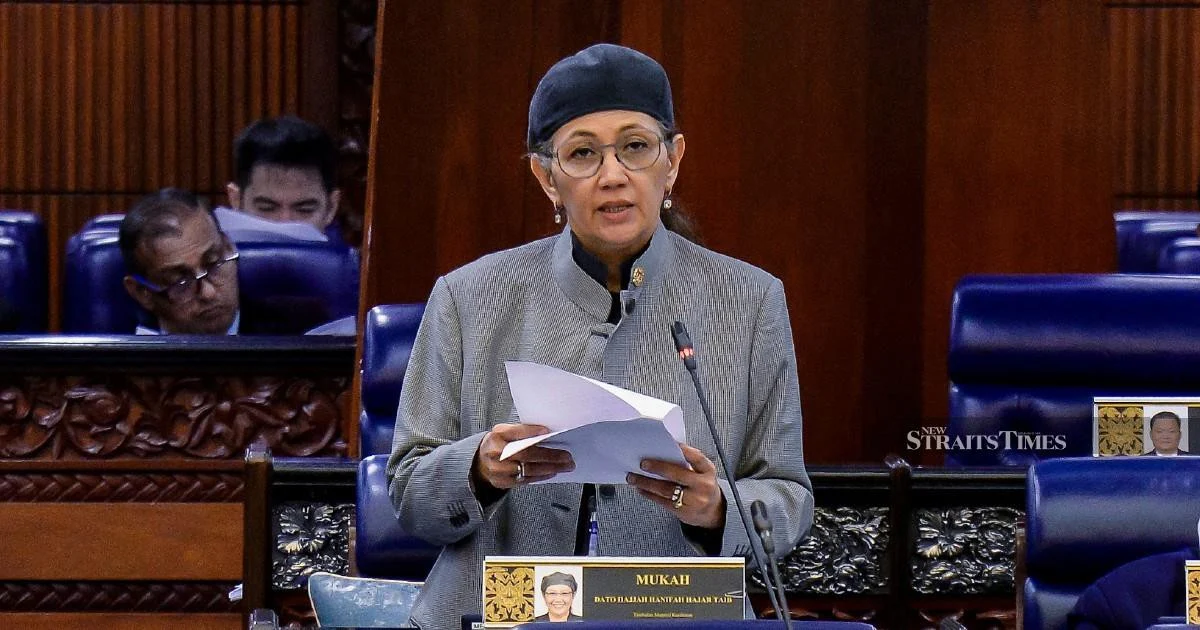
The Malaysian Health Ministry has established a special investigative committee tasked with examining claims of improper conduct by its medical personnel linked to the Taiping Prison disturbance that occurred in January of the previous year. This move represents a significant step toward addressing public concerns about the role of healthcare workers during the incident and reflects broader pressures on government institutions to demonstrate transparency and accountability.
The formation of this dedicated probe suggests that initial preliminary assessments may have uncovered sufficient grounds to warrant a deeper, more systematic examination of the medical officers' actions and decisions during the prison riot. Such committees typically have the authority to summon witnesses, review documentation, and make recommendations regarding disciplinary measures or procedural reforms. The establishment of a formal investigation vehicle indicates that the allegations—though not yet fully detailed in public records—carry sufficient institutional weight to warrant ministerial-level attention.
Prisons in Malaysia, as in many countries, present uniquely challenging operational environments where medical staff must navigate the intersection of healthcare obligations, security protocols, and the rights of incarcerated individuals. When disturbances occur, the decisions made by medical personnel regarding emergency response, treatment provision, and documentation become particularly scrutinised. The Taiping incident appears to have raised questions about whether healthcare professionals fulfilled their duties appropriately under circumstances that were undoubtedly stressful and potentially contentious.
The Health Ministry's proactive stance on this matter comes against a backdrop of increasing public and international interest in prison conditions and the treatment of detainees across Southeast Asia. Malaysia's penal system has occasionally attracted criticism from human rights observers regarding medical care standards and the handling of health emergencies in custodial settings. By initiating a formal investigation, the ministry signals an intent to address specific concerns rather than allowing allegations to fester or remain unresolved.
For Malaysian medical professionals working within correctional facilities, the investigation carries multiple implications. It underscores the importance of meticulous documentation, adherence to ethical guidelines, and maintaining professional standards even in constrained environments. Medical officers in prisons operate under dual pressures: fulfilling their duty of care to patients while respecting security imperatives. This committee's work will likely yield clarity on where the boundaries of appropriate professional conduct lie in such circumstances.
The Taiping Prison incident itself became a significant news story, with various reports emerging about the circumstances and sequence of events. Any involvement by health personnel in either the escalation or de-escalation of the situation would naturally attract scrutiny. The special committee's investigation will need to establish what medical officers were present, what decisions they made, what protocols they followed, and whether those actions aligned with established guidelines and ethical standards for healthcare provision in custodial settings.
Institutional accountability mechanisms like this committee serve multiple purposes in the Malaysian context. They demonstrate to the public that government agencies take allegations seriously and are willing to examine their own conduct. They also provide clarity to affected parties—whether detainees, prison staff, or the medical professionals themselves—about what transpired and whether any breaches of duty occurred. This transparency, though sometimes politically uncomfortable, ultimately strengthens public confidence in institutional integrity.
The investigation's outcomes may have implications extending beyond the immediate personnel involved. Findings could lead to revisions of protocols governing medical response in prison emergencies, additional training requirements for health staff, or enhanced coordination mechanisms between health and security personnel. Such systemic improvements, if warranted, would benefit not only Taiping Prison but potentially the broader national prison healthcare system.
For Malaysian civil society and advocacy organisations focused on detainee rights and prison reform, this committee represents both an opportunity and a test. They will likely scrutinise the investigation's methodology, the scope of its mandate, and whether its recommendations lead to meaningful change. The credibility of the inquiry depends partly on its perceived independence, thoroughness, and willingness to reach conclusions even if they prove politically uncomfortable for the ministry.
Regionally, Malaysia's handling of prison incidents and the transparency with which it investigates institutional conduct influences its standing among Southeast Asian peers. Countries across the region face similar challenges in managing corrections systems where security, healthcare delivery, and human rights protections must coexist. How Malaysia navigates this particular investigation may inform approaches elsewhere in the region and contribute to developing stronger standards for healthcare provision in custodial environments.
The committee's work occurs within broader global conversations about prison reform and detainee welfare. International bodies monitoring human rights increasingly focus on conditions within correctional facilities, and the medical treatment of incarcerated individuals represents a critical indicator of whether systems function humanely and professionally. Malaysia's willingness to investigate these allegations publicly contributes to that evolving conversation.
As the committee proceeds with its investigation, stakeholders will be watching for clear timelines, transparent progress updates, and substantive findings. The resolution of these allegations—whether they result in commendations for professionalism, disciplinary actions, systemic recommendations, or some combination thereof—will send important signals about the Health Ministry's commitment to accountability and the standards it expects from its personnel regardless of their work environment.

