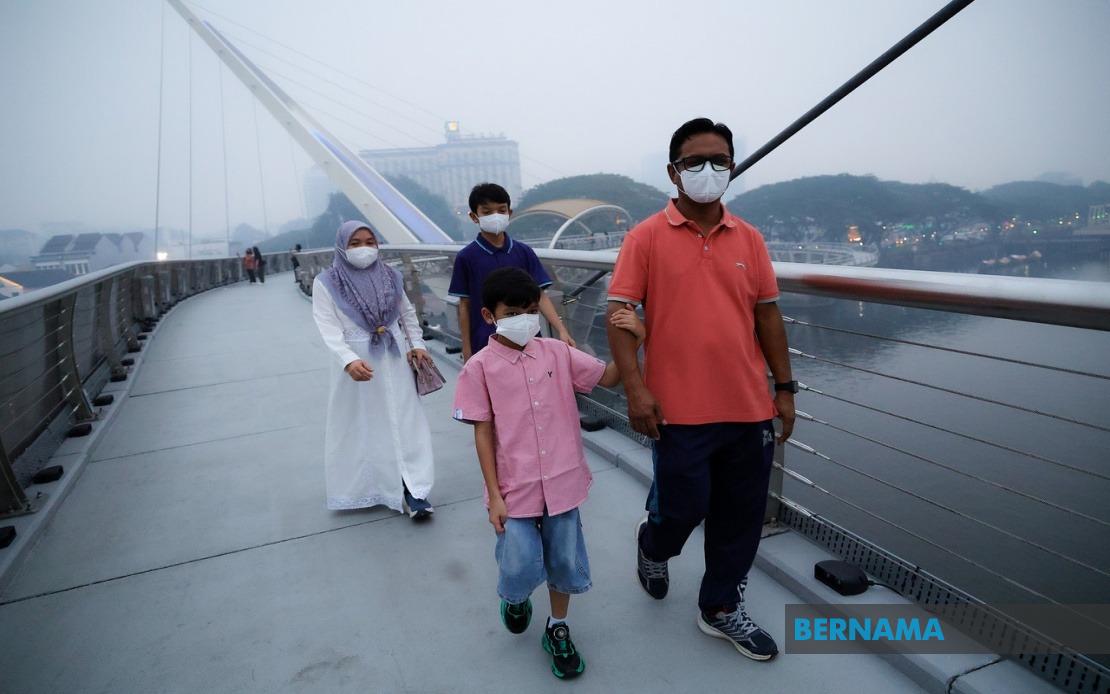
With haze episodes becoming increasingly common across Malaysia, health experts are pressing the public to take daily air quality readings seriously and implement proper protective strategies to safeguard their wellbeing. The message from medical professionals is clear: awareness of Air Pollutant Index (API) figures published by the Department of Environment should guide decisions about outdoor activity, and compliance with protective measures remains inconsistent despite mounting health risks.
Dr Anas Ahmad Jamhari, a lecturer at Universiti Sultan Zainal Abidin's Faculty of Health Sciences, emphasises that individuals should consult current API readings before venturing outdoors, especially when levels surpass 100. For those unable to stay indoors, proper use of N95 masks becomes essential to filtering harmful PM2.5 fine particles. However, effectiveness depends critically on correct application—the mask must fit snugly against the face to create a proper seal, a requirement frequently overlooked in public practice. Loose masks, those worn incorrectly, damp ones, damaged masks, or masks worn over facial hair all compromise their filtering capacity substantially, meaning many individuals obtain minimal protection despite believing themselves adequately shielded.
Children present a particular challenge in mask usage, as finding correctly sized masks that seal properly around smaller faces proves difficult. Adults working outdoors for extended periods remain the group most suited to N95 protection, provided they maintain strict wearing standards and understand that even brief removal undermines effectiveness. The gap between theoretical protection and actual implementation in daily life represents one reason respiratory complaints continue rising throughout haze episodes despite public availability of protective equipment.
Physical exertion during poor air quality episodes dramatically increases health vulnerability, Dr Anas warns. Running, cycling, and competitive sports accelerate breathing rates, causing individuals to inhale substantially greater volumes of contaminated air and allowing fine particles deeper penetration into respiratory passages. Medical facilities continue treating people who exercise outdoors despite unhealthy air classifications, reflecting a persistent public tendency to maintain normal routines regardless of environmental hazard levels. This behaviour pattern carries both immediate and long-term consequences, triggering acute respiratory episodes while simultaneously accumulating damage that may produce chronic health impairment.
Indoor management requires equally deliberate action. Maintaining sealed doors and windows prevents external pollutants from entering living spaces, while simultaneously eliminating internal sources becomes crucial. Cigarette and vape smoke, incense and candles burning indoors, and cooking activities generating smoke all degrade air quality within homes. Vehicle air-conditioning systems merit specific attention—drivers should configure systems to recirculate interior air rather than drawing contaminated air from outside, a setting many motorists never adjust or remain unaware exists.
From a chemical perspective, haze represents considerably more than simple smoke reducing visibility. Dr Anas explains that haze constitutes a complex mixture of particles and chemical compounds, with PM2.5 particles warranting particular concern due to their microscopic dimensions. These particles penetrate deep within lung tissue, settling in the respiratory system where they trigger oxidative stress. This process initiates inflammation, causes cellular damage, and impairs normal respiratory function—mechanisms operating regardless of whether individuals perceive visible symptoms, meaning significant harm can occur unnoticed during episodes of supposedly mild haze.
Datuk Dr Zainal Ariffin Omar, a public health medicine specialist, introduces a frequently overlooked dimension: the intersection between haze and thermal conditions. Elevated temperatures accompanying poor air quality create compounded health stresses. He advises citizens to maintain vigilant hydration during episodes, as the combined effect of air pollution and heat substantially elevates heatstroke and dehydration risks. During El Niño phenomena bringing both intense heat and haze, Malaysia effectively faces dual environmental threats requiring comprehensive protective strategies addressing both dangers simultaneously rather than focusing narrowly on API figures alone.
Treating haze as merely seasonal rather than a pressing ongoing concern allows complacency to undermine preparedness. When communities approach haze episodes as temporary nuisances subsiding naturally, they defer protective actions until API readings reach crisis levels, missing opportunities for early intervention when simple precautions prevent health complications. Dr Zainal advocates strengthening public awareness campaigns through consistently repeated, straightforward messaging that motivates action during early haze development rather than reactive responses to severe episodes.
Recent epidemiological data illustrates the magnitude of haze-related health impacts. The Health Ministry documented asthma cases at sentinel health facilities surging more than eightfold to 1,811 cases during Epidemiological Week 34, compared to merely 219 cases the previous week. Conjunctivitis cases similarly escalated from 146 to 720 during the identical period. These statistics, while staggering in their proportional increase, represent only recorded cases at monitored facilities—actual community prevalence certainly exceeds reported figures as many individuals experience respiratory irritation and eye discomfort without seeking medical attention.
The underlying challenge extends beyond simple lack of information. Australasian populations generally understand haze hazards intellectually yet frequently prioritise convenience and normal lifestyle maintenance over protective measures. Cultural attitudes toward outdoor activities, workplace demands requiring outdoor labour, and individual risk perception all contribute to continued haze exposure despite environmental warnings. Effective public health responses must therefore combine technical guidance with behavioural approaches addressing why individuals ignore warnings, creating conditions where protective behaviour becomes the socially normalised default rather than an optional precaution undertaken during crises.
For Malaysian and Southeast Asian communities facing intensifying haze episodes driven by regional land-clearing practices and climate variability, the expert consensus emphasises that health protection requires sustained vigilance rather than sporadic responses. Monitoring API readings should become habitual practice integrated into daily decision-making about outdoor engagement. Mask usage, when adopted, demands correct application principles rather than symbolic wearing. Indoor air management requires systematic household approach. Simultaneously addressing heatwave risks, hydration, and avoiding strenuous outdoor exertion creates layered protection. The experts' consistent message reflects a sobering reality: haze episodes will recur predictably, and individual precautions, multiplied across millions of people, remain the most immediately available tool for reducing population health burden while communities address the underlying regional environmental factors driving these episodes.

