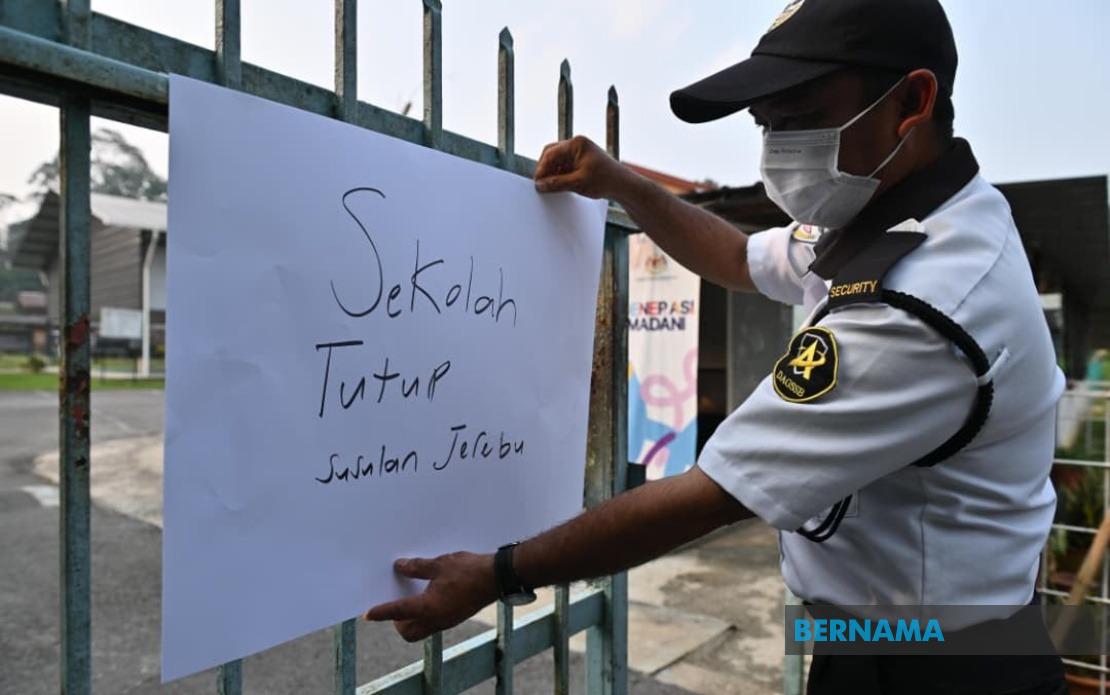
The education system in Sarawak's Serian district came to a standstill on August 12 as state authorities implemented emergency protocols in response to dangerous air quality conditions. One hundred and eight schools across the region were ordered closed, marking a significant disruption to classroom instruction driven by smoke-laden skies that have plagued the state since the beginning of the month. The decision reflected growing concerns among health and safety officials over the cumulative health risks posed by prolonged exposure to polluted air, particularly for vulnerable school populations.
The closure directive was issued by the Sarawak State Disaster Management Committee following Air Pollutant Index readings that breached the critical 200-point ceiling established under national protocols. At the time the announcement was made, Serian itself recorded an API measurement of 202, while the nearby town of Tebedu registered 212—both classified as "very unhealthy" and triggering automatic suspension of all educational activities within affected zones. The threshold-based system represents a structured approach to managing public health during transboundary haze episodes, eliminating discretionary decision-making in favour of predetermined action levels.
To prevent educational losses during the closure period, the Sarawak State Education Department implemented a transition to home-based teaching and learning, referred to locally as PdPR. This shift ensures that students can continue their studies remotely despite physical schools remaining shuttered, allowing the academic calendar to proceed without cumulative delays. The contingency arrangement has become a familiar tool across Malaysia and the region during environmental emergencies, though its effectiveness depends on student access to technology and internet connectivity—a challenge that remains uneven across Sarawak's diverse geography.
The deterioration in air quality across Sarawak has been steep and concerning. Officials noted that API readings have followed an upward trajectory since August 1, indicating a sustained worsening of atmospheric conditions rather than isolated pollution spikes. By mid-afternoon on August 12, the impact was geographically widespread: beyond the two districts in the "very unhealthy" range, eleven additional areas—including major urban centres such as Kuching, Sibu, Bintulu, and Miri—had slipped into the "unhealthy" classification with API readings between 101 and 200. This distribution pattern suggests a region-wide phenomenon affecting coastal and inland communities alike.
The Air Pollutant Index scale employed by Malaysian authorities provides clear delineation between safety categories, though the thresholds themselves reflect international standards for air quality assessment. Readings from zero to 50 represent good air quality suitable for unrestricted outdoor activities. The 51 to 100 band indicates moderate conditions where sensitive individuals may experience minor symptoms. Once readings climb into the 101 to 200 "unhealthy" range, outdoor exertion becomes inadvisable for many population segments. The 201 to 300 "very unhealthy" bracket triggers institutional closures and widespread public health warnings. Beyond 300 points, conditions reach "hazardous" levels where even brief outdoor exposure poses serious risks. Malaysia's decision to anchor school closures at the 200 threshold represents a precautionary stance designed to intercept health impacts before they become acute.
State disaster management officials took the opportunity to issue broader public health guidance extending beyond the education sector. The Sarawak State Disaster Management Committee urged residents to curtail outdoor recreational activities, particularly when air quality readings approached or exceeded unhealthy thresholds. The guidance explicitly identified vulnerable populations deserving heightened protection: children whose respiratory systems are still developing; elderly residents whose cardiovascular and respiratory reserves may be compromised; pregnant women whose physiological demands increase susceptibility; and individuals with pre-existing respiratory or cardiac conditions for whom polluted air can trigger serious medical episodes. These groups were encouraged to remain indoors with air-filtered environments and to limit physical exertion during high-pollution periods.
The haze situation unfolding in Sarawak reflects a recurring challenge for the state and the broader Southeast Asian region, where transboundary smoke from forest fires—whether in Sarawak itself or in neighbouring jurisdictions—creates public health emergencies that demand coordinated institutional responses. School closures represent just one element of broader emergency management protocols that may eventually encompass workplace safety measures, hospital surge planning, and public advisories. The August 2024 episode demonstrates that despite decades of experience managing haze crises, the phenomenon continues to disrupt normal economic and social functioning with little warning.
State authorities also felt compelled to address information management, specifically cautioning the public against speculation and unverified claims regarding air quality conditions. Officials stressed that residents should rely exclusively on data disseminated through official government channels rather than social media accounts, rumour networks, or other informal sources. This directive reflects a broader pattern across Malaysian governance wherein authorities seek to maintain informational control during crisis periods, though such messaging can sometimes generate public skepticism if official communications are perceived as delayed, opaque, or inconsistent with ground-level observations.
For Malaysian readers observing developments in neighbouring Sarawak, the school closures and API readings serve as a potent reminder of regional interdependencies regarding air quality. Peninsular Malaysia has experienced its own haze episodes linked to transboundary pollution, most notably the severe 2015 crisis when API readings in parts of the peninsula surpassed 300. The Sarawak situation demonstrates that even states with lower population densities and less intensive industrial activity remain vulnerable to sudden environmental degradation driven by factors beyond local control. The political economy of haze management—involving questions of burden-sharing between affected countries, enforcement of environmental regulations, and compensation for damages—remains unresolved at the regional level, ensuring that such crises will likely recur.

