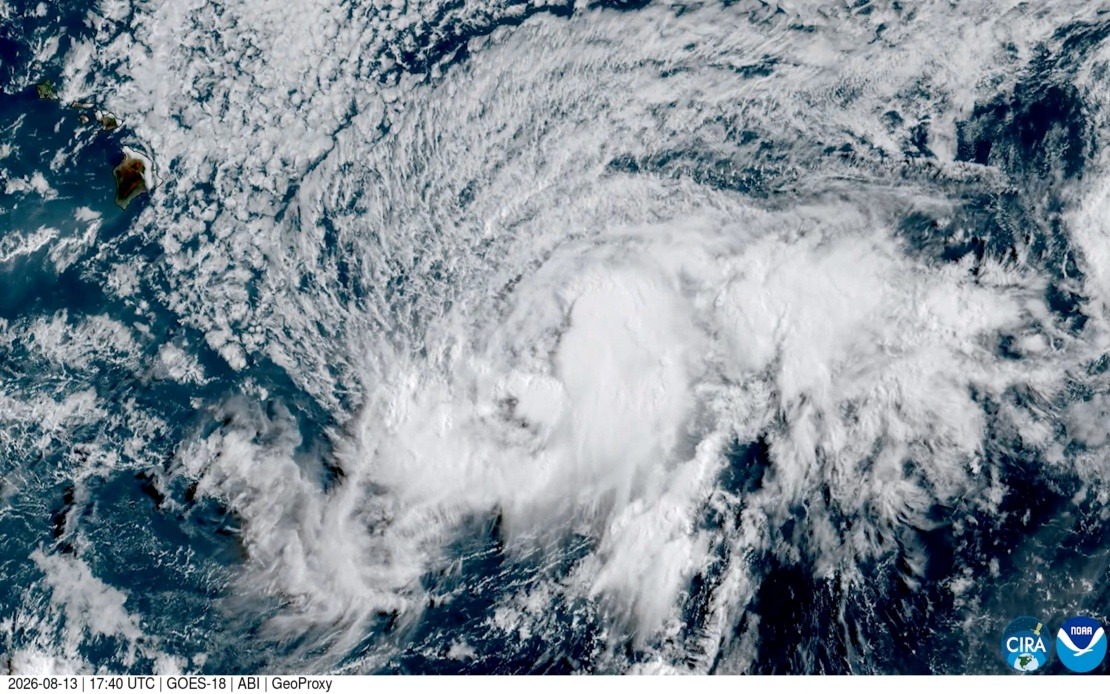
Hawaii's Big Island faces an exceptionally rare meteorological threat this weekend as Tropical Storm Lala accelerates its intensification and charts a course directly toward the Hawaiian archipelago. Forecasters with the National Hurricane Centre have determined that the storm system will graduate to full hurricane status well before making contact with the island, setting the stage for what could be a historically significant weather event. The timing and trajectory place the Big Island squarely in Lala's path on Saturday, with meteorological models showing the system maintaining significant strength as it approaches landfall.
The significance of this developing situation cannot be overstated for residents across the Hawaiian Islands. Should Tropical Storm Lala successfully transition to hurricane-strength winds and make landfall on the Big Island, it would represent the first hurricane to directly strike that particular island since 1871—a span of more than 150 years. This extended hiatus from direct hurricane impacts has left an entire generation of residents and infrastructure systems without contemporary experience managing such an event. The rarity of this occurrence underscores just how protected the Big Island has been by geographic fortune and shifting storm patterns across the Pacific basin.
Historical records, pieced together from contemporary newspaper accounts and analysed by researchers at the University of Hawaii, document that the last major hurricane to reach the Big Island arrived in 1871 as a Category 3 system. That storm struck the northeast corner of the island, providing the only direct comparison point available to modern meteorologists and emergency planners. Vanessa Almanza, a meteorologist stationed with the National Weather Service in Honolulu, noted the exceptional nature of this forecast scenario. She observed that while satellite surveillance technology has revolutionised hurricane tracking and prediction since 1871, the current projection shows Tropical Storm Lala tracking perilously close to the Big Island's southern tip, potentially threatening densely populated communities and vital infrastructure along that portion of the coast.
The hazards posed by an intensifying tropical system extend well beyond the violent winds typically associated with hurricanes. The National Hurricane Centre emphasises that Tropical Storm Lala will transport enormous quantities of moisture across the Big Island, resulting in torrential rainfall that poses severe flooding risks across the landscape. Particular concern centres on areas with vulnerable drainage infrastructure, low-lying communities, and regions prone to flash flooding during extreme precipitation events. The combination of saturated soil conditions and additional heavy rainfall could trigger mudslides and debris flows in steep terrain, compounding the damage footprint beyond traditional hurricane-force wind impacts.
Compounding these water-related hazards is an equally concerning threat from wildfire activity. The atmospheric conditions accompanying hurricanes and tropical storms can paradoxically create dangerous fire weather scenarios, particularly in areas where the system's circulation creates localised wind acceleration and dramatic humidity fluctuations. Strong gusts generated by the hurricane's outer bands could rapidly spread any fires that ignite during or immediately following the storm passage, while landscape vegetation desiccated by the pre-storm weather pattern could burn with exceptional ferocity. This combination of factors means the Big Island faces a dual natural disaster scenario—simultaneous threats from destructive flooding and accelerated wildfire spread.
State officials responded to the escalating threat by issuing a hurricane warning for the Big Island itself, signalling the highest level of preparedness alert. Simultaneously, meteorologists extended tropical storm warnings across Maui County, encompassing the islands of Maui, Molokai, Lanai, and Kahoolawe. This broader warning zone reflects the uncertainty inherent in hurricane track forecasting and the precautionary principle adopted by the National Weather Service. Even islands that escape direct hurricane-force winds face elevated risk from storm-generated heavy rainfall, strong winds, and rough seas that could disrupt transportation, communications, and supply chains across the regional economy.
The implications for Hawaii's broader economy and tourism sector warrant consideration. The Big Island, while less densely developed than Oahu, generates substantial economic activity through tourism, agriculture, and residential development. A significant hurricane impact could disrupt air transportation into and out of the island, strand tourists, damage resort infrastructure, and disrupt agricultural operations during a critical period. Beyond the immediate physical damage, the psychological and operational impacts of the first major hurricane strike in 150 years would likely reshape how both residents and businesses approach disaster preparedness and climate resilience in the Hawaiian Islands.
For mainland United States viewers and those monitoring Pacific weather systems from across the region, including Malaysian and Southeast Asian observers tracking regional climate patterns, Tropical Storm Lala represents another data point in discussions about tropical cyclone behaviour and climate system dynamics. The storm's intensification trajectory and the relatively rare prospect of a direct Big Island hurricane strike underscore how individual weather systems can deviate from broader historical trends. Atmospheric scientists continue monitoring whether shifting ocean temperatures, changing pressure patterns, or other climatic factors might be influencing hurricane genesis and intensification rates across the Pacific Basin.
Emergency management officials throughout Hawaii spent the Thursday and Friday prior to expected weekend landfall distributing emergency supplies, pre-positioning rescue equipment, and conducting final public outreach campaigns encouraging residents to secure loose outdoor items, stock essential supplies, and prepare evacuation plans. The substantial lead time provided by accurate hurricane forecasting allows for meaningful preparation, distinguishing modern disaster response from the minimal warning circumstances that characterised the 1871 event. Residents across the Hawaiian Islands remain vigilant as weather systems continue their relentless advance across the Pacific, with the Big Island population preparing for an encounter with tropical cyclone forces their community has not directly experienced in living memory.

