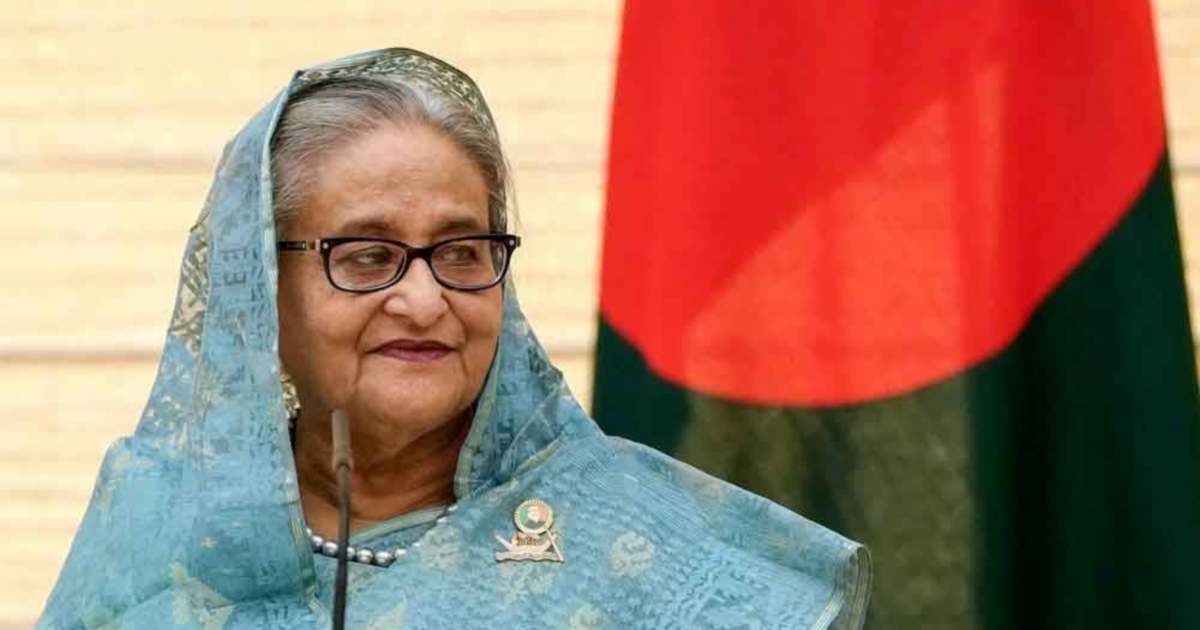
Former Prime Minister Sheikh Hasina has declared her intention to return to Bangladesh before year's end, defiantly disregarding a capital conviction imposed while she remains abroad. The statement represents a significant escalation in the country's ongoing political standoff and raises questions about the stability of the interim administration currently governing the nation following her ouster from office.
Hasina's defiant posture comes in direct response to a death sentence delivered in absentia, which she has categorically rejected as lacking legal legitimacy. According to the ousted leader, the verdict violates constitutional principles and represents a weaponisation of the judiciary for partisan political ends. Her characterisation of the proceedings as unconstitutional challenges the legitimacy of the current legal framework operating under the interim government and suggests her camp views the transitional administration as illegitimate.
The death sentence itself carries profound implications for Bangladesh's democratic trajectory. Capital convictions against former heads of state typically signal a breakdown in institutional restraint and the absence of consensus among political elites regarding acceptable bounds of post-power accountability. Rather than serving as a deterrent, such dramatic measures often harden opposing factions and deepen polarisation within the political landscape. Bangladesh has experienced this dynamic before, with previous cycles of revenge prosecutions against ousted leaders contributing to successive crises of governance.
Hasina's vow to return introduces substantial uncertainty into Bangladesh's near-term political outlook. Her refusal to remain in exile signals that she views her political career as unfinished and her legitimacy as undiminished by her removal from power. For observers monitoring the region, her statement represents more than a personal pledge—it constitutes a declaration that the transition period will not result in any durable political settlement without her participation or accommodation.
The timing of her declaration carries weight, particularly given how political transitions in South Asia frequently hinge upon whether ousted leaders can credibly signal a capability to mobilise support. Hasina's Awami League party retains substantial organisational infrastructure and popular backing in many parts of the country. If she succeeds in orchestrating a return, either voluntarily or through political pressure, the interim government would face immense challenges in maintaining its authority or implementing its stated reform agenda.
For Malaysia and other Southeast Asian nations monitoring Bangladesh's trajectory, Hasina's announcement reinforces concerns about institutional instability in a country of 170 million people that serves as a vital trading partner and regional anchor. Bangladesh's political turmoil can create broader ripple effects throughout South Asia, influencing refugee flows, trade patterns, and security dynamics that Malaysian policymakers must navigate carefully. The potential for renewed civil unrest or authoritarian consolidation would complicate regional cooperation frameworks and economic integration efforts.
The interim government faces an acute dilemma. Allowing Hasina's return risks empowering a political force it has invested significant effort in removing and marginalising. Conversely, preventing her return through force would confirm allegations that the transition represents a coup rather than a legitimate constitutional process, potentially triggering sustained resistance from her supporters. The government's inability to credibly demonstrate that it can manage Hasina's return through legal and constitutional means suggests the transitional administration has not yet established the institutional legitimacy required for genuine democratic consolidation.
Hasina's international position remains consequential. Her family's historical prominence in Bangladesh politics and the Awami League's international connections mean that her case has attracted international scrutiny. Significant segments of Bangladesh's diaspora, particularly in Western countries, view the proceedings against her through a lens of political persecution rather than genuine criminal justice. This international dimension could complicate any scenario in which the interim government attempts to enforce the death sentence or prevents her repatriation.
The broader pattern evident in Hasina's statement reflects a fundamental truth about South Asian politics: leadership transitions driven by extra-constitutional means frequently fail to produce stable settlements. Without some form of political accommodation between competing elites, or unless the interim government can demonstrate transformative reforms that create a new consensus around institutional legitimacy, Bangladesh faces the prospect of renewed confrontation once transition measures expire or elections are scheduled.
Hasina's pledge also signals to her political base that she remains committed to contesting for power rather than accepting permanent exile or marginalisation. This resolute stance likely strengthens her position within the Awami League hierarchy and reinforces the message that the current government should be viewed as temporary and provisional. For supporters of democratic norms in Bangladesh, the standoff between Hasina and the interim administration represents a test of whether the country can develop mechanisms for peaceful political contestation that transcend the cycles of removal, revenge, and return that have characterised its recent political history.
The coming months will reveal whether Hasina's declaration represents a credible commitment backed by organisational capacity, or whether it functions primarily as a rhetorical assertion designed to maintain her political relevance during a period of enforced absence. Either way, her vow has introduced a definitive timeline into Bangladesh's transition process, ensuring that the political question she represents will demand resolution within a compressed timeframe rather than languishing indefinitely in the background of public consciousness.

