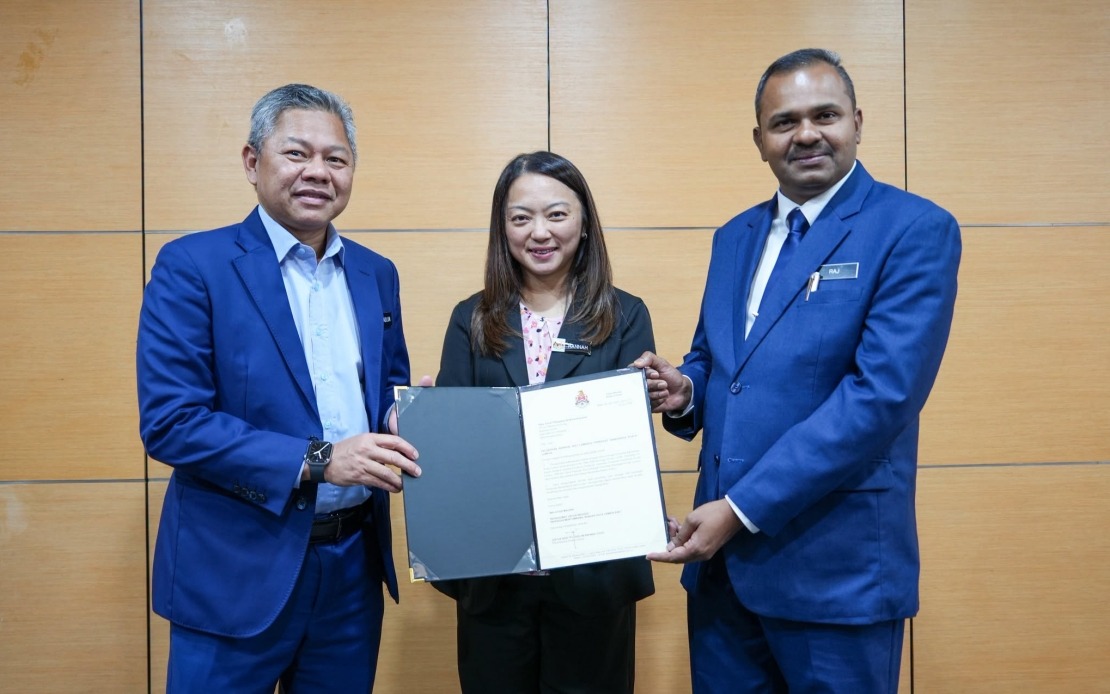
Federal Territories Minister Hannah Yeoh has expressed her confidence in newly appointed Kuala Lumpur City Advisory Board member S. Thiyagaraj, an ex-prison officer whose 18-year career in the corrections sector gives him extensive experience in institutional management and governance. The appointment represents a deliberate move to bring professional expertise from outside the conventional civil service into the city's decision-making structures, reflecting a broader strategy to enhance the quality of advice available to municipal leadership.
Thiyagaraj received his formal appointment letter from Kuala Lumpur's Mayor, Datuk Seri Fadlun Mak Ujud, during a ceremony in which Hannah Yeoh was present to witness the handover. The minister's public endorsement signals institutional backing for the new board member and underscores the government's commitment to recognizing capable individuals who have demonstrated competence in senior roles, regardless of their professional background. This cross-sector recruitment approach is increasingly common in Malaysian governance as policymakers seek to inject fresh perspectives into advisory bodies.
Hannah's statement stressed the pivotal contribution that board members are expected to make to Kuala Lumpur's development trajectory. She outlined that the advisory board functions as a critical interface between municipal administration and resident interests, offering the Mayor analytical input on complex urban challenges including infrastructure, planning, and service delivery. The emphasis on transparency and responsiveness suggests the administration is conscious of public expectations for accountable governance, particularly in the capital city where residents represent diverse constituencies with varying needs and expectations.
Thiyagaraj's professional record spans from 2005 to 2023 within the Prisons Department, where he advanced to the rank of Assistant Superintendent in the Technical Intelligence and Investigation Unit. His tenure in prison administration exposed him to operational challenges related to security systems, resource allocation, and institutional effectiveness—skills that translate meaningfully to urban governance contexts where efficiency and systematic problem-solving are paramount. The technical intelligence background particularly suggests capacity for data-driven decision-making, a quality increasingly valued in city management.
The Kuala Lumpur City Advisory Board itself represents an important institutional mechanism within Malaysia's federal capital governance structure. Unlike municipal councils in many other countries, Kuala Lumpur operates under special federal administration, with the Mayor serving as the chief executive under broader ministerial oversight. Advisory boards supplement this structure by incorporating external voices and expertise, creating a form of collaborative governance that balances bureaucratic accountability with stakeholder input. The composition and caliber of board members therefore carries significance for how effectively the city's development agenda is formulated and executed.
Hannah's remarks underscored the expectation that board members discharge their responsibilities with integrity and professionalism, language that reflects ongoing concerns about governance standards in Malaysian public institutions. By highlighting these qualities explicitly, the minister was effectively setting a performance benchmark while demonstrating that appointments are not merely ceremonial but come with substantive expectations for diligent service. This framing also implicitly acknowledges public scrutiny of how advisory positions are allocated and who gains influence over municipal affairs.
The appointment process for city advisory boards in Kuala Lumpur typically involves consideration of candidates' professional qualifications, sectoral background, and perceived capacity to contribute meaningfully to policy discussions. Thiyagaraj's selection suggests that the appointing authorities valued his operational experience in managing complex institutional systems, particularly his exposure to technical and investigative functions within a hierarchical environment. Former military, police, or corrections personnel often transition into governance advisory roles, bringing institutional discipline and systematic thinking alongside deep experience in managing large organizations.
For Malaysian observers of governance developments, this appointment reflects broader trends toward professionalizing advisory structures and deliberately sourcing expertise beyond traditional political networks. The visibility of Hannah Yeoh's involvement in publicly welcoming the appointee also demonstrates how ministerial-level engagement can elevate the status of technical advisory bodies, potentially enhancing their practical influence over municipal strategy. In a city where quality of governance directly affects millions of residents' daily experiences, the character and composition of advisory mechanisms merit serious public attention.
The timing and public prominence of this appointment announcement suggest alignment with any current municipal priorities or strategic reviews that might benefit from fresh analytical input. Thiyagaraj's background in intelligence and investigation functions could prove particularly valuable if Kuala Lumpur's administration is examining systemic inefficiencies or exploring more evidence-based approaches to service delivery. His integration into the advisory framework represents an institutional investment in strengthening the intellectual resources available to senior decision-makers within the city administration, a development that carries implications for how effectively municipal challenges are diagnosed and addressed.

