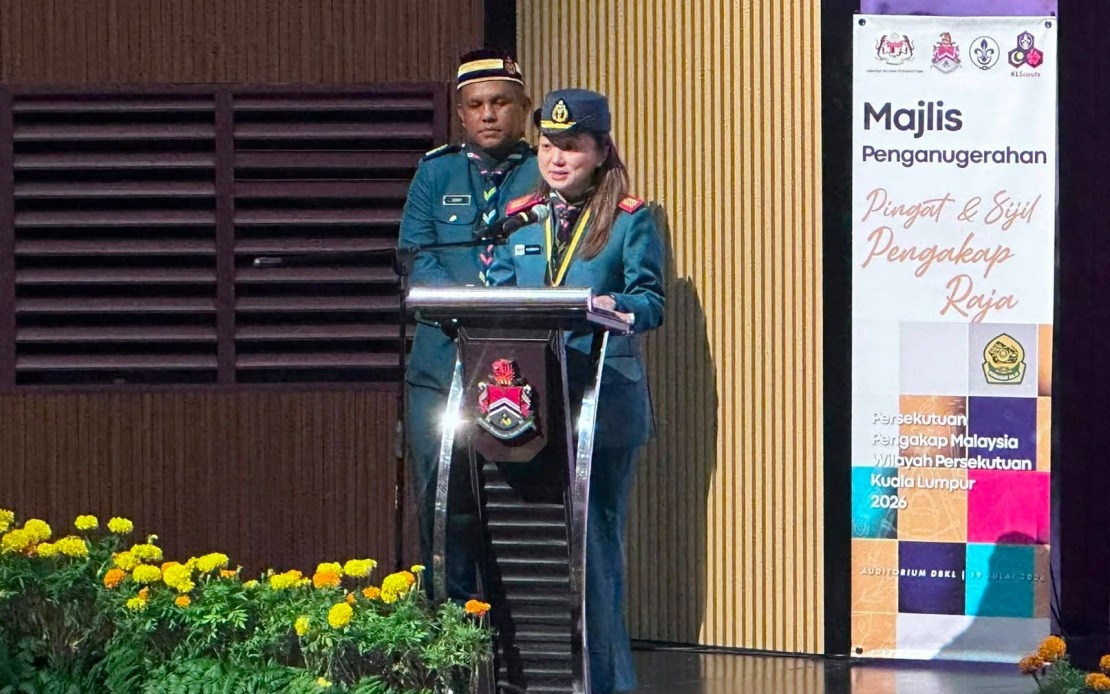
Minister in the Prime Minister's Department (Federal Territories) Hannah Yeoh has assumed the role of president of the Federal Territories State Scouts Council, marking a significant institutional leadership position in the nation's youth development framework. The formal proclamation took place during a ceremony at City Hall Auditorium in Kuala Lumpur on July 19, coinciding with the 2026 Kuala Lumpur Federal Territory King's Scout Medal and Certificate Presentation Ceremony, underscoring the government's commitment to recognizing excellence in scouting and supporting youth advancement.
Yeoh's appointment comes with immediate financial backing for youth programmes. The minister announced a total ministerial allocation of RM20,000 earmarked specifically to strengthen scouting activities across the Federal Territories. This two-tranche funding approach demonstrates strategic prioritization of youth engagement—RM10,000 was allocated to the Kuala Lumpur Federal Territory branch of the Scouts Association of Malaysia to develop additional school holiday programmes that will broaden opportunities for young people to participate in structured scouting activities during recreational periods.
Recognizing potential barriers to youth participation, Yeoh supplemented this initial allocation with an additional RM10,000 to fund specialized training initiatives targeting young people who may face obstacles in accessing conventional scouting programmes. This targeted approach addresses equity concerns within youth development, ensuring that financial constraints do not prevent interested individuals from engaging in scouting's leadership and character-building framework.
The ceremony also witnessed the proclamation of Kuala Lumpur City Hall Executive Director Rosli Nordin as chairman of the Kuala Lumpur Federal Territory State Scouts Council, further strengthening the institutional linkage between municipal administration and youth development infrastructure. This dual appointment reflects a coordinated governmental approach to implementing scouting initiatives at both state and municipal governance levels.
At the same event, Yeoh presented the King's Scout Certificate to 58 recipients—the pinnacle accolade within Malaysian Scouting. This award represents the apex of achievement for scouts who have demonstrated exceptional competency across multiple dimensions including leadership capabilities, technical proficiency, personal resilience, active community engagement, and steadfast adherence to Scout principles and ethics. The King's Scout distinction serves as external validation of recipients' transformation into disciplined young leaders characterized by personal integrity and demonstrated commitment to societal service.
Beyond the highest honour, 75 scout leaders received Chief Scout's Commendation Certificates, acknowledging their contributions to mentoring and organizational leadership within the scouting movement. An additional 108 individuals were awarded Federal Territories Scouts Wangsa Certificates, recognizing their service and dedication as scout leaders within the territory's scouting structure.
The ceremony attracted prominent national figures instrumental in Malaysia's scouting infrastructure. Chief Scout of Malaysia Major General Datuk Prof Dr Mohd Zin Bidin attended alongside Tan Sri Johari Abdul, who serves both as a National Scout Council member and Speaker of the Dewan Rakyat, indicating cross-institutional recognition of scouting's significance in national youth development policy.
Yeoh's leadership appointment carries particular significance given the Federal Territories' unique administrative status and concentrated urban youth population. As a federal enclave comprising Kuala Lumpur, Labuan, and Putrajaya, the Federal Territories represent a substantial proportion of Malaysia's urban youth demographic. Enhanced scouting infrastructure within these areas could establish benchmarks for youth programme implementation that other state governments might subsequently emulate, creating potential ripple effects throughout the nation's youth development ecosystem.
The scouting movement in Malaysia has historically functioned as a foundational institution for character formation and civic engagement, particularly among school-age populations. By securing ministerial-level leadership and dedicated funding, the Federal Territories Scouts Council now operates with heightened institutional visibility and resource security. This positioning enables the organization to expand programme scope, enhance training delivery capacity, and potentially develop innovative scouting activities suited to contemporary urban youth contexts.
The financial commitment of RM20,000, while modest in budgetary terms, carries symbolic weight regarding governmental prioritization of structured youth development beyond conventional classroom environments. In an era where youth engagement patterns have shifted toward digital platforms and informal networks, scouting's emphasis on experiential learning, face-to-face mentorship, and structured progression through defined achievement levels offers counterbalance to purely technology-mediated youth experiences.
Yeoh's dual focus—allocating resources for mainstream programme expansion while simultaneously addressing accessibility barriers—reflects sophistication in youth policy design. Rather than assuming uniform programme fit for all demographics, this differentiated approach acknowledges that scouting participation patterns vary across socioeconomic strata, geographic distribution, and individual circumstance. By dedicating specific resources to reach underserved youth populations, the allocation strategy positions scouting as inclusive institution rather than exclusive club, potentially broadening recruitment and retention.
The appointment and funding commitment signal governmental intent to strengthen youth-oriented institutions as civic participation mechanisms. Scouting's structured framework for developing leadership competencies, civic responsibility, and community service orientation aligns with broader policy objectives regarding youth employability and social cohesion, particularly within rapidly urbanizing Federal Territories contexts where traditional community anchors may be less established than in other regions.

