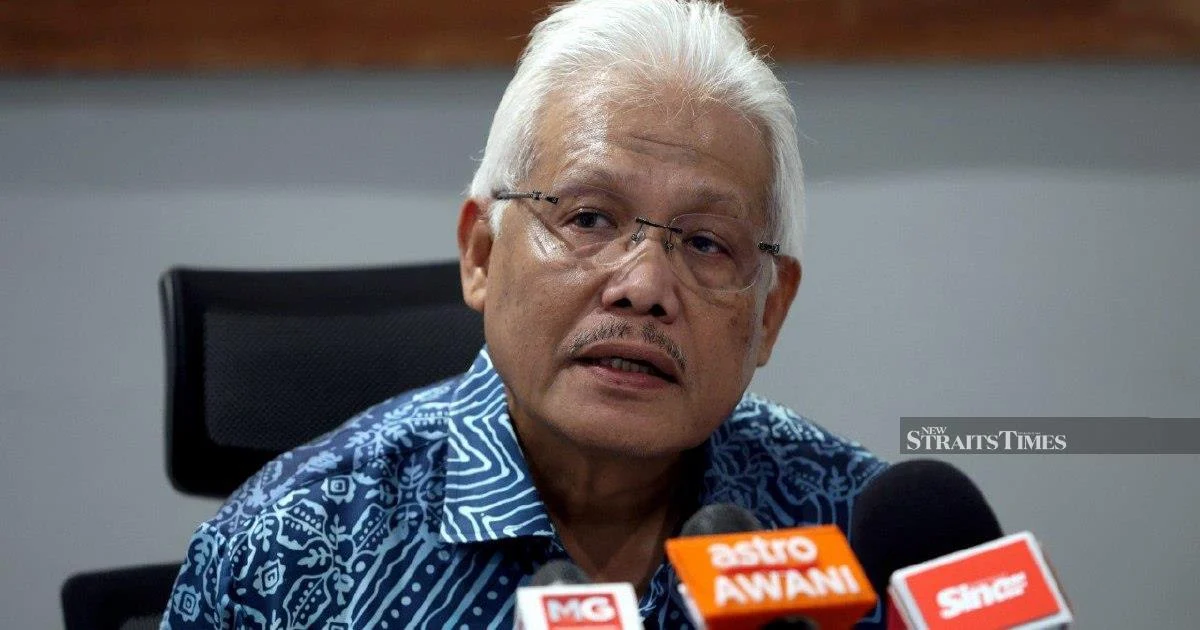
Parti Wawasan Negara, the recently rebranded political entity previously operating under the banner of Parti Cinta Malaysia, has positioned itself as a potential peacemaker in efforts to repair the fractured relationship between Malaysia's two dominant Malay-Muslim parties, PAS and UMNO. The party's leadership, spearheaded by Hamzah Zainudin, has signalled readiness to leverage its position as a relatively independent entity to facilitate dialogue and reconciliation between the two rivals, motivated by concerns that continued antagonism threatens the broader interests of Malay political representation.
The initiative comes at a time when tensions between UMNO and PAS have intensified across multiple levels of Malaysian politics. The two parties, historically the largest Malay-based political organisations, have found themselves competing for influence within federal and state governments, with their rivalry extending into matters of religious interpretation and communal representation. This competition, party officials warn, has created a political environment in which smaller disputes risk escalating into broader factional conflicts that ultimately undermine the cohesion necessary for effective governance and policy implementation.
Hamzah Zainudin's approach reflects a strategic calculation that mediating institutions or bridge-builders can perform valuable functions in plural democracies where major parties hold divergent interests. By positioning Parti Wawasan Negara as willing intermediary, the party leader is attempting to carve out a niche role distinct from the conventional adversarial positioning that characterises competition between established political bodies. This mediatory stance could also enhance the party's visibility and relevance within Malaysian political discourse, particularly among voters who favour consensus-building approaches to governance.
For Malaysian observers, the proposed bridging function raises important questions about the nature and sustainability of Malay-Muslim political unity. Both UMNO and PAS command substantial followings and resources, yet their ideological orientations and policy prescriptions have diverged considerably, particularly around matters of Islamic governance and the role of secular state institutions. Any meaningful reconciliation would require these fundamental differences to be either resolved or bracketed through carefully negotiated agreements, a process that independent intermediaries might facilitate but cannot ultimately control.
The rebranding from Parti Cinta Malaysia to Parti Wawasan Negara itself signals an attempt to reposition the organisation within the broader political ecosystem. The name change suggests aspirations toward a more inclusive, national perspective rather than one centred on a particular community or narrow policy agenda. Such repositioning is strategically necessary if the party is to credibly present itself as a neutral broker capable of earning the trust of both UMNO and PAS negotiators, as either side would reject mediation from an entity perceived as aligned with its competitor.
Regionally, the stability of Malaysian Malay-Muslim politics carries implications for Southeast Asia's broader political landscape. Malaysia's influence on ASEAN discussions, regional security frameworks, and economic coordination depends partly on the coherence of its domestic political coalitions. Deepening divisions within Malay-majority constituencies could complicate Malaysia's ability to project consistent positions on regional issues and maintain diplomatic effectiveness within regional organisations. Hamzah Zainudin's initiative thus resonates beyond the immediate Malaysian context.
Historically, efforts to bridge political divides between established parties have met with limited success in Malaysia, particularly when those parties maintain distinct organisational structures and competing resource bases. Effective mediation typically requires either external pressure, as might arise from an electoral crisis or constitutional conflict, or fundamental shifts in the incentive structures facing party leaderships. Without such catalysts, parties often prefer direct negotiation to bridge-building through intermediaries, viewing the latter approach as potentially constraining their autonomy or negotiating positions.
The involvement of Hamzah Zainudin, a politician with significant federal-level experience, lends credibility to Parti Wawasan Negara's bridging aspiration. His personal political standing and network relationships could facilitate conversations that smaller or newer political entities might struggle to initiate. However, his effectiveness as mediator would ultimately depend on both UMNO and PAS leadership perceiving tangible benefits from engaging in such dialogue through his party's framework.
The practical mechanisms through which such bridging would occur remain unclear. Hamzah Zainudin has not articulated specific proposals regarding the structure, format, or agenda of mediatory discussions, nor has he indicated whether UMNO and PAS leadership have expressed receptiveness to such an arrangement. Without such foundational agreements, Parti Wawasan Negara's offer, whilst well-intentioned, may remain largely symbolic rather than operational.
Civil society analysts have long recognised that deep institutional and ideological differences between major political parties require sustained, multi-level engagement to address meaningfully. Elite-level negotiation, essential as it is, proves insufficient without corresponding efforts across party cadres, constituency organisations, and civil society networks. A comprehensive bridging initiative would necessarily encompass such varied engagement levels, a scope substantially exceeding what a single party could realistically facilitate or sustain.

