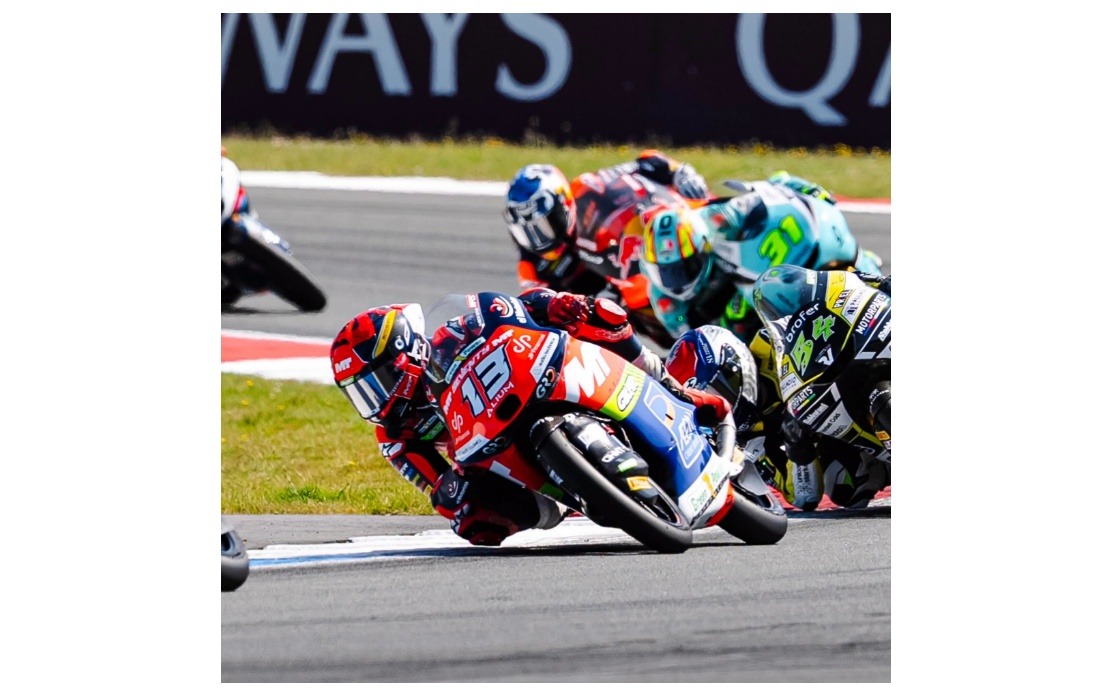
Malaysian motorsport continues to gain traction on the international stage as young talent Muhammad Hakim Danish Ramli delivered an encouraging performance at the TT Circuit Assen, finishing seventh in the Moto3 Dutch Grand Prix on June 29. Despite grappling with tyre grip concerns that plagued his machine throughout the 25-lap contest, the 18-year-old showcased tactical racing awareness and resilience to salvage a points-scoring result from a challenging afternoon in the Netherlands.
Hakim Danish's journey through the race demonstrated the calibre of racecraft developing among Malaysia's next generation of motorcycle racers. Beginning from a lowly 16th position on the grid, the young rider executed a calculated progression through the field, systematically working his way forward to breach the leading group and challenge for podium positions during the middle stages of the contest. This rise from deep in the field to contention for top-three honours illustrated both his pace and his ability to read race dynamics—a crucial skill in highly competitive junior motorcycle racing.
The earlier portion of the race saw Hakim Danish mounting genuine pressure on the frontrunners, establishing himself among the top three for a sustained period as he managed his tyres and fuel consumption across multiple laps. This period suggested the Malaysian had found a competitive window and the capability to fight among the race's leading contingent. However, the demanding nature of Moto3 racing, where margins between competitors are razor-thin and mechanical consistency is paramount, would ultimately test his mettle as the race progressed toward its climax.
Tyre performance emerged as the decisive factor in shaping the outcome of Hakim Danish's afternoon. As the race entered its final five laps, the Malaysian rider noticeably lost momentum, suggesting that his machine's rubber had degraded beyond his comfort threshold. This deterioration allowed a succession of rivals to sweep past him down the order, puncturing what had been a promising challenge for a better finishing position. The difficulty underscores a common challenge in Moto3 competition, where tyre management across full race distance separates those who secure victories from those who merely accumulate points.
Ultimately, Hakim Danish crossed the finish line 33 minutes 56.275 seconds after the race leader, securing seventh position in a competitive field that spans riders from multiple continents and racing backgrounds. While this finish may appear modest compared to his earlier aspirations for the podium, it represents solid value for a teenager still developing his craft against some of the world's most promising young motorcycle talents. Every point gained in junior racing categories carries significance for driver development and momentum building.
The ninth championship points earned at Assen proved crucial for Hakim Danish's seasonal campaign. These points elevated him to sixth position in the Moto3 standings, bringing his total tally to 82 points as the season progresses through its middle stages. This advancement reflects consistent performance rather than isolated brilliance, suggesting the Malaysian is establishing himself as a regular scoring threat in what remains a highly competitive and unpredictable category where fortune often plays a role alongside skill and preparation.
For Malaysian motorsport enthusiasts and analysts monitoring homegrown talent in international series, Hakim Danish's trajectory carries particular significance. The nation has produced accomplished motorcycle racers in the past, yet maintaining that pipeline of competitive riders in the global arena remains an ongoing challenge. At 18 years old, Hakim Danish represents investment in Malaysia's future on the international racing calendar, competing in a feeder series widely regarded as a legitimate pathway to higher echelons of motorcycle racing including Moto2 and ultimately MotoGP.
The Dutch Grand Prix result also provides constructive learning opportunities for the teenager and his technical team. The tyre-related struggles that emerged in the final laps suggest areas requiring attention in pre-race preparation, setup optimization, and potentially in understanding how different track characteristics affect rubber performance across a full distance. Such granular analysis forms the bedrock of improvement in modern motorcycle racing, where the difference between seventh and third often hinges on marginally superior preparation or understanding.
Looking forward, this Dutch circuit performance establishes a baseline for expectations in subsequent rounds. Racing at the TT Circuit Assen is considered technically demanding given its flowing layout, tight corners, and varied elevation changes, so successfully accumulating points here provides confidence heading toward remaining calendar commitments. The championship campaign extends beyond Assen, offering Hakim Danish further opportunities to consolidate his sixth-place standing or potentially climb higher depending on consistency and development curves across the remainder of the season.

