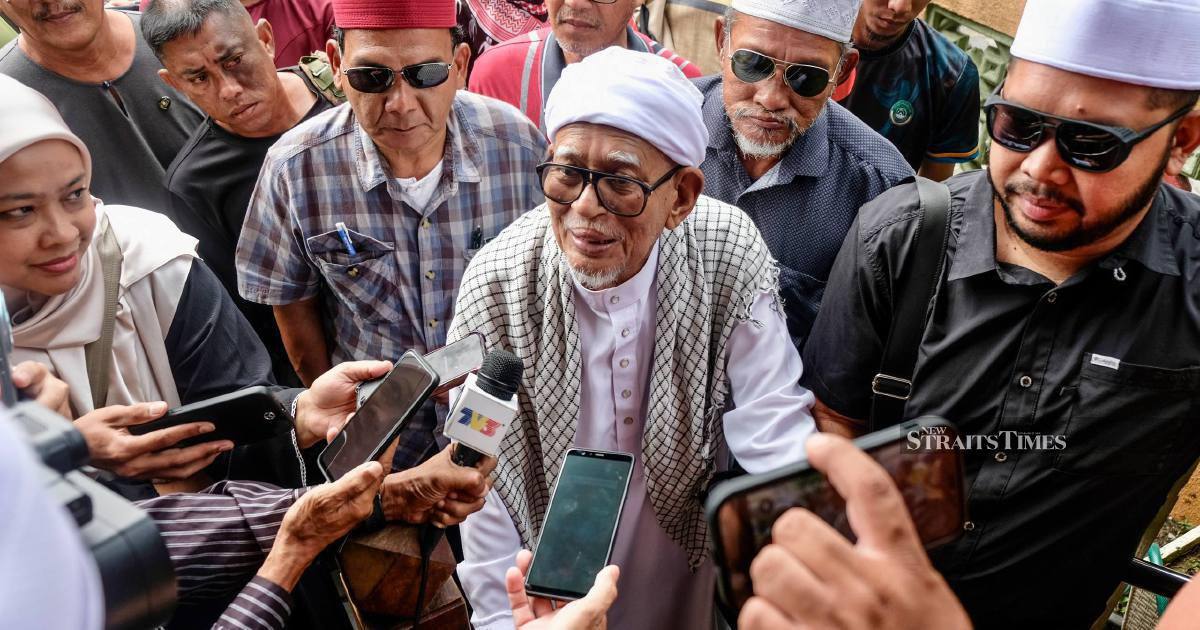
PAS president Tan Sri Abdul Hadi Awang has expressed disappointment over Prime Minister Datuk Seri Anwar Ibrahim's absence from a special parliamentary sitting dedicated to debating the Royal Commission of Inquiry report on Lembaga Tabung Haji, suggesting that the premier's presence would have underscored the significance of the matter to the nation's legislators and Muslim pilgrims who depend on the institution.
Speaking in his constituency of Marang, Hadi implied that the PM's non-attendance sent a concerning signal about the government's commitment to addressing findings from the RCI, which was established to investigate the affairs of Malaysia's pilgrim fund manager. The inquiry had been tasked with examining various aspects of TH's operations and governance, making its report a document of considerable public interest and importance for the millions of Malaysian Muslims who have placed their savings with the institution over decades.
The Royal Commission of Inquiry into Tabung Haji represents a significant undertaking aimed at restoring public confidence in an organisation that holds billions of ringgit in pilgrim deposits. The RCI was convened following mounting concerns about TH's financial health, investment decisions, and management practices that had attracted scrutiny from lawmakers and civil society groups. The findings of such an investigation typically carry substantial weight in parliamentary deliberations, particularly when they touch on matters affecting public funds and religious trust.
Hadi's remarks come at a time when governance issues surrounding Malaysia's major institutions remain under intense public and political scrutiny. The absence of the chief executive from a parliamentary session dedicated to examining a critical institutional report raises questions about prioritisation and the message such non-attendance conveys to both parliamentarians and the public about how seriously the government views the inquiry's conclusions. Parliamentary conventions have long established that a PM's presence at significant policy debates signals the administration's commitment to transparency and accountability.
For Malaysian pilgrims and their families, the TH inquiry holds particular resonance. Many citizens save with Tabung Haji specifically for the Hajj, Islam's fifth pillar, making the fund deeply intertwined with religious identity and personal aspiration. Any findings concerning mismanagement or financial irregularities therefore strike at matters of both material interest and spiritual importance. The special parliamentary sitting would have provided an opportunity for lawmakers to engage directly with government leadership on these sensitive issues.
The timing of Hadi's criticism reflects broader political dynamics within Malaysia's coalition government. While PAS and the Prime Minister's Pakatan Harapan-led coalition have worked together in various capacities, the relationship remains complex, with each party maintaining distinct interests and occasionally diverging on matters of governance and oversight. Hadi's intervention suggests that even governing partners may expect greater governmental presence and engagement on matters deemed sufficiently important to warrant special parliamentary sessions.
Parliamentary debates on major institutional inquiries serve multiple functions beyond mere legislative procedure. They provide a forum for lawmakers to press the executive for clarifications, demand accountability, and signal to the public that elected representatives take institutional governance seriously. A prime minister's attendance typically elevates the perceived importance of the proceedings and may facilitate more substantive engagement between the legislature and executive branches. The PM's absence, regardless of other commitments, inevitably diminishes these parliamentary functions.
Tabung Haji's governance has become an increasingly salient issue in Malaysian politics, attracting attention from various quarters including opposition lawmakers, civil society organisations, and religious leaders concerned with ensuring that the institution properly safeguards the interests of the faithful. The RCI report would presumably contain detailed findings and recommendations addressing identified problems, making parliamentary scrutiny and governmental response mechanisms critically important for public confidence and future institutional reform.
The incident underscores recurring tensions in Malaysian parliamentary practice regarding the balance between executive prerogatives and legislative oversight responsibilities. While prime ministers necessarily manage competing demands on their time, critics argue that certain parliamentary sessions—particularly those focused on major institutional inquiries affecting millions of citizens—warrant executive presence as a matter of principle and respect for parliamentary processes. Hadi's position reflects this conventional view that significant institutional matters deserve top-level governmental engagement and responsiveness.
Moving forward, the parliamentary sitting's outcome and any government responses to TH RCI findings will likely continue generating political commentary and scrutiny. Whether Anwar Ibrahim or other senior government officials subsequently engaged with the inquiry's recommendations through alternative channels remains to be seen, but Hadi's public intervention has placed additional spotlight on how the administration handles the political and governance dimensions of the Tabung Haji matter, a concern that resonates across Malaysia's Muslim-majority population and within parliament's diverse political spectrum.

