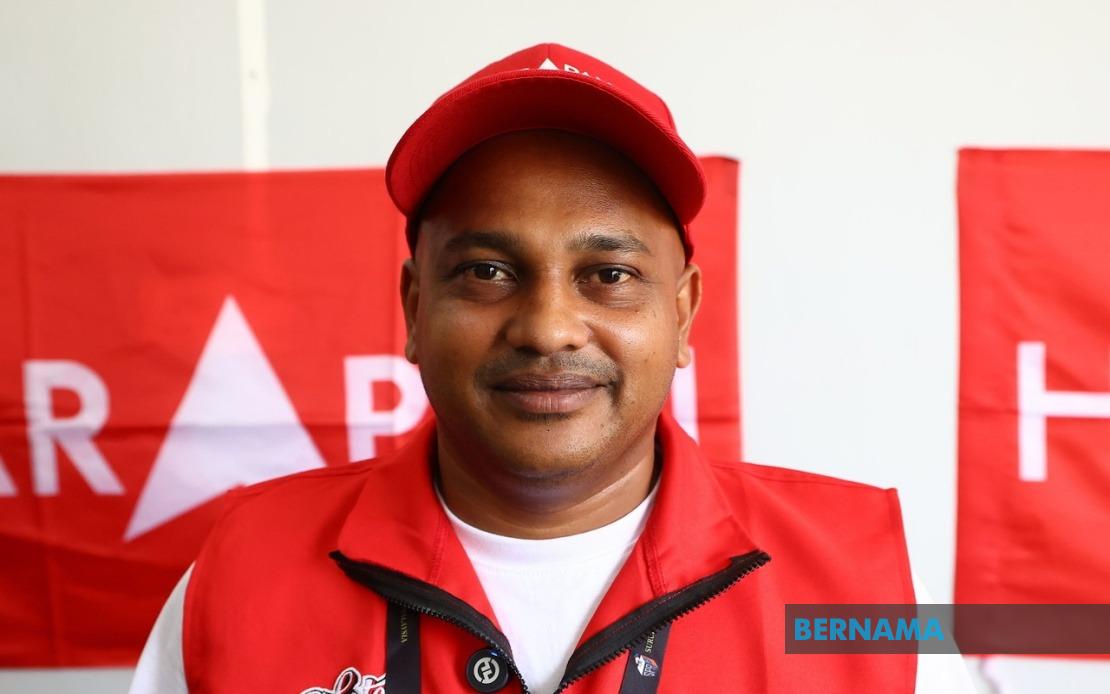
Pakatan Harapan candidate Guna Balakrishnan is taking aim at four critical infrastructure and safety issues that residents have flagged throughout his campaign for the Layang-Layang state seat in Johor, pledging concrete progress within the first 100 days if voters elect him to represent the 25,181-strong constituency. The priorities he has identified—improving street lighting, expanding internet and telecommunications access, controlling wild animal encroachment, and preventing the theft of oil palm fruit—reflect the grassroots concerns that dominate local conversations in the constituency, moving beyond generic campaign rhetoric to address tangible quality-of-life challenges that affect daily life in rural and semi-rural areas.
The street lighting initiative represents both a symbolic and practical commitment, with Guna setting a measurable baseline of resolving between 50 and 60 per cent of resident complaints within the first three months. This phased approach acknowledges the complexity of rolling out infrastructure improvements across dispersed communities while maintaining political credibility through realistic targets rather than sweeping promises. Poor street lighting remains a perennial challenge across many Johor constituencies, affecting both public safety and the attractiveness of neighbourhoods to young families and businesses, making this a particularly resonant pledge for voters concerned about personal security and community vitality.
On telecommunications, Guna has articulated a more optimistic timeline, suggesting that the infrastructure backbone is already substantially in place and that completing the rollout requires only the installation of additional transmitters in underserved pockets of the constituency. This distinction matters considerably for Malaysia's broader digital equity agenda, as it signals that the problem in Layang-Layang is not the absence of foundational investment but rather the final-mile connectivity challenges that plague even moderately developed areas. The feasibility of the 100-day completion window hinges on this technical reality—if the feeders and supporting infrastructure are indeed operational, administrative coordination rather than capital expenditure becomes the limiting factor, a challenge that an elected representative with political leverage can potentially address more readily.
Wild animal encroachment presents a more complex governance challenge, as it transcends the traditional boundaries of state constituency politics and involves coordination between state forestry departments, wildlife authorities, and agricultural agencies. The frequency with which residents raise this issue suggests that human-wildlife conflict is creating genuine hardship, whether through crop destruction, livestock losses, or direct safety threats. By making this a first-100-days priority, Guna is signalling willingness to broker inter-agency action and potentially secure emergency resources or expedited protocols—a subtle but important distinction from merely promising to resolve the underlying ecological tension, which no single politician can fully accomplish.
The theft of oil palm fruit, Guna's fourth priority, points to a security and livelihoods challenge specific to Johor's agricultural economy. Oil palm is the backbone of rural income for many constituencies, and organized theft represents both economic loss and a symbol of inadequate local security infrastructure. This issue binds together concerns about policing effectiveness, estate management coordination, and community vigilance, making it emblematic of the governance gaps that voters experience in areas where economic activity concentrates in large agricultural operations.
Beyond his immediate priorities, Guna's fuller manifesto indicates a broader development vision encompassing flood mitigation, road infrastructure upgrades, women's entrepreneurship support, Technical and Vocational Education and Training expansion, and the establishment of senior citizen activity centres. This layered approach positions the candidate as addressing both immediate crises and longer-term social investment, appealing to different voter cohorts—young people seeking skills pathways, women business owners seeking support ecosystems, elderly residents requiring social infrastructure, and families concerned about climate resilience and transport connectivity. The emphasis on human capital development reflects an understanding that rural prosperity depends not merely on infrastructure but on equipping local populations with the tools and opportunities to participate in the broader economy.
The three-way contest in Layang-Layang—pitting Guna against Barisan Nasional's Chua Jian Boon and Perikatan Nasional incumbent Abd Mutalip Abd Rahim—sets up a fractured political contest that could prove decisive. In a constituency where neither coalition commands overwhelming voter loyalty, the candidate who convincingly articulates a concrete, achievable action plan while demonstrating genuine understanding of local grievances may hold an advantage. Guna's specificity regarding timelines and targets, particularly the 50-60 per cent street lighting resolution rate, represents a calculated attempt to position himself as pragmatic and grounded rather than ideologically distant.
Johor's July 11 election carries broader significance for Malaysian politics, as it represents one of the few state-level contests occurring outside the rhythm of federal political cycles. The state has historically served as a political bellwether, with results often previewing longer-term shifts in voter sentiment. A strong Pakatan Harapan performance would reinforce the coalition's recovery trajectory following the 2022 federal election, while gains by Barisan Nasional or Perikatan Nasional would suggest persistent fragmentation of the PH vote or regional vulnerability in the coalition's Malay-Muslim messaging.
For Layang-Layang voters specifically, the choice between these three candidates will likely hinge on which representative they believe will most effectively translate campaign promises into material improvements to their constituency's infrastructure and services. Guna's emphasis on early, measurable gains in street lighting, telecommunications, and security addresses the most immediate pain points, while his manifesto's longer-term investments signal concern for intergenerational opportunity and social welfare. In rural and semi-rural Malaysian constituencies where infrastructure deficits and security concerns remain chronic challenges, such specificity can prove decisive.

