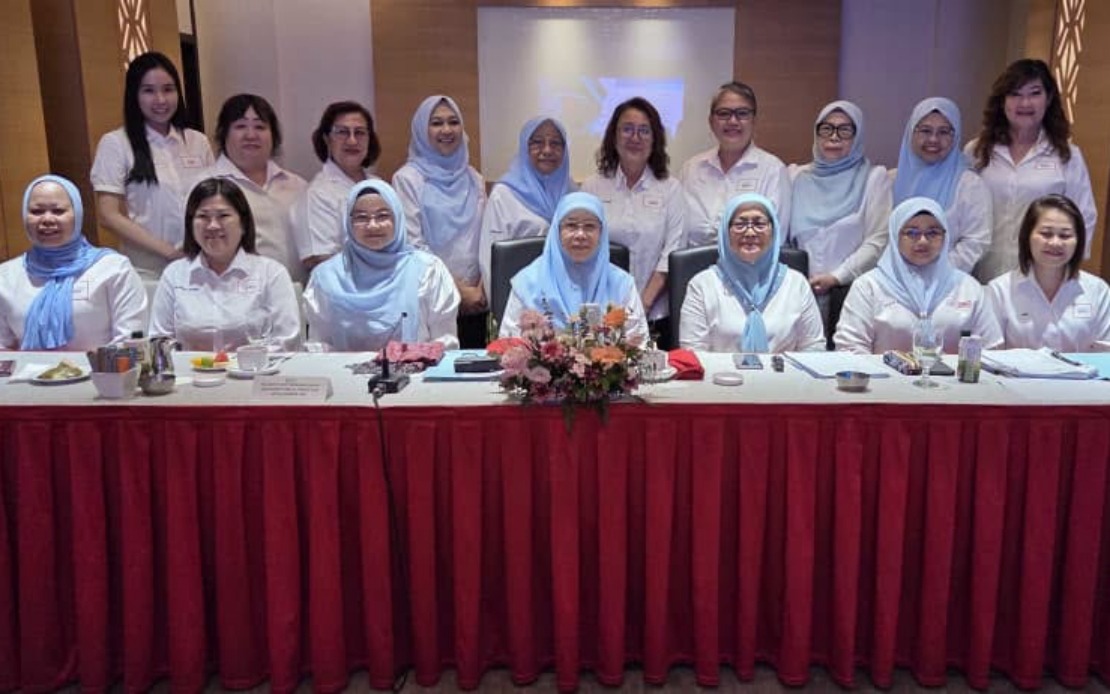
The Gabungan Rakyat Sabah (GRS) Women's wing has moved to bolster its organizational capacity by creating five specialized operational units designed to enhance the coalition's grassroots machinery and community outreach capabilities. The decision was formalized during a meeting held in Kota Kinabalu on July 22, where the wing's leadership approved the new structural framework aimed at preparing the organization for the political challenges ahead. This organizational restructuring reflects a broader strategy among Malaysian political coalitions to strengthen their institutional foundations and improve their capacity to mobilize support across different demographic groups and policy areas.
Datuk Seri Azizah Mohd Dun, who chairs the GRS Women's wing, announced the establishment of five distinct units, each tasked with specific responsibilities within the organization's overall agenda. The Policy and Strategy Unit will handle long-term planning and strategic direction, while the Economic Unit focuses on economic policy issues and opportunities affecting women and families. The Health Unit addresses healthcare advocacy and wellness programmes, the Information Unit manages communications and public engagement, and the Welfare Unit concentrates on social support services and community assistance initiatives. This division of labour represents an attempt to create a more sophisticated and responsive organizational apparatus capable of addressing multiple policy domains simultaneously.
The leadership appointments reflect attempts by the GRS Women's wing to ensure experienced hands guide each functional area. Azizah herself will lead the Policy and Strategy Unit, maintaining direct control over the coalition's strategic direction. Datuk Surinam Sadikun takes charge of economic affairs, Simi Linggom directs health initiatives, Datin Atin Belynda Buntot oversees information and communication, and Datin Wong Siow Lee @ Mary Wong heads welfare programmes. These assignments position established party figures in critical roles, suggesting the leadership views these units as essential to the organization's future effectiveness and electoral prospects.
For Malaysian readers, the GRS Women's wing reorganization carries particular significance given Sabah's pivotal role in national politics. Sabah remains a crucial electoral battleground where women voters represent a substantial portion of the electorate, making the enhanced organizational capacity of the GRS Women's wing potentially consequential for the coalition's performance in future elections. The establishment of specialized units suggests recognition that contemporary political competition requires sophisticated targeting of different voter concerns and communities, moving beyond traditional blanket campaign approaches toward more nuanced constituency-based strategies.
Azizah emphasized that the new structure enables the organization to respond more dynamically to emerging political developments and community needs. Each unit operates with defined responsibilities to ensure the party apparatus remains engaged and can address issues quickly as they arise in the public sphere. This emphasis on agility and responsiveness reflects understanding that political landscapes shift rapidly, particularly in Malaysia where coalition dynamics, policy debates, and electoral calculations frequently realign. The five-unit system theoretically allows the GRS Women's wing to maintain consistent attention to multiple priority areas while remaining flexible enough to adjust emphasis as circumstances warrant.
The coalition leader also articulated a philosophy rejecting organizational complacency or static operational patterns. Azizah's assertion that the GRS Women's wing cannot remain in its comfort zone acknowledges a competitive environment where rival organizations continuously upgrade their capabilities and engage voters through innovative methods. She stressed the necessity for regular meetings, coordinated action across units, and preparedness to shift strategies in response to political changes. This rhetoric signals to party members that electoral success requires continuous effort and adaptation rather than reliance on past victories or established voter bases.
The timing of this organizational restructuring, announced ahead of the next general election, indicates the GRS leadership considers women's mobilization a strategic priority for electoral success. Women's wings in Malaysian political parties have traditionally served both policy advocacy functions and grassroots mobilization roles, and the GRS Women's wing appears to be formalizing these dual responsibilities through its new unit structure. By creating dedicated units for policy areas including economics, health, and welfare—domains where women voters often express particular concern—the GRS signals attention to gendered policy interests that could influence voting decisions.
The Health Unit and Welfare Unit deserve particular attention from a regional perspective. In Southeast Asia more broadly, women increasingly prioritize healthcare access, quality of services, and social safety nets when evaluating political parties. By establishing dedicated units in these areas, the GRS Women's wing positions itself to develop more detailed policy proposals and community programmes potentially attractive to female voters concerned about these issues. Similarly, the Economic Unit's focus addresses growing female participation in Malaysia's workforce and small business sectors, areas where policy support and advocacy could meaningfully influence women's electoral preferences.
The Information Unit's establishment reflects recognition of how political communication has transformed through digital platforms and social media. Dedicated information units in political organizations now handle online engagement, fact-checking and counter-narrative work, and targeted messaging across multiple platforms. The GRS Women's wing appears cognizant that political competition increasingly occurs in digital spaces where women voters consume news and political content, necessitating specialized capacity to communicate effectively through these channels.
The organizational initiative also carries implications for intra-coalition dynamics within the Gabungan Rakyat Sabah. By strengthening the women's wing's institutional capacity and clarifying leadership roles within five distinct units, the coalition may be positioning women's concerns more centrally within its overall political strategy. This could influence internal coalition discussions and decision-making processes, potentially giving women leaders greater voice in party deliberations and policy formulation across the coalition structure.
Looking ahead, the five-unit system will be tested through implementation and practical effectiveness in strengthening the GRS Women's wing's engagement with communities and advancement of coalition objectives. The success of this reorganization will depend on whether unit leaders effectively mobilize their respective domains, coordinate action across units, and translate organizational improvements into tangible policy outcomes or community programmes that resonate with voters. The structure itself represents ambition to upgrade organizational sophistication, but translating that ambition into electoral advantage requires sustained effort and genuine delivery on the promises embedded in this reorganization.

