Singapore's pilot scheme to nurture citizen-led community projects has generated remarkable interest, with more than 200 applications flooding in since the SG Partnerships Fund began accepting proposals in April 2026. The S$50 million initiative, announced by Prime Minister Lawrence Wong during his February 2026 Budget speech, represents a significant shift in how the city-state supports ground-up social innovation, moving beyond traditional top-down policy implementation to harness grassroots energy and local expertise.
The fund operates through a tiered structure designed to accommodate projects at different scales and stages of development. The seed tier, offering grants of up to S$5,000, targets individuals, informal groups, and newly registered organisations piloting innovative ideas within their communities. The sprout tier provides up to S$50,000 to established groups aiming to create sector-wide impact, while the newly launched scale tier—introduced in July 2026—extends grants reaching S$1 million for mature organisations ready to transform entire sectors. This graduated approach reflects a deliberate strategy to meet applicants where they are, whether they are testing untested concepts or scaling proven models.
Data from the Singapore Government Partnerships Office reveals that the seed tier has proven most popular among applicants, a finding that offers insight into Singapore's civic landscape. SGPO Director Hasliza Ahmad notes that this pattern reflects the fund's underlying philosophy: citizens need not launch grand initiatives to qualify for support. By lowering barriers to entry and celebrating incremental progress, the scheme encourages ordinary Singaporeans to translate personal observations and community concerns into concrete action. This democratisation of social innovation contrasts sharply with earlier frameworks that often required formal credentials or institutional backing to access government resources.
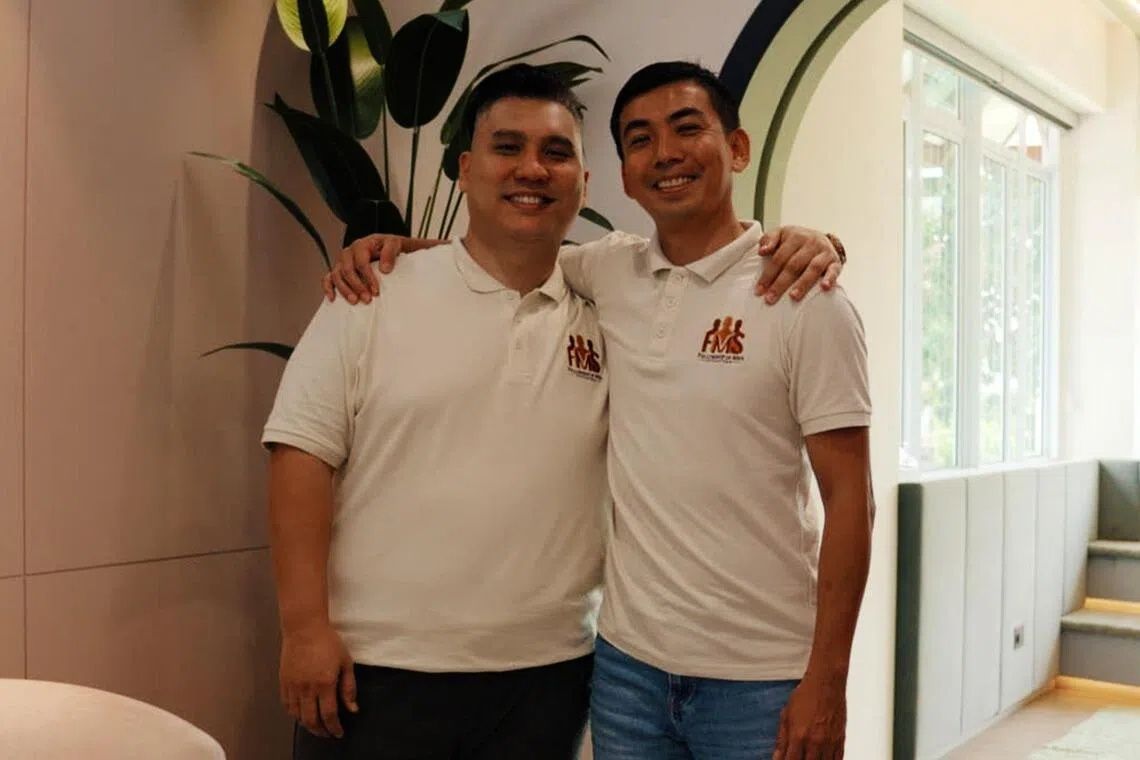
One compelling illustration comes from Ben Ang and Ismail Didih Ibrahim, two individuals who recognised a gap in men's mental health support while working at a family service centre five years ago. Rather than waiting for an established organisation to address the issue, they quit their full-time positions in January 2026 to launch Fellows for Movement Singapore, a non-profit dedicated to helping men seek emotional support through peer-led activities and guided conversations. Their approach prioritises accessibility over clinical formality, recognising that many men resist traditional therapy but remain open to informal community engagement. The S$5,000 seed grant enabled them to host a professionally catered engagement session involving 24 men and their families at a culinary school in Geylang—an activity that would otherwise have stretched household finances and limited their reach.
The initiative's focus on masculinity and emotional wellbeing touches on a growing concern across Southeast Asia, where male suicide rates and relationship difficulties persist largely unaddressed by formal services. By encouraging men to see help-seeking as consonant with healthy masculinity rather than weakness, Ang and Didih are reframing cultural narratives that inhibit disclosure and vulnerability. Their vision—that manhood encompasses emotional depth and interdependence, not merely provider roles—challenges entrenched assumptions that shape how men navigate family life and personal crises. For Malaysia, where similar gender-specific mental health blindspots exist, their model offers instructive lessons on peer-driven intervention design.
Another seed-grant recipient, Loke Wai Yee, a 21-year-old LASALLE College of the Arts student, identified a structural inequity within Singapore's charitable giving landscape. During the annual angel tree initiative, where disadvantaged children's Christmas wishes are displayed in shopping malls, she observed that trees appeared only in affluent retail districts and that expensive gift expectations discouraged younger or budget-conscious donors. Working with twelve peers, Loke developed Little Wishes, an online platform enabling gift-givers to select presents within their chosen price range and match directly with child beneficiaries. The grant permitted her team to hire a professional web developer rather than cobbling together a site themselves, ensuring the platform functions intuitively and attractively when it launches in August 2026.
Loke's project highlights how modest funding can unlock professional quality and user experience that grassroots teams struggle to achieve independently. Beyond the monetary grant, she emphasises that the SGPO functioned as a broader support ecosystem, connecting her team with social service agencies, signposting additional funding sources, and providing strategic mentorship. This wraparound support model distinguishes the SG Partnerships Fund from transactional grant schemes: the government office positions itself as an active partner in translating ideas into operational reality, not merely a funding dispenser. Such holistic engagement significantly increases the likelihood that recipient projects will survive initial implementation and scale sustainably.
The tiered structure and accessible entry points reflect a maturation in how governments across Asia approach citizen participation. Rather than consulting communities at predetermined moments or co-opting popular voices into existing agendas, this framework invites Singaporeans to define problems and design solutions from inception. The seed tier particularly democratises innovation: it signals that insight and compassion matter more than credentials, and that testing ideas modestly precedes large-scale deployment. For Malaysia's policymakers considering analogous schemes, the Singapore model suggests that removing procedural friction and offering non-financial support—connections, training, mentorship—may prove equally valuable as capital allocation.
Hasliza Ahmad's observation that applicants need not pursue grand ambitions underscores a philosophical reorientation within Singapore's approach to social development. Historically, civic contribution has been framed in terms of large-scale productivity or formal volunteering through established institutions. This fund instead validates neighbourhood-level action, micro-entrepreneurship in the social sector, and community members' own diagnosis of local needs. A university student noticing inequities in charity distribution, or two professionals shifting careers to address male emotional isolation, exemplify the kinds of contributions the scheme aims to catalyse and sustain.
The overwhelming response—over 200 applications processed or in review—suggests that demand for accessible funding and support for community-led solutions significantly exceeds supply. This pent-up demand points to a substantial population of Singaporeans frustrated by structural barriers to implementing grassroots ideas. Whether the S$50 million envelope proves sufficient for sustained momentum remains unclear, but the breadth of applicants indicates that future tranches may be warranted. For regional observers, the fund's reception suggests that citizens across Southeast Asia hunger for pathways to translate civic passion into tangible community benefit.
Senior Minister of State Low Yen Ling's presence at the July 4 community exchange event at the Common Ground Civic Centre in Bedok North signals high-level political endorsement for the initiative. Her framing of the fund as offering "pathways for Singaporeans to develop and grow their ideas" positions civic innovation as integral to national progress, not peripheral charity. This rhetorical shift matters: it redefines the relationship between state and citizens from one of provision to partnership, and from paternalism to co-creation. As the fund matures and more projects cycle through approval, expansion, and potential replication, it will generate a rich repository of lessons for how ground-up initiatives can complement state capacity and address community challenges at scale.
Looking ahead, the success of projects like Fellows for Movement Singapore and Little Wishes will largely depend on sustained SGPO engagement and whether further funding tranches allow promising initiatives to consolidate gains. The current applicant pool suggests that many Singaporeans possess concrete ideas awaiting capital and institutional validation. If the SG Partnerships Fund continues expanding its reach and reducing barriers, it could fundamentally reshape how civic problems are identified and solved, shifting the locus of innovation from state bureaucracies to communities themselves. This shift carries particular relevance for Malaysia and other Southeast Asian nations grappling with how to foster inclusive development while honouring citizens' agency and expertise.

