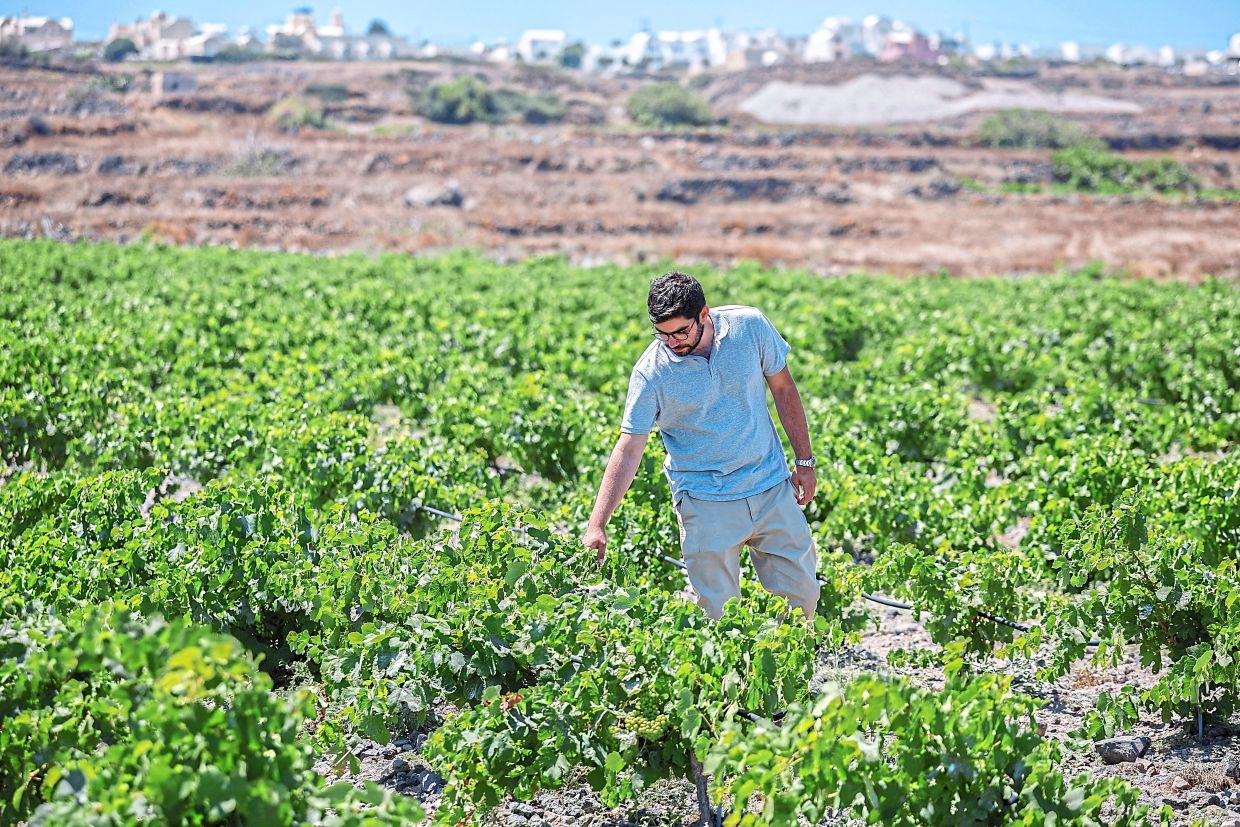
The ancient vineyards of Santorini face an unprecedented existential threat from soaring temperatures and prolonged water shortages that have transformed the island's agricultural landscape over the past three years. Yiannis Boutaris, a sixth-generation winemaker operating the Domaine Sigalas winery within the Kir-Yianni family of wineries, recently watched one of his most prized assets succumb to the relentless climate conditions — a 90-year-old vine trained into the traditional basket shape known as a "kouloura" that once protected grapes from the punishing Mediterranean summer sun. The death of this single plant represents far more than a local loss; it symbolises the broader collapse of viticultural practices that have defined the island for centuries.
The period from 2023 to 2025 has proven catastrophic for Santorini's wine sector, with combined effects of sparse rainfall and record-breaking temperatures fundamentally altering the economics of grape farming. Production volumes have plummeted while grape prices have surged, creating a squeeze that threatens the viability of traditional producers. Beyond immediate economic impacts, the crisis has exposed a deeper structural vulnerability — the island's freshwater resources are evaporating faster than they can be replenished, forcing uncomfortable competition between wine growers, hotel operators, and swimming pool managers for access to scarce water supplies during peak tourist season.
Stefanos Koundouras, a viticulture professor at Aristotle University in Thessaloniki, contextualises the severity of recent conditions within a historical framework that underscores the extraordinary nature of the challenge. The temperatures recorded across Santorini during 2023 and 2024 represented the hottest sustained period in six decades, surpassing previous records by a significant margin. Koundouras warns that without intervention, the entire European wine sector — particularly regions around the Mediterranean — could experience fundamental degradation in both production volume and product quality. Wine enthusiasts globally have already begun noticing the effects, with distinctive characteristics and flavour profiles that define certain appellations becoming increasingly difficult to maintain.
Rather than surrendering to climatic pressure, Boutaris and his peers are orchestrating a technological and methodological renaissance within Santorini's wine industry. The winemaker is spearheading a pilot initiative developed with local government and scientific institutions that transforms wastewater from residential properties and hotel complexes into irrigation resources for vineyard parcels. This approach, already established in California's wine regions, offers considerable advantages over alternative solutions such as energy-intensive desalination plants, which carry both steep operational costs and substantial environmental footprints. The strategy represents a pragmatic compromise between sustainability and economic necessity.
Accompanying the wastewater recycling project, Boutaris is experimenting with structural modifications to vineyard layouts. The traditional scattered planting patterns characteristic of Santorini's heritage vineyards, while aesthetically distinctive and culturally resonant, prove inefficient for modern irrigation requirements. By reorganising plantings into conventional row configurations, he can deploy water delivery systems with greater precision, reducing waste through evaporation and runoff. Additionally, Boutaris is piloting atmospheric water harvesting technology — a methodology that captures ambient moisture using specialised hydrogels and subsequently extracts usable water through heat supplied by solar panels. This approach effectively converts air itself into a water source, minimising dependence on conventional supplies.
Yiannis Papaeconomou, another island winemaker managing six-year-old vines, has embraced an overlapping yet distinct adaptation strategy. Rather than relying solely on surface irrigation, which permits substantial water loss before plants can absorb it, Papaeconomou has implemented subsurface irrigation systems that deliver moisture directly to root zones beneath soil surfaces. This technique dramatically reduces evaporation rates whilst ensuring more efficient nutrient and water uptake. He has complemented this infrastructure modification with adjusted trellising arrangements that allow his vines to receive water more systematically. Papaeconomou's comments reflect the philosophical reorientation occurring across the island's agricultural sector — producers recognise that survival demands embracing unfamiliar methodologies and abandoning assumptions that previous generations could take for granted.
The broader context of water competition on Mediterranean islands during summer months reveals how climate change generates cascading challenges across multiple economic sectors simultaneously. Santorini's tourism industry brings millions of visitors during warm months, and these temporary populations consume substantial quantities of water for accommodation, dining establishments, and recreational facilities. Wine growers operating within this context must now negotiate with hotel operators and leisure businesses for access to finite supplies. In northern Greece, where conditions remain comparatively cooler and wetter, grape prices hover around €0.80 per kilogram — less than half the premium that Santorini producers can command, yet also reflecting the artificial scarcity driving island prices higher.
The transformation underway on Santorini illustrates a pattern emerging throughout Mediterranean viticulture zones where production regions must simultaneously contend with eroding natural advantages whilst competing for resources with other sectors. Innovation in water management and irrigation technology offers partial mitigation, yet cannot fully offset the fundamental challenges created by warming trends and precipitation decline. The wine industry's adaptation efforts nevertheless provide valuable lessons for other agricultural communities confronting similar pressures. Success will ultimately depend on whether technological solutions can scale sufficiently to support both traditional quality standards and economically viable production volumes — outcomes that remain uncertain as climate models project continued warming and precipitation volatility across southern Europe through the remainder of this decade.

