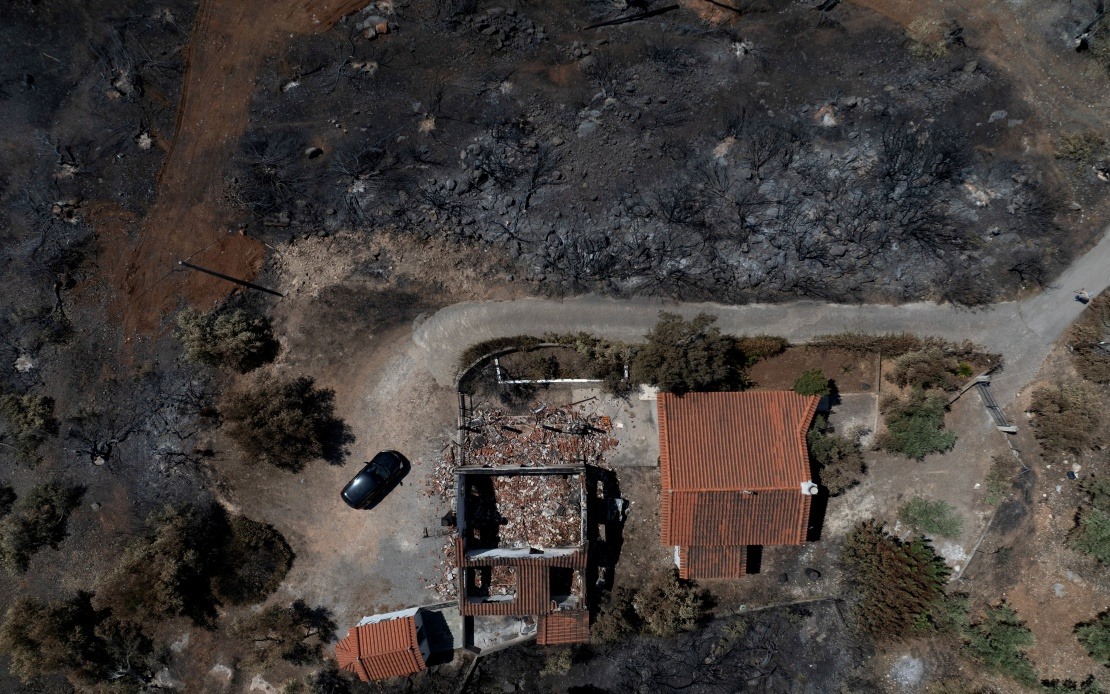
Greece's government has escalated its wildfire preparedness to the highest level, declaring a red alert for three critical regions threatened by dangerous fire conditions. The General Secretariat for Civil Protection, operating under the Climate Crisis and Civil Protection Ministry, raised the wildfire risk classification to Category 4 for August 6, affecting Attica, Viotia and Evia—regions that encompass the capital Athens and its surrounding areas. This maximum-level alert represents the most severe fire threat designation in the Greek alert system, triggering extraordinary measures across the country's disaster response infrastructure.
Under this red alert status, Greece's National Civil Protection Mechanism shifts into full operational capacity, substantially expanding the resources and personnel dedicated to wildfire prevention and response. The mobilisation involves comprehensive coordination between the fire service, police and armed forces, all of whom have been instructed to conduct intensive ground and aerial patrols throughout the three affected regions. This multi-agency approach reflects the scale of the threat, with authorities recognising that no single organisation can adequately manage the wildfire risk across such extensive and populated areas during periods of extreme fire danger.
The alert brings immediate restrictions designed to reduce human-caused fire ignition. Vehicle traffic and visitor access to forests and other areas deemed vulnerable to rapid fire spread face preventive limitations. Authorities have issued explicit warnings to residents, urging them to refrain from any activities that could ignite fires, recognising that during periods of extreme heat and low humidity, even minor sources of flame can rapidly develop into uncontrollable blazes. These behavioural restrictions, though sometimes unpopular with the public, represent a critical component of Greece's strategy for protecting lives and property during peak fire season.
The red alert declaration comes as firefighting crews were simultaneously managing an active wildfire southeast of Athens. On Wednesday, crews brought under control a significant blaze that had erupted in low vegetation near Koropi, in the Driggia area, around 1.45 pm local time. The response demonstrated the considerable resources Greece dedicates to individual fire incidents during peak danger periods. The operation deployed 52 firefighters, including three specialised forest commando units, alongside 14 ground vehicles. Aerial support included four helicopters and two water-dropping aircraft, with one additional helicopter coordinating the aerial campaign.
The scale of resources committed to even a single wildfire underscores the operational strain placed on Greece's fire services during summer months. Beyond dedicated firefighting personnel and equipment, local authorities contributed water tankers to support ground-based suppression efforts. Modern technology played a crucial monitoring role, with thermal and optical drone cameras providing real-time surveillance of fire behaviour and spread. An arson investigation team was dispatched to the Koropi incident, reflecting the importance authorities place on identifying whether human action or natural causes triggered the blaze.
Simultaneously, firefighters continued battling a far more extensive wildfire that had begun the previous week in Viotia before spreading westward into Attica. According to satellite data from the European Union's Copernicus Earth observation system, this larger blaze had already consumed approximately 14,424 hectares of land—an area equivalent to roughly 35,642 acres. The scale of this destruction underscores the severe consequences even when firefighting resources are substantial. The geographic spread from Viotia into western Attica demonstrates how rapidly fire behaviour can exceed the capacity of ground-based suppression, particularly when conditions favour rapid propagation.
This ongoing major wildfire has already claimed lives, highlighting the human cost of Greece's summer fire season. On Sunday, two firefighting helicopters collided midair during operations against the blaze, resulting in the deaths of a Danish pilot and a Greek aerial coordinator. The tragedy underscores the extraordinary risks that firefighting personnel accept when battling large-scale blazes, particularly during complex multi-aircraft operations where coordination challenges can prove fatal. The incident raises questions about operational protocols and safety measures during high-intensity aerial firefighting campaigns.
For Southeast Asian observers, Greece's experience offers sobering lessons about wildfire management during climate-induced extreme weather events. Malaysia and its regional neighbours face comparable challenges during dry seasons, particularly in areas vulnerable to peatland fires and rapid vegetation combustion. The Greek approach—combining maximum alert status, multi-agency coordination, resource mobilisation and public behavioural restrictions—mirrors strategies increasingly adopted across Southeast Asia as climate change intensifies fire seasons.
The red alert mechanism demonstrates how developed nations formalise their response to escalating fire danger, with clearly defined alert categories that trigger predetermined operational changes. Greece's Category 4 designation, representing the highest fire danger level, activates full civil protection capacity, a threshold-based approach that contrasts with more gradual or discretionary response systems. This structured escalation framework potentially offers applicable models for Southeast Asian countries seeking to strengthen their own wildfire preparedness during increasingly severe fire seasons driven by changing climate patterns and shifting precipitation regimes.
The combination of the Koropi incident and the larger Viotia-Attica blaze, occurring within the context of a maximum red alert, illustrates the complexity of managing multiple simultaneous fire events. Even with extraordinary resource mobilisation, Greece's firefighting services face scenarios where several major incidents occur concurrently, potentially stretching response capacity to its limits. For Malaysia and Southeast Asia, developing surge capacity—the ability to rapidly expand response resources beyond baseline levels—represents a critical infrastructure need as fire seasons intensify and expand in duration.
The timing of Greece's red alert on August 6 reflects the predictability of summer fire danger during specific atmospheric conditions and weather patterns. Authorities can forecast dangerous fire conditions days in advance, allowing preemptive escalation of alert status and resource positioning. Such forecasting capability depends on sophisticated meteorological infrastructure and integration with fire management systems, resources that Southeast Asian nations continue developing to enhance their own predictive capacities for wildfire risk periods.

