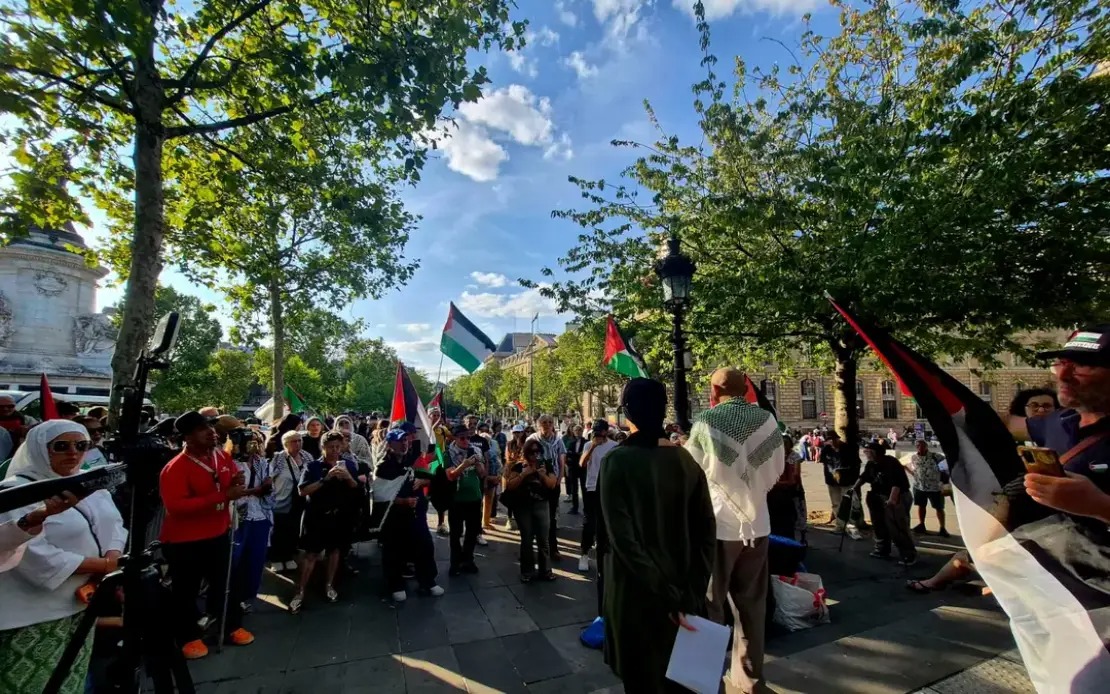
A grassroots international movement has launched an ambitious overland journey from France, with the Palestine Convoy setting out on a path that will traverse multiple continents and several countries before reaching the occupied West Bank. The initiative represents one of the most geographically ambitious civilian-led advocacy campaigns focused on the Palestinian situation, organised by independent activists and civil society groups determined to amplify global awareness of conditions facing Palestinians through direct, visible action across international borders.
The convoy's routing reflects careful symbolic and strategic planning. Participants will first converge in Srebrenica, Bosnia and Herzegovina, a location chosen deliberately to commemorate historical atrocities and draw parallels with contemporary humanitarian concerns. From this initial gathering point, the movement will expand substantially when it reaches Istanbul, where delegations from across Europe and beyond are expected to merge into a larger multinational formation. This phased assembly approach allows organisers to coordinate participants from diverse origins while building momentum throughout the journey.
The planned route continues through Türkiye, Iraq, and Jordan before approaching the West Bank border, a trajectory that underscores the convoy's intent to maintain visibility and generate grassroots engagement across territory directly relevant to broader Middle Eastern geopolitics. The choice of overland travel, rather than air transport, deliberately maximises the convoy's public profile and creates multiple opportunities for awareness-raising events along the route.
Participants number over 500 individuals drawn from remarkably diverse backgrounds and geographic origins. The convoy includes healthcare professionals, academics, trade unionists, students, faith leaders, artists, and other citizens mobilised by shared solidarity with Palestinian causes. Representation spans 20 countries across continents: Malaysia and Indonesia from Southeast Asia, France, Germany, Switzerland, Italy, Spain, Finland, the Netherlands, Belgium, and the United Kingdom from Europe, Canada from North America, Australia from Oceania, Chile from South America, South Africa from the continent, and Tunisia, Algeria, Libya, and Morocco from North Africa, plus Türkiye and the United States. This geographical breadth reflects the transnational nature of contemporary civil society activism and demonstrates that Palestinian advocacy extends far beyond Middle Eastern and Arab constituencies.
The Palestine Convoy's organisers have explicitly positioned the initiative as an independent, people-led international solidarity movement rather than a conventional humanitarian aid operation. This distinction matters considerably, as it frames the convoy's primary objective as advocacy and consciousness-raising rather than material provision. The movement's stated commitment to peaceful, non-violent action reflects contemporary activist norms, though the campaign explicitly targets what organisers describe as human rights violations and the humanitarian crisis confronting Palestinians.
Among specific policy concerns driving the convoy is opposition to what organisers characterise as discriminatory death penalty legislation recently introduced in Israel and affecting Palestinian prisoners. This focus on legislative dimensions demonstrates that the movement engages with concrete legal and institutional frameworks rather than engaging in abstract political rhetoric. The broader campaign also opposes what the movement defines as Israel's occupation of Palestinian territories, framing this as a territorial and political issue demanding international attention.
For Malaysian and Southeast Asian audiences, the convoy's departure carries particular significance given substantial participation from the region. Malaysia and Indonesia, both countries with substantial Muslim populations and historical roles in supporting Palestinian causes through diplomatic and civil society channels, are directly represented within this grassroots initiative. This participation suggests that Palestinian solidarity remains a mobilising issue for regional civil society, distinct from but complementary to official governmental positions on the conflict.
The convoy's mode of transport—combining cars, vans, buses, motorcycles, and bicycles—reflects both practical necessity and deliberate symbolism. The diversity of transport methods ensures accessibility for participants across economic circumstances while creating a visually distinctive presence as the convoy moves through cities and regions. Planned public meetings and awareness events along the route are designed to engage local populations and generate media coverage, transforming the journey itself into a prolonged campaign rather than treating travel as merely functional transit.
The selection of Srebrenica as the initial meeting point carries profound historical weight. The Bosnian enclave witnessed mass atrocities during the 1990s conflict, and invoking this location positions the Palestine Convoy within a broader narrative about preventing humanitarian crises and maintaining international accountability for mass suffering. This framing appeals to global audiences concerned with preventing repetition of documented historical tragedies and underscores the movement's argument that Palestinian circumstances warrant international intervention and witness.
The timing and scale of this initiative reflect broader trends in transnational activism, where civil society increasingly organises across borders to address conflicts and humanitarian concerns with limited direct resolution through conventional diplomatic channels. The Palestine Convoy exemplifies how grassroots movements leverage logistical coordination and public visibility to maintain pressure on international consciousness and policy agendas. For Southeast Asian participants, engagement in this European-originating initiative demonstrates how regional activists connect with global solidarity networks focused on Middle Eastern and Palestinian affairs.
As the convoy progresses, its trajectory will generate sustained media attention and present both opportunities and challenges for organisers attempting to maintain discipline around non-violent messaging while traversing politically sensitive regions. The journey through Türkiye, Iraq, and Jordan will expose participants to varied political environments and local perspectives on Palestinian issues, potentially creating dialogue opportunities but also requiring careful navigation of local sensitivities. The arrival at the West Bank border will represent the culmination of this overland advocacy campaign, though questions remain regarding how border authorities and Israeli security forces will respond to the convoy's arrival and what concrete outcomes the movement anticipates from this multi-month initiative.

