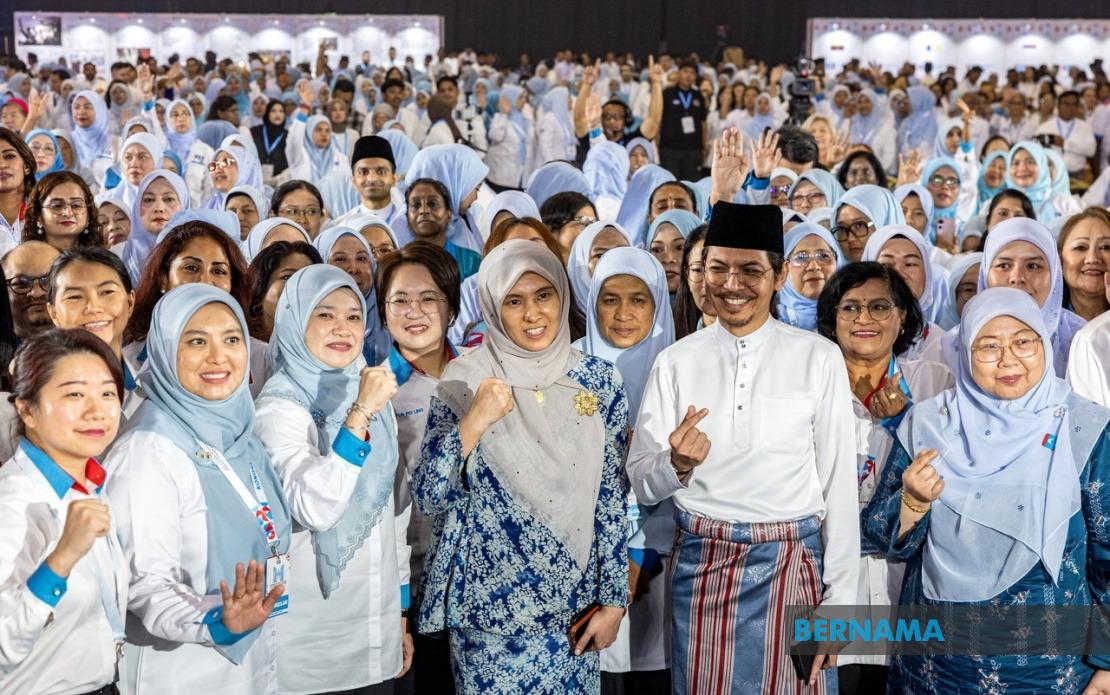
Elected representatives cannot afford to neglect their connection with ordinary citizens at the neighbourhood level if they wish to sustain meaningful relationships with their constituents, according to Angkatan Muda Keadilan (AMK) chief Muhammad Kamil Abdul Munim. Speaking in Melaka during the conclusion of debates on the AMK Chief's Policy Address at the 2026 AMK National Congress, he underscored that establishing durable networks within communities represents a foundational requirement for effective political leadership in Malaysia's complex electoral environment.
Muhammad Kamil argued that proximity to voters and the ability to articulate a compelling message go hand in hand. When party leaders maintain consistent engagement with their communities, they create the conditions necessary to shape public discourse effectively and, critically, to counteract misleading information or hostile narratives initiated by political opponents. This defensive positioning becomes particularly relevant in a landscape where competing voices constantly vie for public attention and credibility.
The AMK chief articulated a comprehensive framework for political effectiveness, identifying multiple reinforcing elements that work in concert. He stressed that organisational visibility, the coherence and persuasiveness of messaging, operational capacity, and channels of communication all matter significantly. However, he suggested that underlying all these mechanisms must be a foundation of authentic relationships and functional networks operating at the grassroots, where most citizens experience politics directly through interactions with local representatives.
A particularly important dimension of his argument concerns the translation of national strategy into local relevance. Muhammad Kamil cautioned that election preparations focused exclusively on shaping narratives at the national or federal level risk missing crucial opportunities to address the specific concerns and aspirations of individual communities. Different neighbourhoods face distinct challenges, whether related to infrastructure, economic opportunity, education, or social services, and leaders who remain detached from these local realities fail to demonstrate understanding of their constituents' lived experiences.
The AMK chief called upon local-level leadership to intensify their engagement with party members, with particular emphasis on newer recruits who may lack deep understanding of the party's foundational principles and historical mission. This represents an acknowledgment that political parties in Malaysia often struggle with member retention and ideological coherence as they grow or experience generational transitions. Without deliberate educational and engagement efforts, newer members may lack the contextual understanding necessary to serve effectively as party ambassadors within their networks.
Muhammad Kamil identified a significant vulnerability in contemporary political organising: the risk that party members become disconnected from the underlying rationale for their participation and commitment. He expressed concern that without concerted effort to transmit party ideals and reinforce understanding of the party's purpose, members might gradually lose sight of the principles that distinguish their political home from alternatives. This drift, he suggested, occurs insidiously, almost imperceptibly, yet fundamentally weakens the party's coherence and effectiveness.
He appealed specifically for local leaders to initiate more frequent programmes and activities designed to deepen members' grasp of party doctrine and the historical context of the party's struggle. Such activities serve multiple purposes simultaneously: they provide opportunities for horizontal bonding among members, they reinforce commitment and sense of belonging, and they serve as educational vehicles transmitting institutional knowledge and values across generations. Without these deliberate mechanisms, institutional memory becomes fragile and new members inherit only procedural knowledge without ideological grounding.
The emphasis on clarifying duties and responsibilities reflects a recognition that party members sometimes undertake their roles without genuine comprehension of what they are working toward. Muhammad Kamil's concern appears directed toward transforming party members from passive participants into conscious actors who understand their place within a larger struggle with defined objectives and values. This transformation from nominal membership to engaged commitment depends substantially on the quality and frequency of interaction between local leadership and the broader membership.
For Malaysian political observers, this intervention carries implications extending beyond the AMK specifically. It represents an articulation of challenges facing opposition political movements more broadly in Malaysia, where maintaining party cohesion and member engagement presents ongoing difficulties in a competitive political system. The emphasis on grassroots work and local community engagement, while not novel, reflects a reckoning with the reality that electoral success depends not simply on sophisticated national campaigns but on the unglamorous work of maintaining thousands of local relationships and networks across the country.
The timing of these remarks, with explicit reference to election preparations, suggests the AMK is positioning itself for heightened political activity in the period approaching 2026 and beyond. Building such grassroots infrastructure cannot be accomplished hastily in the weeks immediately preceding an election, requiring instead sustained investment across several electoral cycles. Muhammad Kamil's intervention appears designed to reorient party priorities toward this longer-term foundation-building, even as national-level political discussions capture media attention and public imagination.
Moreover, his framing of narrative control and counter-messaging through grassroots engagement reflects an understanding that information flows in multiple directions in contemporary Malaysia. Voters increasingly access political messaging through varied channels and evaluate competing claims with greater sophistication than in previous decades. Party machinery that operates only at the national level, relying purely on media and centralised messaging, operates at a disadvantage compared to organisations maintaining dense networks of trusted local messengers who can explain party positions within contexts of pre-existing relationships and demonstrated commitment to community concerns.

