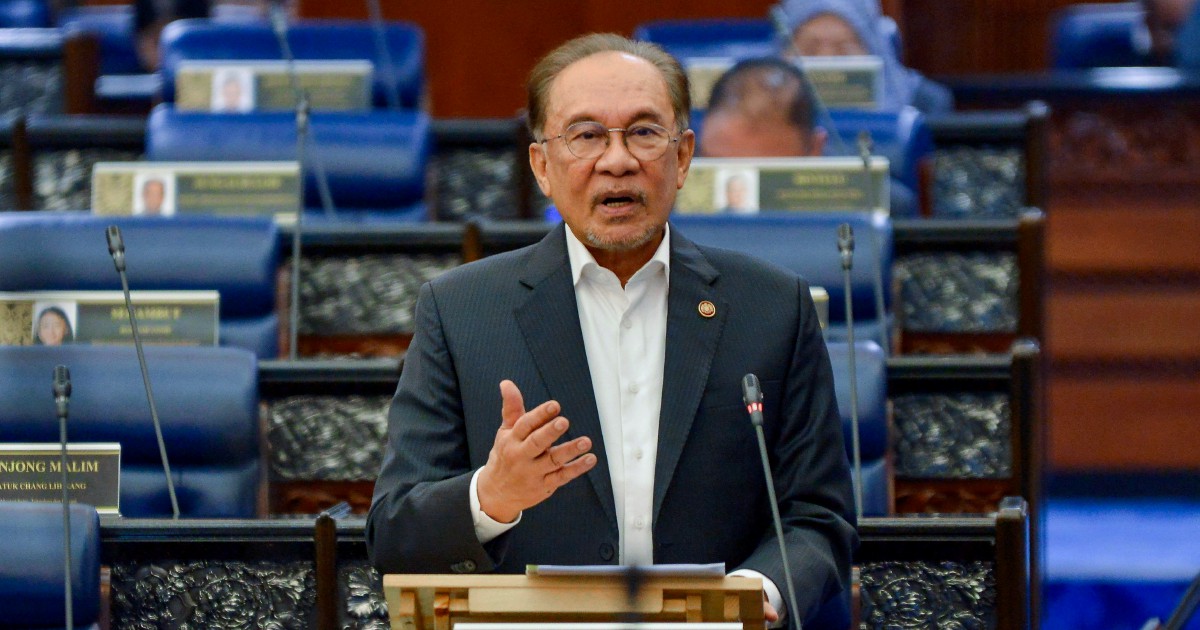
Prime Minister Datuk Seri Anwar Ibrahim has acknowledged a significant shortfall between Malaysia's Retirement Fund Incorporated (KWAP) investment income and the government's burgeoning pension obligations, drawing attention to one of the country's most pressing long-term fiscal pressures. The fund's annual earnings of RM12.9 billion represent barely 29 percent of the nearly RM45 billion that federal authorities must allocate yearly to service pension liabilities for retirees across the civil service, military, and other public sector schemes.
This funding gap underscores the structural challenges facing Malaysia's public pension system at a time when the government is already grappling with elevated debt levels and competing budget priorities. The disparity between what KWAP generates through equity returns, fixed-income investments, and other portfolio assets and what the Treasury must disburse annually reflects both the maturation of Malaysia's pension base and the cumulative obligations inherited from decades of public sector employment commitments. With a growing cohort of retirees and longer life expectancies, the annual pension bill has swollen considerably, placing mounting pressure on the federal budget.
The pension funding challenge has become particularly acute in the context of Malaysia's broader fiscal consolidation efforts. The government has committed to achieving a balanced budget by 2027, a target that would be significantly complicated if pension obligations continue to escalate faster than economic growth or tax revenues. Anwar's explicit acknowledgment of the KWAP shortfall suggests that policymakers are facing difficult trade-offs between maintaining pension levels, increasing contributions, or exploring structural reforms that many governments in the region are reluctant to contemplate.
KWAP's investment performance, while generating RM12.9 billion annually, depends heavily on global market conditions, equity valuations, and the geopolitical environment. As a significant institutional investor in Malaysia and regional markets, the fund's returns have fluctuated in recent years amid volatile interest rates, technology sector cycles, and economic uncertainty. Should returns decline from current levels, the gap between earned income and pension payouts would widen further, intensifying pressure on the government budget.
The scale of the shortfall—some RM32 billion annually—must ultimately be funded from general government revenue, whether through taxation, borrowing, or budget reallocation. This represents a substantial claim on the Treasury that competes with spending on healthcare, education, infrastructure, and debt servicing. For Malaysian taxpayers and citizens, the implication is clear: unsustainable pension dynamics will either force difficult spending choices elsewhere or require gradual adjustments to retirement benefits and contribution rates.
Regional governments face similar dilemmas. Singapore's Central Provident Fund operates on a different model, with individuals funding their own retirement, while Thailand and Indonesia confront comparable pressures on their public pension schemes. Malaysia's KWAP system, which relies on both fund returns and government top-ups, mirrors patterns seen across Southeast Asia where aging workforces and generous legacy benefits create mounting fiscal strain. The region's experience suggests that without proactive reform, pension obligations could become increasingly destabilizing for public finances.
One potential avenue for addressing the gap involves enhancing KWAP's investment returns through more sophisticated portfolio management, greater exposure to higher-yielding assets, or expanded international diversification. However, such strategies carry their own risks and may be constrained by government directives emphasizing domestic investment and financial stability. Alternative approaches—including gradual increases to retirement ages, adjustments to benefit formulas, or higher government contributions—each carry political implications that elected officials typically prefer to defer.
The pension funding issue also intersects with broader questions about Malaysia's social contract and intergenerational equity. Current retirees depend on commitments made decades ago, while younger workers wonder whether the system will remain solvent when they retire. Public sector unions, which represent the interests of active and retired civil servants, have traditionally resisted benefit reductions, making political consensus on reform difficult to achieve.
Anwar's transparency in discussing the KWAP shortfall represents a departure from past administrations, which often downplayed such challenges. This openness may reflect either a commitment to honest governance or an implicit signal that the government recognizes a reckoning with pension finances cannot be indefinitely postponed. Whether this acknowledgment translates into concrete policy action—whether through contribution increases, benefit adjustments, or structural reforms—will become apparent in coming budget cycles.
The RM45 billion annual pension obligation will almost certainly continue growing unless parametric reforms are introduced. With KWAP's investment income unlikely to match this growth trajectory over the long term, the government faces mounting pressure to either accept a rising structural deficit attributable to pensions, increase revenues substantially, or embrace politically contentious reforms. For Malaysia's policymakers, the window for gradual, manageable adjustment to the pension system is narrowing, making the timing of any reform initiative increasingly critical for long-term fiscal sustainability.

