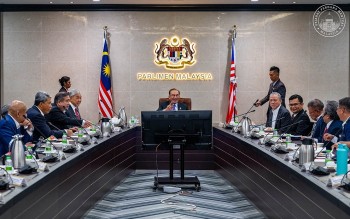
Prime Minister Datuk Seri Anwar Ibrahim has ordered direct intervention by two key government agencies to address mounting cost pressures afflicting Malaysia's manufacturing sector, signalling growing official concern about the ripple effects of ongoing global supply chain disruptions. The instruction came after the National Economic Action Council, chaired by Anwar on Monday, assessed measures needed to strengthen the country's manufacturing resilience during a period of heightened economic uncertainty. The directive reflects mounting anxiety within government about the interconnected nature of Malaysia's manufacturing ecosystem, where weakness in one pillar threatens stability across multiple downstream industries.
The Prime Minister's engagement directive targets both the Ministry of Investment, Trade and Industry (MITI) and the Ministry of Economy, tasking them with deeper consultation among affected manufacturers to develop practical policy responses. Anwar, who simultaneously holds the finance portfolio, emphasised that government is taking industry concerns seriously and committed to formulating interventions capable of sustaining Malaysia's manufacturing competitiveness over the longer term. The timing of this high-level attention underscores the urgency with which the administration views the challenge, moving beyond acknowledgement of problems toward concrete engagement with stakeholders to devise workable solutions.
The plastics industry emerged as a particular focal point of government concern, reflecting its critical but often underappreciated role within Malaysia's broader industrial structure. While plastics might appear as a commodity sector to casual observers, it functions as a vital supply backbone for numerous higher-value manufacturing segments that generate substantial economic output and employment. The industry's importance transcends simple production metrics; it represents a structural vulnerability in the economy whereby cost shocks originating in one sector rapidly transmit through interconnected supply chains. This vulnerability has become acutely visible as global supply disruptions persist, pushing input costs upward across the sector and threatening the competitiveness of dependent industries.
Economy Minister Akmal Nasrullah Mohd Nasir provided detailed context during a recent ministry briefing, revealing the scale of the plastics sector within Malaysia's industrial portfolio. The industry generated sales valued at RM62.69 billion in 2025, representing a decline from the RM64.78 billion recorded during the previous year, evidence that cost pressures and market headwinds are already affecting sector performance. This contraction raises questions about the trajectory of dependent industries should the trend accelerate, with particular concern for sectors relying heavily on plastic inputs. The year-on-year decline, though modest in percentage terms, signals weakening momentum at a time when manufacturers require strengthening rather than deterioration of their supply ecosystems.
Within the plastics sector, market segmentation reveals the breadth of downstream impacts whenever the industry faces pressure. Packaging applications account for 45 percent of the market, making the food and beverage manufacturing segment directly vulnerable to any cost escalation in plastic inputs. The electrical and electronics sector represents an additional major consumer at 29 percent of the market, meaning that Malaysia's globally important E&E manufacturing cluster faces particular exposure to plastics sector challenges. These two segments alone represent three-quarters of total plastics consumption, concentrating risk and amplifying the significance of any stabilisation measures directed at the source industry.
Beyond packaging and electronics, the effects of plastics sector stress extend into automotive manufacturing, medical devices, construction, agriculture and numerous export-oriented manufacturing operations. This breadth of exposure illustrates why the government has positioned plastics as a strategic concern rather than a sectoral peculiarity. For Malaysia, which has invested decades in building integrated manufacturing clusters spanning multiple industries, weakness in foundational supply sectors threatens the entire edifice. Automotive manufacturers sourcing plastic components, medical device producers requiring specialised polymers, and agricultural processors dependent on plastic packaging all face transmission of cost pressures should the plastics industry continue under strain.
The government's response strategy centres on facilitated dialogue between policymakers and industry stakeholders, suggesting an approach emphasising collaboration over prescriptive intervention. MITI and the Economy Ministry will function as forums through which manufacturers can articulate specific pain points and constraints, enabling identification of targeted policy levers potentially available to government. This approach acknowledges that cost pressures arising from global supply chain dysfunction may have limited responsiveness to purely domestic policy instruments, yet targeted measures addressing regulatory or operational inefficiencies could provide meaningful relief at the margins.
The National Economic Action Council's focus on manufacturing resilience reflects broader policy recognition that sustained economic growth requires stable and competitive production ecosystems. Resilience in this context means not merely surviving short-term supply shocks but maintaining sufficient cost competitiveness to preserve manufacturing investments and employment. For Malaysia, where manufacturing employment sustains millions of workers and generates crucial foreign exchange through exports, sector competitiveness carries immediate social and macroeconomic consequences. The government's engagement initiative thus addresses not peripheral concerns but central questions of economic viability and employment stability.
The challenges confronting Malaysia's manufacturers must be understood within the context of intense global competition for manufacturing investment and supply chain positioning. Countries across Asia compete aggressively to attract and retain manufacturing clusters, and persistent cost disadvantages relative to regional peers risk gradual investor migration. The government's intervention in addressing plastics sector pressures therefore carries strategic implications beyond immediate cost relief, extending to competitiveness relative to Vietnam, Thailand, Indonesia and other regional manufacturing competitors. Manufacturers will assess whether Malaysia can deliver stable, cost-competitive input supplies or whether they should consider relocating production to alternatives better able to manage supply chain pressures.
Implementation of solutions emerging from the planned ministry engagements will require coordination spanning multiple government agencies and levels, potentially involving trade policy, investment incentives, research and development support, or infrastructure investments. The breadth of coordination required suggests that meaningful outcomes may take time to develop, underscoring the importance of the government's early engagement rather than delayed response after competitiveness erosion has occurred. Industry stakeholders will be monitoring the pace at which ministerial discussions translate into concrete policy adjustments capable of materially alleviating the cost pressures they currently confront.

