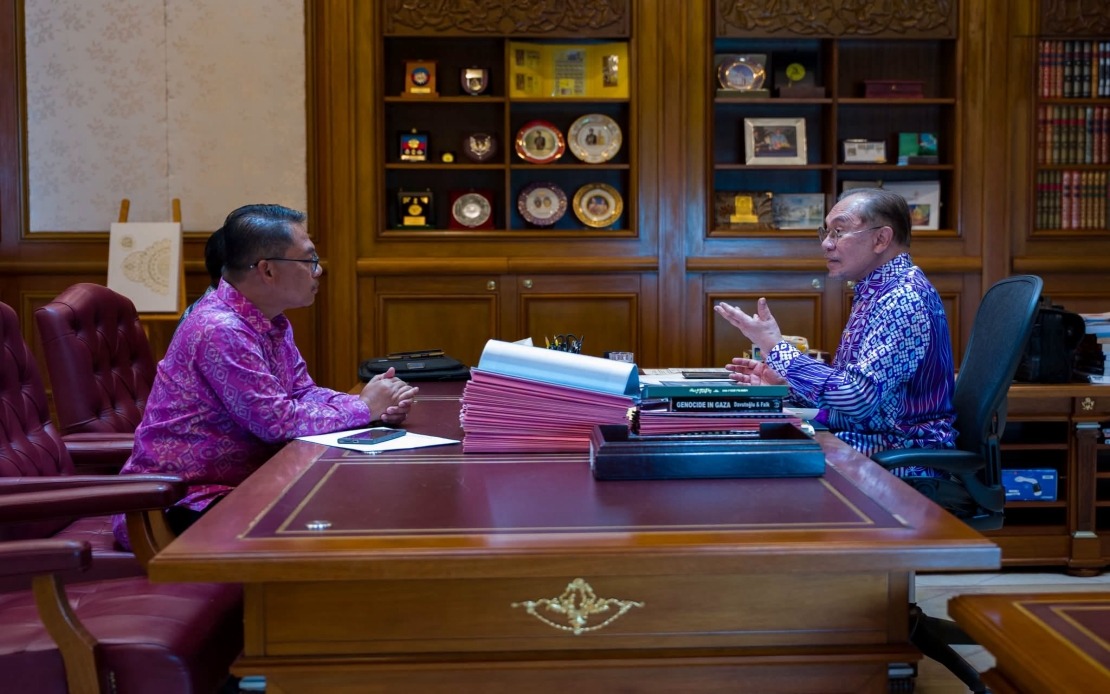
The federal government is committed to improving how targeted fuel subsidies operate in Sabah and Sarawak, with officials pledging to incorporate feedback gathered from communities across both states. Datuk Mustapha Sakmud, the Minister in the Prime Minister's Department responsible for Sabah and Sarawak, announced the refinement process on Tuesday during a visit to Kota Kinabalu, signalling that policymakers remain responsive to challenges emerging on the ground since the scheme's nationwide rollout earlier this month.
Mustapha's statement underscores a broader commitment from the MADANI administration to balance fiscal prudence with social responsibility in energy pricing. The minister indicated that ongoing consultations involving key stakeholders, state administrations, and federal agencies will shape how the subsidy framework evolves. This consultative approach reflects recognition that East Malaysian states, with their dispersed populations and geographic challenges, may require implementation models differing from peninsular Malaysia. Mustapha emphasised that refinements must ensure programme effectiveness does not compromise living standards, particularly for communities in remote and rural locations where fuel supply chains are already complex and costly.
Prime Minister Datuk Seri Anwar Ibrahim has personally engaged with residents grappling with the practical realities of the BUDI Diesel initiative's introduction, demonstrating high-level attention to implementation friction. Despite his substantial official commitments, Anwar made time to hear directly from ordinary Malaysians about specific difficulties they encountered as the new subsidy mechanism took effect. This direct engagement signals that the Prime Minister regards grassroots concerns as integral to policy evaluation rather than peripheral complaints requiring bureaucratic filtering. Mustapha referenced this personal involvement as evidence that the government values community perspectives and remains willing to recalibrate approaches when evidence suggests adjustments are warranted.
The BUDI Diesel scheme launched nationwide on July 1, introducing a targeted subsidy structure replacing the previous blanket fuel support system. Under the framework, qualifying owners of private diesel vehicles receive a fundamental monthly allocation of 200 litres at the subsidised rate of RM2.10 per litre. Owners of sports utility vehicles and pickup trucks meeting specified eligibility requirements may claim an additional 100 litres monthly through a separate application process. This tiered structure aims to concentrate government spending on households and businesses with demonstrated need while reducing outlays for high-income vehicle owners less dependent on subsidies.
The transition to targeted subsidies represented a significant policy shift, moving away from universal price support that benefited all consumers regardless of income or vehicle type. Policymakers viewed this recalibration as essential for fiscal sustainability, particularly as the government confronts mounting development pressures and infrastructure demands. However, the initial implementation phase has generated feedback suggesting that the allocation system, quotas, and application procedures require adjustment in East Malaysian contexts where diesel dependency is substantially higher and alternative fuel sources less developed.
Rural and remote communities have expressed particular concern about quota adequacy for commercial and agricultural vehicles essential to livelihood activities. Farmers, small traders, and transport operators indicated that standard allocations fail to account for the essential role diesel plays in regional economies dependent on vehicle transport. These stakeholders have articulated compelling cases for modified quota structures reflecting local economic realities rather than uniform national parameters. Their input appears to have reached senior government levels, prompting the commitment to refine implementation particulars.
The government's responsiveness to feedback carries political implications for Sabah and Sarawak, where fuel pricing and subsidy policies historically attract intense scrutiny. Both states maintain substantial petroleum resources yet frequently perceive federal resource distribution as inadequately reflecting their contributions. Demonstrations of willingness to adjust national policies based on East Malaysian input can strengthen public confidence that the federal government genuinely considers regional interests rather than implementing one-size-fits-all approaches disconnected from local circumstances. This sentiment has periodically underpinned political challenges in state-level politics, making perceived dismissiveness toward regional concerns potentially costly for ruling coalitions.
The consultation process underway will likely examine whether quota levels require differentiation between urban and rural users, whether application procedures present accessibility barriers for less digitally connected populations, and whether implementation timelines accommodated sufficient notice for affected communities. State governments in Sabah and Sarawak may push for greater autonomy in programme administration, enabling local authorities to adjust parameters within federal guidelines. Such decentralised implementation could prove more responsive to geographic variation and population needs across dispersed settlements.
Mustapha's invocation of the MADANI government's principle that people's voices constitute sacred input reflects the administration's emphasis on governance rooted in public consultation rather than top-down directive. This rhetorical commitment carries practical implications: the government is publicly committing itself to transparent recalibration processes where communities can observe how feedback translates into policy adjustments. Failure to demonstrate tangible modifications following stated consultation commitments would undermine credibility and generate cynicism about government responsiveness generally.
The refinement process also occurs amid broader regional economic pressures. Southeast Asian economies confront inflation, energy price volatility, and competing fiscal demands. Malaysia's fuel subsidy approach attracts regional attention as other governments evaluate optimal balance between protecting household budgets and maintaining fiscal stability. How Malaysia implements targeted subsidies while preserving programme integrity and public acceptance will inform policy conversations across the region. Successful navigation of East Malaysian feedback, translating it into workable modifications, could strengthen Malaysia's standing as a government genuinely attempting to harmonise fiscal discipline with equitable treatment of diverse regional populations.
Looking ahead, the government's stated commitment to refining implementation provides opportunity to address systemic vulnerabilities in the BUDI Diesel framework before they generate broader discontent. Whether refinements emerge swiftly enough to prevent frustration among affected communities remains to be determined, but the explicit acknowledgment that adjustments are warranted and actively under consideration represents meaningful recognition that initial implementation parameters require recalibration based on ground-level experience.

