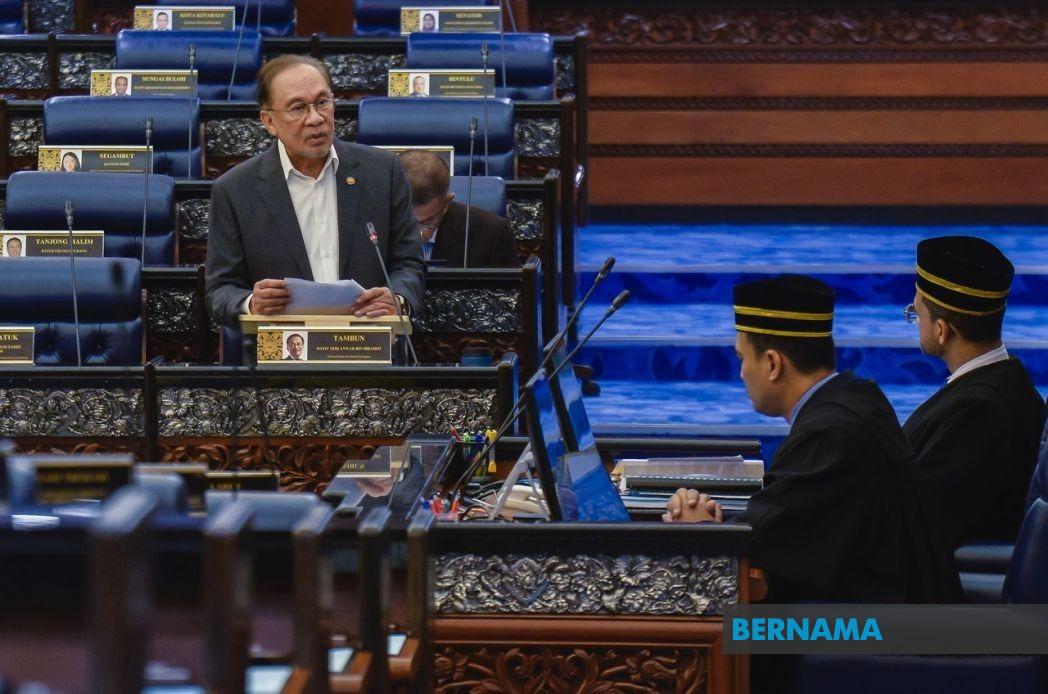
Prime Minister Datuk Seri Anwar Ibrahim has pledged that the government will seek additional information and engage in substantive discussions with petroleum companies regarding complaints that petrol station operators experienced substantial losses during the shift to the country's enhanced fuel subsidy arrangement. The commitment signals the administration's willingness to address grievances from retail fuel distributors who bore the operational costs of implementing the new targeted subsidy framework for RON95 petrol and diesel.
In remarks delivered during Minister's Question Time at the Dewan Rakyat, Anwar acknowledged the significant role played by oil companies and petrol station operators in facilitating the rollout of Malaysia's targeted fuel subsidy programme. He emphasised that without their active participation and cooperation, the government would have faced formidable obstacles in delivering the subsidy mechanism efficiently across the nation's thousands of retail outlets. This recognition underscores the delicate balance required between government policy objectives and the commercial viability of downstream petroleum businesses.
The issue surfaced when Ipoh Timur member of parliament Howard Lee Chuan How raised specific concerns about the financial impact on petrol station operators, citing estimates of between RM40,000 and RM50,000 in losses incurred by individual operators during the subsidy transition period. These figures point to a significant squeeze on margins for retailers who had to manage inventory adjustments and price changes while maintaining operational costs. The scale of potential losses, if representative of the broader industry experience, suggests that the transition created meaningful disruptions to business models across the retail fuel sector.
Anwar indicated that he would direct Second Finance Minister Datuk Seri Amir Hamzah Azizan to coordinate the information-gathering exercise and facilitate talks with the petroleum companies involved in the supply chain. This delegation to the Second Finance Minister suggests the government recognises the technical and financial dimensions of the dispute may require specialist attention beyond the prime minister's office. The move also signals that the administration is treating the matter with sufficient seriousness to assign it to a senior financial official.
The government's targeted RON95 petrol and diesel subsidy programme represents a shift from the previous universal subsidy model, designed to direct government support more precisely toward lower-income consumers while reducing overall fiscal expenditure on fuel support. Such structural changes in subsidy mechanisms inevitably create transition costs and operational challenges for the businesses responsible for implementing them at the consumer level. Petrol station operators occupying the retail interface between government policy and consumer experience often absorb unexpected costs during policy shifts.
The prime minister framed the government's approach as collaborative rather than dismissive, suggesting that if deficiencies have been identified in how the transition was executed, there exists scope for discussion and resolution. This tone indicates the administration's preference for working through outstanding issues rather than allowing grievances to fester within the petroleum retail sector. Such an approach recognises that maintaining cooperative relationships with downstream operators is essential for the long-term success of subsidy policies.
The context of Malaysia's fuel subsidy structure makes this issue particularly significant for regional observers. Malaysia maintains one of Southeast Asia's more generous fuel subsidy regimes, with the government absorbing substantial costs to keep domestic fuel prices competitive. Any disruption to the retail distribution network or loss of operator cooperation could compromise the effectiveness of subsidy delivery and potentially create supply or pricing irregularities at the consumer level. For Malaysian drivers and businesses dependent on fuel, petrol station operator health directly affects their access to subsidised fuel.
The transition mechanism Anwar referred to involves considerable operational complexity. Petrol station operators must manage their inventory of previously purchased fuel at older subsidy rates while simultaneously adjusting to new pricing structures. This creates temporary working capital challenges and potential inventory valuation losses, particularly for operators with large fuel tank capacity or those who restocked shortly before the subsidy change. The alleged RM40,000 to RM50,000 range suggests these losses are neither trivial nor uniform across the retail sector.
Looking forward, the government's commitment to investigate and discuss these losses carries implications beyond the immediate operators affected. How the administration responds to documented transition losses will influence industry confidence in future policy changes. If the government demonstrates willingness to address legitimate operator grievances, it may facilitate smoother implementation of subsequent subsidy adjustments or other downstream petroleum sector reforms. Conversely, unresolved grievances could create resistance to policy changes deemed necessary for fiscal sustainability or equity objectives.
The broader policy context reflects Malaysia's ongoing tension between maintaining affordable fuel costs for consumers and managing government expenditure on energy subsidies. Targeted subsidy mechanisms are intended to achieve both objectives more efficiently than universal subsidies, but successful implementation requires that transition costs do not accumulate as hidden losses borne entirely by private businesses. The government's investigation signals recognition that sustainable subsidy policies require transparent accounting for implementation costs and fair distribution of transition burdens between public and private sector participants.

