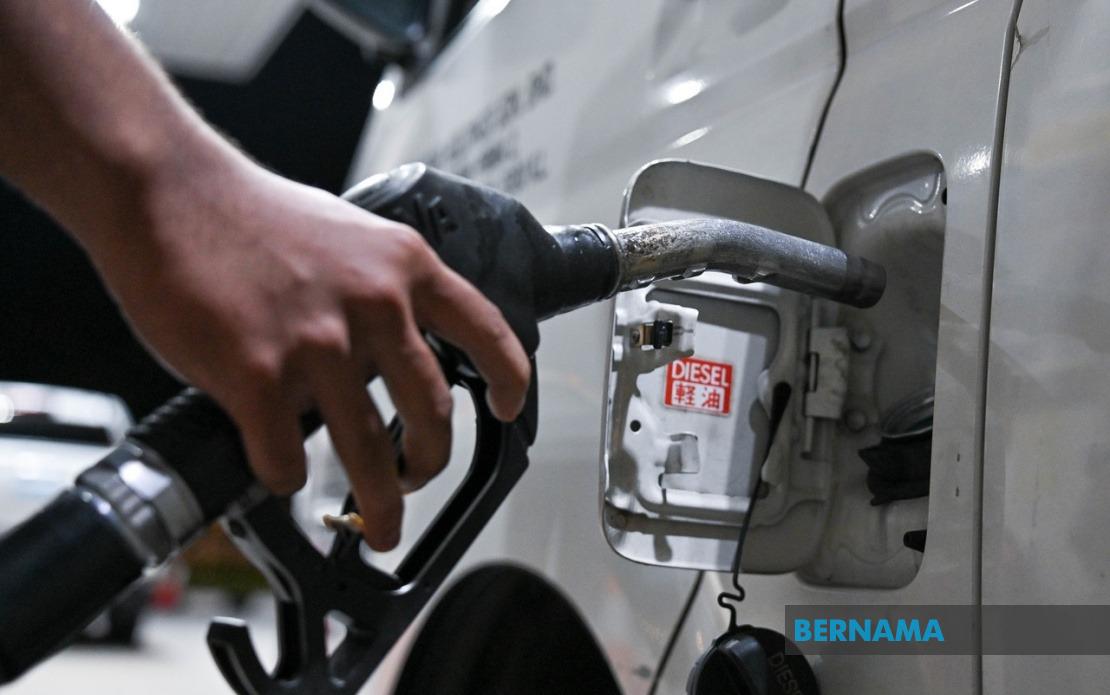
The Federal Government has committed to an ongoing programme of assessment for the BUDI Diesel initiative, drawing on empirical data gathered from petrol stations and direct input from industry participants and users across Sabah and Sarawak. Finance Minister II Datuk Seri Amir Hamzah Azizan outlined this adaptive strategy during a press conference in Kota Kinabalu on Friday, emphasizing that policy refinements will emerge organically from real-world usage patterns rather than predetermined schedules.
Less than a week into its July 1 launch, the programme has successfully maintained operational stability across all participating petrol stations in the two states, with registered users able to complete purchases without significant disruption. The finance ministry's early assessment indicates that the initial phase has achieved its primary objective of establishing reliable system infrastructure while ensuring eligible participants can access their fuel quotas. This foundational success provides the platform for more granular analysis as transaction volumes accumulate over coming weeks.
The government's decision-making framework for BUDI Diesel reflects a departure from fixed review periods, instead adopting what officials term a data-driven methodology. Rather than waiting for a predetermined window to examine the programme's impact, the finance ministry will continuously evaluate actual consumption figures, demographic patterns, and operational metrics. This approach mirrors adjustments already made to the earlier BUDI95 scheme, where the quota was reduced from 300 litres to 200 litres following analysis of user behaviour. Amir Hamzah highlighted that this revision was not a cost-cutting measure but a recalibration based on empirical evidence showing that between 94 and 95 per cent of users consumed less than 300 litres monthly, while fewer than one per cent consistently exceeded 200 litres.
The implications of this flexible methodology are significant for Malaysian consumers and regional fuel subsidy policy. By anchoring decisions to actual usage data rather than assumptions, the government aims to target subsidies more precisely, potentially reducing waste while maintaining equitable access. For Southeast Asia, where fuel subsidy schemes often face fiscal pressure and efficiency challenges, the BUDI programme's emphasis on evidence-based management offers a comparative case study in balancing affordability with fiscal sustainability. The approach also signals willingness to adjust course if ground realities diverge from initial projections, a pragmatic stance that acknowledges the complexity of implementing nationwide or regional schemes.
Amir Hamzah acknowledged that a comprehensive reassessment of the quota structure would require additional time as monitoring data continues to accumulate. However, the finance ministry is already addressing specific issues flagged by stakeholders, particularly concerns surrounding vehicle ownership verification and eligibility criteria. Government teams have been stationed at petrol stations to engage directly with users and identify systemic problems requiring intervention. This dual-track approach—allowing aggregate metrics to guide structural decisions while simultaneously resolving individual grievances—reflects the operational reality of managing a scheme affecting millions of motorists.
One area receiving particular attention involves designing mechanisms to serve underserved populations and commercial entities. While the MyKad identification system functions as the standard verification tool for individual consumers, the ministry is exploring alternative arrangements such as fleet cards for service providers operating in remote or rural areas. This flexibility recognises that a uniform implementation approach may create unintended barriers for transportation operators, small businesses, and communities in less densely populated regions. By incorporating such variations into the programme's design, the government aims to ensure that subsidy benefits reach intended beneficiaries across diverse geographic and economic contexts.
Public understanding and accessibility form another dimension of the ongoing monitoring process. The ministry views the BUDI Diesel enquiry counters established at petrol stations as essential infrastructure for helping consumers navigate eligibility requirements and application procedures. Collaboration with oil companies and station operators will intensify to streamline these support services, including the integration of QR code technology and online platforms that enable rapid eligibility verification. Enhanced public communication reduces friction in the system and builds user confidence, particularly among older or less digitally literate segments of the population who may require additional assistance.
The experience with BUDI Diesel carries implications for how Malaysia approaches future subsidy programmes and welfare initiatives. The emphasis on real-time data analysis and iterative adjustment suggests a institutional shift toward more responsive, evidence-based policy-making. Rather than implementing programmes in a static form and only reviewing them after extended periods, the government is signalling commitment to continuous improvement and mid-course corrections. This approach demands robust data infrastructure, skilled personnel to interpret metrics, and organisational cultures that treat feedback mechanisms seriously rather than defensively.
For Malaysian businesses and transport operators, the programme's evolution will depend heavily on how officials interpret emerging data patterns. Logistics companies, taxi operators, and commercial vehicle owners will closely monitor whether quotas remain stable, whether alternative verification mechanisms genuinely function, and whether government support services actually address ground-level challenges. The credibility of BUDI Diesel hinges partly on the transparency of this monitoring process and the extent to which stakeholders perceive their concerns are genuinely influencing policy adjustments.
Regionally, the BUDI Diesel scheme and its adaptive management approach merit attention from policymakers in neighbouring economies grappling with fuel subsidy pressures and the need to support vulnerable populations. Indonesia, Thailand, and the Philippines have all experimented with targeted subsidy mechanisms, often struggling with implementation complexities and fiscal sustainability. Malaysia's emphasis on data-driven refinement, flexibility in operational design, and direct stakeholder engagement offers lessons in how governments might balance political objectives with fiscal constraints and administrative feasibility. The coming months will test whether this methodology delivers both equitable access and sustainable outcomes.

