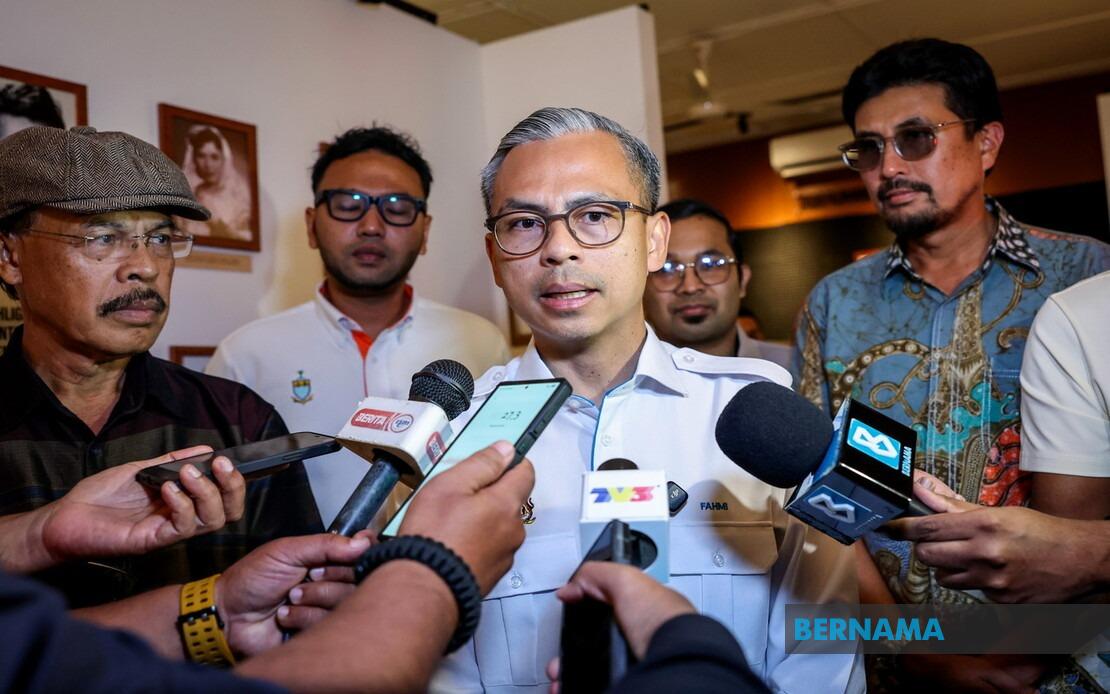
The government is moving forward with plans to bolster the Nordin Ahmad Gallery, a museum housed within a heritage schoolhouse in Permatang Pasir, Bukit Mertajam, as part of broader efforts to safeguard Malaysia's cinematic and cultural legacy. Communications Minister Datuk Seri Fahmi Fadzil announced the initiative during a July 25 visit to the gallery, signalling renewed official commitment to preserving the legacy of the late Datuk Nordin Ahmad, a towering figure in Malaysia's golden age of cinema who passed away decades ago but remains culturally significant.
The Nordin Ahmad Gallery, which opened to the public in January 2025, occupies a renovated section of Sekolah Kebangsaan Permatang Pasir, an institution built in 1888 that the legendary actor himself attended as a student. The gallery houses an interactive exhibition space containing archival photographs, personal memorabilia, and digitised materials spanning Nordin Ahmad's prolific career, including his most celebrated performances in the 1956 classic Semerah Padi and the 1961 historical epic Hang Jebat. The venue represents a tangible connection between Malaysia's cultural past and its present-day efforts to engage younger generations with heritage conservation.
Fahmi outlined a multi-pronged approach to enhancing the facility, beginning with high-level coordination between government ministries. He committed to consulting with the Unity Ministry, under whose jurisdiction museum services fall, to identify suitable forms of assistance, funding mechanisms, and professional advisory support tailored to the gallery's operational needs. This inter-ministerial approach reflects recognition that cultural preservation initiatives require coordinated input across different government portfolios.
A central component of the government's support strategy involves enlisting the National Film Development Corporation of Malaysia (FINAS) to contribute archival materials that would substantially enrich the gallery's existing collection. Fahmi specifically mentioned the potential for FINAS to provide high-resolution digitised versions of classic Malay films, a resource that would position the gallery as a genuine repository of cinema history rather than merely a biographical museum. Such materials would prove invaluable to researchers, filmmakers, and cultural institutions studying Malaysia's contribution to Southeast Asian cinema.
Beyond traditional curatorial approaches, Fahmi advocated for modernising how the gallery presents its content to appeal to younger visitors. He proposed leveraging digital technology and social media platforms to bridge the generational gap, suggesting specific strategies such as creating TikTok filters and backgrounds derived from Nordin Ahmad's films. This approach acknowledges that heritage institutions must adapt their engagement methods to survive in a digital-first media environment, particularly when seeking to transmit cultural knowledge to demographics that primarily consume content through social platforms.
The gallery's creation was facilitated through the Seberang Perai Town Grant Programme, operating under the Levelling Up Seberang Perai (LUSP) initiative, with backing from the Implementation Coordination Unit within the Prime Minister's Department and the Penang Museum and Art Gallery Board. The renovation of the historic schoolhouse represents a form of heritage-led urban revitalisation, converting a protected structure into a functioning cultural space while maintaining its historical integrity. Such adaptive reuse projects are increasingly important as Malaysian towns seek to balance modernisation with cultural conservation.
Nordin Ahmad himself embodied the cultural significance that the government now seeks to preserve and promote. Born in the Permatang Pauh district, he rose to prominence during an era when Malay cinema was experiencing remarkable creative vitality, attracting audiences throughout the Malay-speaking world. His on-screen charisma and range across dramatic and action roles established him as a foundational figure in the industry, comparable in cultural stature to cinema icons across Southeast Asia. His work predated the digital disruption that would eventually transform film production and distribution, making preservation efforts all the more critical.
The gallery's establishment comes in the context of renewed official recognition of Nordin Ahmad's contributions to Malaysian culture. On July 11, nearly 55 years following his death, the late actor was posthumously conferred the Darjah Setia Pangkuan Negeri (DSPN) honour, carrying the title of Datuk, during the State Awards ceremony marking the 85th birthday of Tun Ramli Ngah Talib, Yang Dipertua Negeri Pulau Pinang. This recognition, while ceremonial, signals government acknowledgement that certain cultural figures merit formal state honours even decades after their passing, underscoring their enduring significance.
The Penang Karyawan Association, represented at the gallery visit by President Datuk Dr Sohaimi Abdul Aziz, has championed efforts by local art and professional communities to uphold Nordin Ahmad's legacy. These grassroots initiatives preceded government involvement, demonstrating that cultural preservation often emerges from community commitment before receiving institutional backing. The government's engagement represents validation of such efforts and offers resources that volunteer-led organisations typically cannot access independently.
For Malaysia and Southeast Asia more broadly, the gallery project embodies broader questions about cultural memory in rapidly modernising societies. As traditional entertainment forms give way to digital streaming and contemporary content consumption patterns, earlier eras of regional cinema risk fading from public consciousness unless actively preserved and presented to new audiences. The Nordin Ahmad Gallery, supported by multi-level government coordination and augmented by digital innovation, offers a model for how heritage institutions might remain relevant and accessible in the twenty-first century.
The initiative also reflects growing recognition within Malaysian policymaking that cultural soft power depends on successful domestic transmission of heritage values. Younger Malaysians who encounter Nordin Ahmad's films and life story through modernised gallery experiences become ambassadors for Malaysian cinema history when engaging with regional and international audiences. In this sense, heritage preservation carries implications extending beyond nostalgia into questions of national cultural identity and regional influence.
Moving forward, the success of these support initiatives will depend on sustained commitment beyond initial announcements. Implementation of FINAS contributions, digital platform development, and content upgrades will require ongoing coordination and adequate resource allocation. Monitoring visitor engagement, particularly among school groups and younger demographics, will indicate whether modernised presentation methods effectively transmit cultural knowledge across generational divides. The gallery thus represents both a completed restoration project and the beginning of a longer-term experiment in heritage communication.

