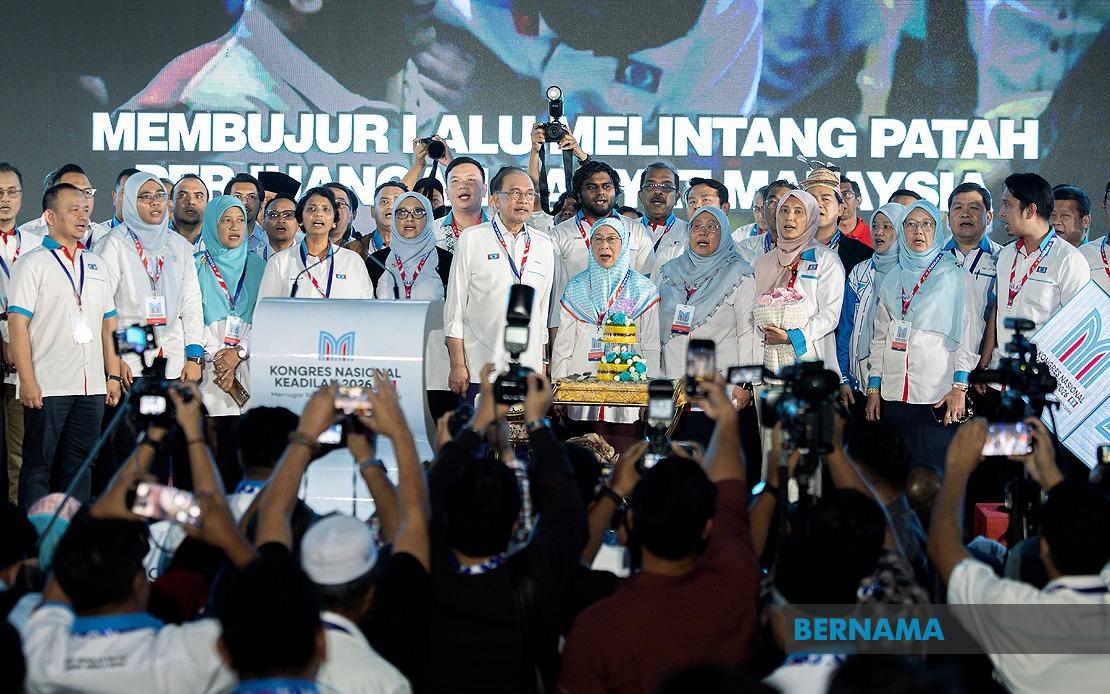
Prime Minister Datuk Seri Anwar Ibrahim has committed to amending the Tabung Haji Act 1995 to restore and maintain public trust in Malaysia's largest Islamic financial institution. The announcement came during the conclusion of the Parti Keadilan Rakyat's 2026 National Congress in Kuala Lumpur, signalling the MADANI Government's determination to address long-standing concerns about institutional integrity that have plagued the organisation in recent years. Anwar, who doubles as Finance Minister, framed the legislative overhaul as essential to demonstrating that governance improvements extend beyond rhetoric into concrete institutional restructuring.
Tabung Haji has faced significant reputational challenges over the past decade, with multiple controversies ranging from investment losses to questions about administrative transparency. The fund, which serves as the principal savings vehicle for Malaysian Muslims preparing for the Hajj pilgrimage, holds billions of ringgit in deposits from millions of contributors nationwide. For many working-class Muslims, especially in rural and lower-income communities, Tabung Haji represents a crucial financial mechanism for fulfilling one of Islam's Five Pillars. The trust deficit that emerged from previous management decisions has created anxiety among depositors about the security of their savings.
The decision to amend the 1995 legislation reflects a recognition that the existing legal framework may have created structural vulnerabilities or accountability gaps. While specific proposed amendments were not detailed in the Prime Minister's statement, such reforms typically address matters of governance structures, transparency requirements, regulatory oversight, and stakeholder protections. The government appears committed to ensuring that the institutional architecture adequately shields the interests of millions of ordinary Malaysians who depend on Tabung Haji for their spiritual obligations.
Simultaneously, Anwar signalled the government's intent to completely repeal the Universities and University Colleges Act 1971 without replacing it with restrictive legislation. This dual announcement underscores a broader philosophical approach where the MADANI Government positions itself as committed to dismantling institutional constraints that limit democratic participation and transparency. The AUKU repeal would end decades of restrictions on campus political activism and student expression, marking a significant departure from previous governance orientations.
The Prime Minister's statements emerged against the backdrop of the PKR National Congress, where party leadership articulated core ideological commitments. Anwar emphasised that the party's foundational strength derives not from the concentration of power or the enrichment of elites, but from principled governance centred on advancing justice and human dignity. This messaging appears designed to differentiate PKR's trajectory from rival factions and to reinforce the party's reform credentials among its base and beyond.
A critical dimension of Anwar's remarks concerns equitable governance across state boundaries and political divisions. He stressed that the government's responsibility extends to opposition-controlled states and constituencies, not merely to areas where the ruling coalition holds sway. This statement carries particular resonance in Malaysia's federal structure, where resource allocation and developmental priorities have historically reflected partisan considerations. Such a commitment, if implemented consistently, would represent a meaningful shift in how the federal government engages with subnational administrations regardless of their political complexion.
The emphasis on institutional cleansing reflects accumulating pressure from civil society and concerned citizens regarding governance standards across multiple sectors. Tabung Haji represents just one institution where questions about decision-making processes, financial stewardship, and accountability have generated public concern. By placing institutional reform at the centre of the government's narrative, Anwar attempts to demonstrate responsiveness to governance anxieties that transcend narrow partisan interests.
For Malaysian Muslims, the Tabung Haji amendment carries symbolic and practical significance. The amendment process itself will require parliamentary scrutiny and public consultation, creating opportunities for stakeholders to shape the reforms. The successful implementation of stronger governance frameworks could restore confidence in an institution that serves as a financial cornerstone for millions planning life's most important spiritual journey. The timing of this announcement, delivered by the Finance Minister personally, signals high-level political commitment to seeing the reform through the legislative process.
The broader context involves Malaysia's ongoing struggle to establish institutional credibility following years of governance crises. From sovereign wealth funds to regulatory bodies, questions about management competence and ethical conduct have eroded public confidence. Positioned within this landscape, the Tabung Haji amendment represents one component of a larger institutional revitalisation agenda. Whether the government can translate these reform commitments into durable legislative and administrative changes will significantly influence its political standing and the prospects for Malaysia's institutional renewal more broadly.

