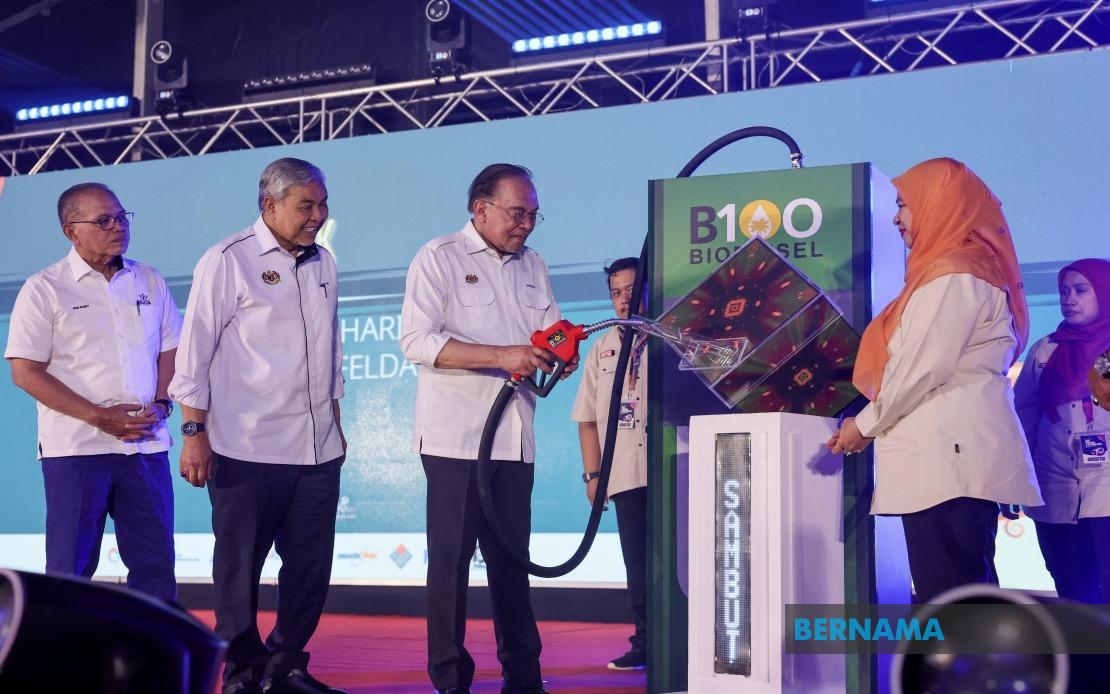
The Malaysian government intends to revisit the Land (Group Settlement Areas) Act 1960, commonly referred to as Act 530, to create space for multiple residential structures on single plots owned by FELDA settlers, according to Prime Minister Datuk Seri Anwar Ibrahim. The announcement was made during celebrations marking both FELDA Settlers' Day and the authority's 70th anniversary at Tun Abdul Razak Stadium in Bandar Pusat Jengka, signalling a significant shift in how the government views housing flexibility within the FELDA framework.
Anwar, speaking in his dual capacity as Prime Minister and Finance Minister, revealed that FELDA has been tasked with developing legislative amendments to present to Cabinet within a two-month window. Once Cabinet approves the proposed changes, they will be formally introduced to Parliament later this year, launching what could be a lengthy parliamentary process for what has traditionally been an inflexible land settlement framework.
The timing of this initiative gains particular urgency from the fact that approximately 8,000 residential units have already been constructed on individual lots and are currently occupied by settlers. This existing stock represents a legal grey area under current legislation, as Act 530 was designed when multi-unit development on single plots was not contemplated. The Prime Minister's acknowledgment of this situation—noting that these homes have been in occupation since December 31, 2025—underscores the practical reality that has prompted the government's reconsideration of the statutory framework.
While the legislative machinery grinds forward, the government has chosen not to leave these 8,000 households in limbo. Anwar announced immediate approval for water and electricity connections to all occupied homes, bypassing the need to wait for parliamentary action. This pragmatic interim approach recognizes that families already residing in these units require essential services regardless of the legal status of their structures.
The infrastructure responsibility will be divided between federal and state authorities. Water supply duties will transfer to the respective state governments where FELDA lots are located, while Tenaga Nasional Berhad has been instructed to accelerate its electricity connection programme to serve all 8,000 units. This coordination between federal entities and state governments reflects the shared jurisdiction over utilities in Malaysia's federal system and suggests the government is determined to prevent bureaucratic delays from denying residents basic services.
The broader context for this initiative stems from the FELDA New Generation Housing Project, abbreviated as PGBF in Malay, which commenced in 2013. This programme represents a modernisation attempt within FELDA's traditional settlement model, introducing contemporary housing standards while maintaining the cooperative principles that underpinned the original scheme. The PGBF currently operates across 43 distinct sites with a combined portfolio of 8,224 housing units spread across seven states: Pahang, Johor, Negeri Sembilan, Kedah, Terengganu, Kelantan, and Perak.
The proposed amendment carries significant implications for Malaysia's land settlement framework. Act 530 has governed FELDA operations for over six decades, reflecting mid-20th century assumptions about agricultural settlement patterns and rural housing needs. Permitting multiple dwellings per lot would modernise this framework, allowing younger generations of FELDA families to build homes on inherited or allocated land without relocating to urban areas, potentially strengthening family ties and community cohesion within settlement schemes.
For Malaysian readers, particularly those in rural areas or with family connections to FELDA schemes, this development signals a policy direction favouring property ownership flexibility and residential development rights. It suggests the government recognises that rigid land-use restrictions may inadvertently hinder wealth creation and housing security for rural communities, whose land assets often represent their primary financial resource.
The amendment also touches on equity considerations within FELDA communities. By allowing multiple units per lot, settlers can potentially generate rental income or house extended family members, creating economic opportunities that rigid single-dwelling restrictions currently prevent. This represents a shift toward recognising FELDA lots as genuine property assets rather than restricted-use allocations.
From a Southeast Asian perspective, Malaysia's FELDA model has been studied and partially replicated across the region as a land settlement and rural development approach. Changes to Act 530 may influence how neighbouring countries view similar schemes, particularly regarding balancing social objectives with property rights and economic flexibility.
The two-month timeline for submitting draft amendments to Cabinet suggests the government views this as a priority legislative item, though parliamentary passage remains uncertain. The success of this initiative will depend on whether Act 530's amendment can secure cross-party support and address potential concerns from various stakeholders, including traditional FELDA administrators and settlers who might view multiple-unit development with reservation.
The government's simultaneous action on utility connections demonstrates recognition that legislative perfection cannot be allowed to obstruct the provision of basic services to citizens already occupying homes. This pragmatism, combined with the intention to regularise the legal position, indicates a comprehensive approach to resolving what might otherwise become a contentious issue affecting thousands of FELDA families across Malaysia's rural landscape.

