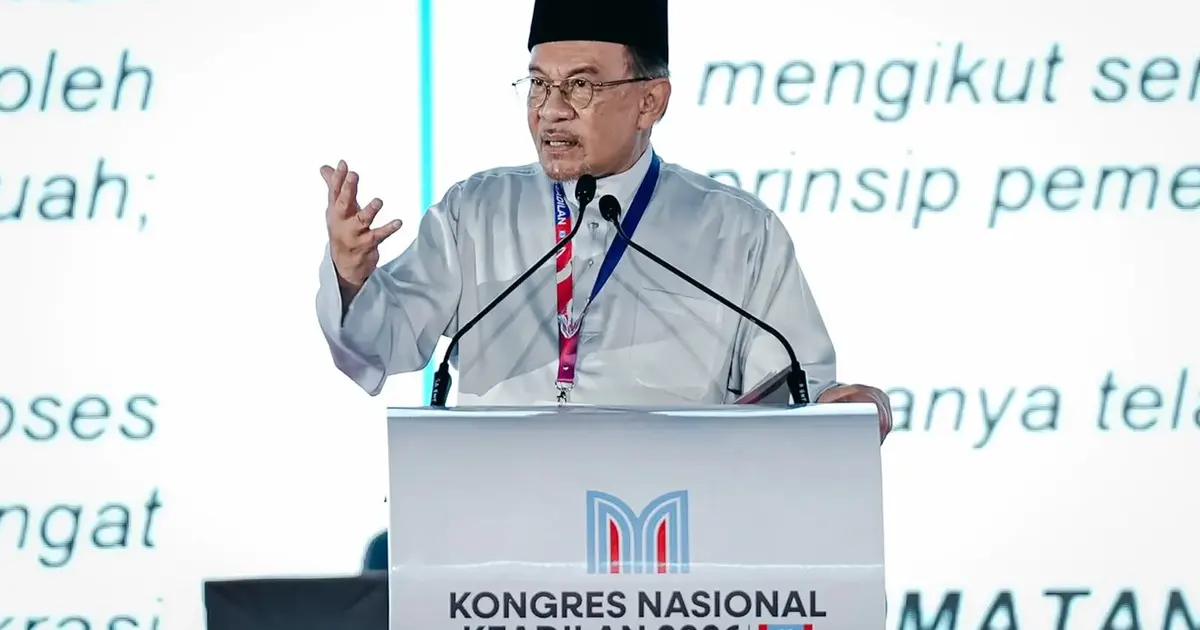
Prime Minister Anwar Ibrahim has indicated that the government's examination of governance failures at statutory agencies will not conclude with the Tabung Haji pilgrims' fund, but will deliberately shift focus to addressing persistent challenges at the Federal Land Development Authority (Felda). The Prime Minister disclosed that the Yang di-Pertuan Agong has expressed support for this broader investigative approach, signalling royal backing for sustained institutional reform across Malaysia's substantial network of state-owned enterprises and bodies.
The Tabung Haji matter has loomed large over Malaysia's political landscape in recent months, with successive revelations of financial mismanagement, governance lapses, and poor investment decisions at the Islamic pilgrimage fund prompting public outcry and parliamentary pressure. That institution, which manages accumulated savings from millions of would-be pilgrims, had emerged as a potent symbol of bureaucratic dysfunction and the need for stronger oversight mechanisms. However, policymakers and the monarchy have come to view the Tabung Haji investigation not as an isolated remedial exercise but as the opening salvo in a more comprehensive audit of how Malaysia's statutory bodies operate and account for public resources.
Felda, a sprawling agricultural enterprise created to settle poor rural Malaysians on developed plantation land, has faced mounting criticism over the past decade regarding inefficient operations, opaque financial reporting, and strategic missteps that have eroded shareholder returns and settler welfare. The organisation manages vast tracts of agricultural land and oversees the interests of hundreds of thousands of settler families and their descendants, making its institutional health a matter of significant social consequence beyond mere financial metrics. Long-standing grievances from Felda settlers concerning land tenure, dividend payments, and corporate governance have accumulated without systematic, high-level intervention, creating a backlog of legitimate complaints awaiting formal review.
Anwar's announcement reflects a recalibration of governmental priorities under his administration, emphasising transparency and accountability as central pillars of public sector renewal. The implicit acknowledgement that multiple statutory bodies warrant scrutiny represents a departure from previous approaches where individual crises were addressed episodically rather than as symptoms of systemic governance deficits. By framing the coming Felda investigation within a sequence of institutional audits, the government is attempting to establish a narrative of comprehensive reform that extends across several major organisations rather than treating each as an independent problem requiring separate intervention.
The Yang di-Pertuan Agong's reported endorsement carries constitutional weight in Malaysia's system, where the monarchy occupies a position of formal authority and symbolic importance in national affairs. Royal backing for intensified scrutiny of statutory bodies serves as a legitimating signal to the public and reinforces the impression that governance reform enjoys institutional consensus rather than representing merely executive preference. This alignment between the executive and constitutional monarchy is particularly significant in Malaysia's context, where public confidence in institutions depends partly on visible coordination between major pillars of state authority.
Felda's structural difficulties stem from multiple sources: agricultural commodity price volatility, technological disruption in plantation management, declining settler productivity, legacy pension obligations, and recurring allegations of management inefficiency. Unlike Tabung Haji, which operates in the financial services domain with clearer metrics for measuring performance, Felda operates across agricultural production, land administration, and social welfare provision—making governance assessment more complex and reform implementation more labour-intensive. Investigators examining Felda will need to disentangle questions of operational mismanagement from broader sectoral challenges affecting Malaysia's agricultural competitiveness, while distinguishing legitimate settler grievances from unrealistic expectations regarding income provision.
The investigation's scope remains undefined, but precedent from the Tabung Haji exercise suggests the government may establish a special task force or commission of inquiry to examine financial practices, board decision-making processes, management accountability, and stakeholder communications. Such exercises typically consume several months and generate substantial public documentation, creating opportunities for media scrutiny and parliamentary questioning. For Malaysian investors and settler communities dependent on Felda, the announcement signals that institutional reform is moving from idle talk to concrete governmental action, though the timeline and depth of proposed changes remain uncertain.
From a Southeast Asian perspective, Malaysia's willingness to conduct systematic reviews of its statutory bodies positions the country as relatively transparent by regional standards, though performance still lags peer economies in mechanisms for preventing recurrence of governance failures. Thailand, Indonesia, and the Philippines have all grappled with major scandals at state enterprises, and Malaysia's approach—combining formal investigation with implicit institutional reform—represents a middle path between aggressive restructuring and passive acceptance of dysfunction. Whether Anwar's government will translate investigative findings into substantive operational changes at Felda, or whether the exercise becomes another voluminous report gathering dust on bureaucratic shelves, will determine whether this reform initiative generates genuine institutional improvement or merely performs governmental accountability.
The political economy of Felda reform is intricate, given the organisation's historical importance to Malaysia's ruling coalition and its electoral significance in rural constituencies. Settlers form an organised constituency capable of mobilising political pressure, and any investigation's recommendations regarding land policy, dividend restructuring, or management restructuring will intersect with electoral calculations. The government's timing in announcing the Felda review—positioned sequentially after Tabung Haji rather than simultaneously—suggests calculated political staging, allowing initial investigation conclusions to emerge before Felda's examination accelerates, potentially managing political fallout across a longer timeframe rather than concentrating institutional controversy.
Looking forward, the success of this investigative process will depend on whether governmental authorities are prepared to accept unflattering findings about their own institutions and implement recommended changes despite potential political costs. International development experience suggests that statutory body reforms frequently founder when political interests conflict with operational efficiency improvements, particularly when long-serving management or connected constituencies stand to lose privileges. Whether Malaysia's reform impulse will prove sufficiently robust to overcome such countervailing pressures remains the central question in assessing Anwar's governance agenda.

