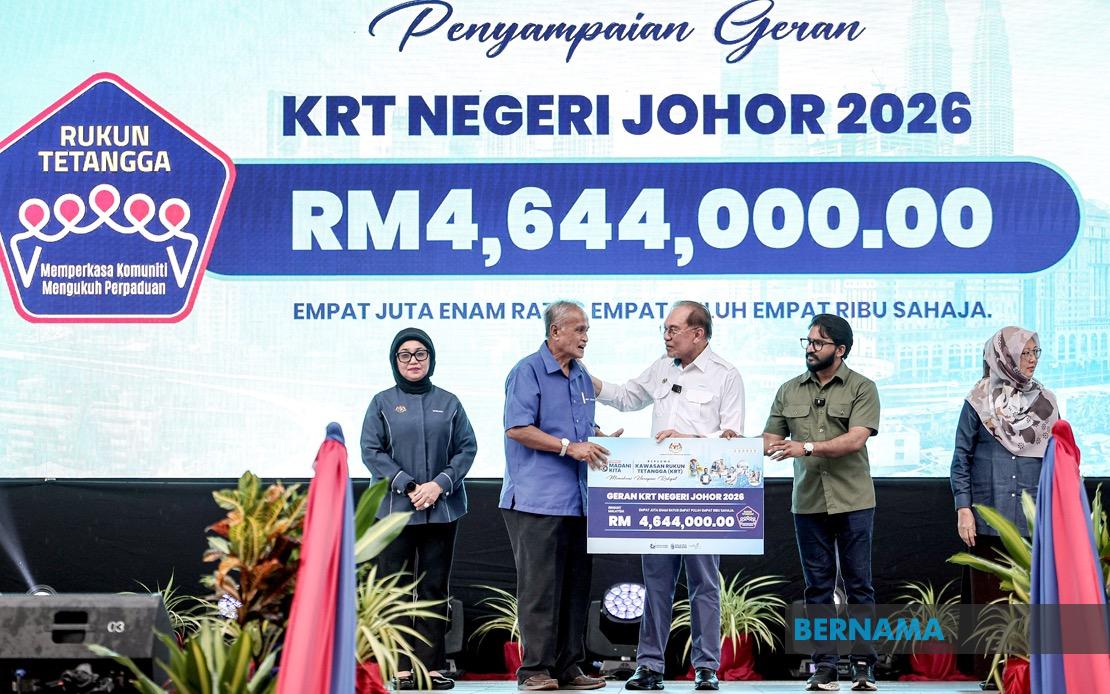
Prime Minister Datuk Seri Anwar Ibrahim has announced a significant financial boost for community safety organisations across Malaysia, approving an increase in annual grants to Neighbourhood Watch Areas (KRT) to RM10,000 beginning next year. The announcement marks the first enhancement to the programme's funding in a decade, with disbursements scheduled to commence on January 1, 2027. Speaking at the MADANI KITA Programme in Segamat, the Prime Minister acknowledged that the previous allocation of RM6,000 had remained static for ten years despite the expanding responsibilities undertaken by these community-based groups.
The decision to raise the grant reflects the government's recognition of KRT's importance in addressing local issues and strengthening ties between residents and authorities. These neighbourhood associations function as crucial intermediaries, enabling communication between grassroots communities and government departments responsible for security and welfare. By approving this 66.7 percent increase, the administration has signalled its commitment to adequately supporting institutions that foster community engagement and social cohesion at the local level. The move comes as Malaysia faces evolving security challenges and social fragmentation risks, making robust community participation in governance increasingly vital.
Anwar emphasised that KRT organisations contribute substantially to reviving the spirit of consensus, democracy, and social unity that has anchored Malaysian society since independence. The Prime Minister framed the funding increase within a broader national narrative, underscoring that Malaysia's fundamental strength derives from its capacity to maintain harmony across racial, cultural, and religious lines. This positioning is significant for Malaysian policymakers and community leaders, as it explicitly connects grassroots funding to the larger project of national cohesion and interethnic peace.
The Prime Minister also used the occasion to remind citizens that demographic diversity should not become a vector for social division, but rather serve as a defining national asset. This messaging carries particular weight in a political climate where communal tensions occasionally surface, suggesting that the government views strengthened community organisations as potential safeguards against polarisation. KRT groups, by fostering regular interaction among residents of different backgrounds in neighbourhoods, effectively function as decentralised peace-building institutions.
Beyond the KRT funding announcement, Anwar unveiled additional allocations targeting infrastructure and facilities across Johor. An immediate disbursement of RM3.205 million was approved for sixteen basic infrastructure repair and upgrading projects at Islamic educational institutions throughout the state. These investments span religious schools, madrasahs, study centres, and tahfiz institutions located in districts including Batu Pahat, Muar, and Segamat. The government justified this expenditure by arguing that improved facilities would create more conducive learning environments for students, reflecting a wider developmental philosophy that links physical infrastructure to educational outcomes.
The investment in Islamic educational facilities carries particular significance for understanding government priorities in a Muslim-majority nation with substantial Islamic education participation. Many Malaysian students attend madrasahs and tahfiz centres alongside conventional schooling, making the quality of these institutions a matter of both educational policy and religious community relations. By targeting immediate repairs at these venues, the government positioned itself as responsive to concerns raised by Islamic educators and parents regarding facility standards.
Anwar also authorised RM1.0 million in immediate funding for critical and urgent repair work at Royal Malaysian Police (PDRM) quarters in Johor. The Prime Minister framed this allocation within a welfare and morale context, arguing that adequate facilities for security personnel constitute an essential investment in maintaining national peace and stability. This spending decision reflects recognition that police officer satisfaction and wellbeing correlate with organisational effectiveness and public trust in law enforcement. In a region where police legitimacy sometimes faces scrutiny, proactive investment in officer facilities represents a strategic approach to institutional strengthening.
The announcements made during the Segamat event reveal a government strategy centring on simultaneous attention to community-level organisations, religious education infrastructure, and security sector welfare. This multi-pronged approach suggests recognition that national stability depends upon investment across multiple institutional layers rather than concentration in a few policy areas. For Malaysian taxpayers and development analysts, the coordinated nature of these allocations demonstrates an attempt at holistic governance addressing community cohesion, education, and security provision concurrently.
The timing of these announcements, coupled with the emphasis on consensus and unity, indicates that the government views the second half of 2024 as an opportune moment for community-focused messaging. With the KRT funding increase not taking effect until 2027, the announcement function partly as forward commitment and partly as present political communication, signalling to community leaders and residents that the administration recognises their contributions. For KRT leaders nationwide, the approved increase provides concrete motivation to continue their community engagement activities while awaiting the enhanced financial resources.
Regionally, Malaysia's approach to community safety funding through KRT structures contrasts with models adopted in neighbouring Southeast Asian nations. Unlike some regional counterparts that rely more heavily on private security or centralised policing, Malaysia maintains grassroots volunteer safety networks supported by government grants. This model reflects Malaysia's historical emphasis on community participation in governance, though observers note that effectiveness varies significantly depending on local leadership quality and resident engagement levels.
The infrastructure investments announced in Segamat also underscore the government's attention to regional equity, with Johor receiving substantial allocations across multiple sectors. This geographical focus may reflect both genuine needs assessment and political calculation regarding state-level support. For other Malaysian states and communities outside Johor, the Segamat announcements raise questions about funding distribution and the criteria determining allocation priorities across the federation.
Moving forward, stakeholders including KRT leaders, Islamic educators, and police welfare advocates will monitor implementation of these approved allocations. The success of the KRT funding increase in generating measurable improvements in community safety and cohesion will likely influence policy discussions regarding support for other grassroots institutions. Additionally, the government's ability to deliver on infrastructure promises to Islamic educational facilities and police quarters will affect its credibility on community-focused development pledges.