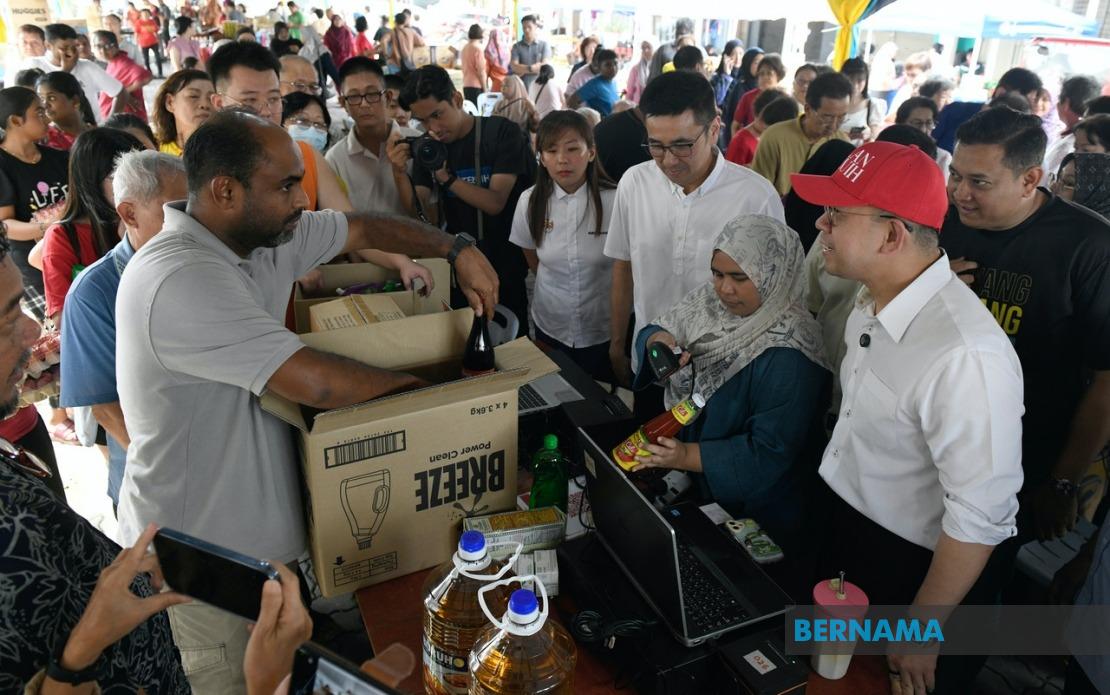
The government is doubling down on its commitment to empower local micro, small and medium enterprises and cooperatives through the Ministry of Entrepreneur and Cooperatives Development, recognising the substantial opportunities emerging in Malaysia's thriving wholesale and retail trade sector. Speaking at an event in Nibong Tebal, Minister Steven Sim Chee Keong outlined plans to deepen grassroots engagement with entrepreneurs across the nation, positioning these initiatives as crucial to ensuring ordinary Malaysians benefit from the country's sustained economic expansion.
The timing of this push reflects impressive momentum in the sector. According to data from the Department of Statistics Malaysia, wholesale and retail trade recorded sales valued at almost RM175 billion in April 2026, representing a robust 15.3 per cent year-on-year increase. Such figures underscore the sector's resilience and attractiveness as a vehicle for small business growth. For MSMEs and local entrepreneurs, these numbers signal genuine demand and expanding market opportunities at a time when many households are managing tight budgets.
Sim attributed this sectoral vitality to a combination of stable domestic demand and coordinated efforts between government and the private sector to manage inflation and enhance consumer purchasing power. With the ministry actively promoting programmes such as the Jualan MADANI KUSKOP initiative, the government is attempting to channel growth benefits directly to grassroots entrepreneurs rather than allowing them to concentrate among larger players. This approach carries significance for Malaysia's economic inclusivity agenda, as MSMEs collectively employ millions and underpin household incomes across both urban and rural areas.
The broader economic context adds weight to these initiatives. Despite global headwinds—tariff disputes, trade tensions, and geopolitical volatility—Malaysia has maintained encouraging growth trajectories. As an open economy heavily integrated into regional and global supply chains, the country remains vulnerable to external shocks. Yet domestic consumption has proven sturdy, suggesting that consumer confidence and spending remain relatively intact. For small traders and cooperatives, this stability creates space to invest, expand inventory, and explore new customer segments without immediate fear of a sharp downturn.
The government's emphasis on local participation in the economic value chain reflects a deliberate policy choice. Rather than viewing wholesale and retail solely as sectors dominated by large corporations and franchises, policymakers are actively working to create pathways for independent merchants, family businesses, and cooperative structures to capture market share. This decentralised approach strengthens community economies, keeps profits circulating within local networks, and reduces dependency on multinationals for essential goods distribution.
For Malaysian MSMEs, particularly those in smaller towns and secondary cities, these initiatives address a persistent challenge: access to markets and financing on competitive terms. Cooperatives, when properly supported, can aggregate buying power and standardise quality, making local producers more attractive to retailers and wholesalers. Government backing for such structures—through training, access to credit, and procurement preferences—can tip the balance in their favour, especially against well-capitalised competitors.
The minister's remarks also highlight the government's awareness that economic growth alone does not guarantee equitable distribution of benefits. Without deliberate intervention, gains tend to concentrate among established enterprises and wealthier regions. By channelling support specifically to MSMEs and cooperatives, KUSKOP is attempting to widen the circle of beneficiaries, embedding growth more deeply into communities. This has implications beyond economics; it affects political stability, social cohesion, and public satisfaction with government performance.
From a regional perspective, Malaysia's approach mirrors trends across Southeast Asia, where governments increasingly recognise that sustainable development requires inclusive growth. Countries like Indonesia, Thailand, and Vietnam have similarly launched MSME support schemes, recognising these enterprises as engines of job creation and poverty reduction. Malaysia's initiatives, therefore, position the country competitively within the region and demonstrate commitment to the United Nations Sustainable Development Goals, particularly those targeting economic growth and reduced inequality.
However, success hinges on implementation quality. Past government programmes have sometimes faltered due to bureaucratic inefficiency, inadequate training, or funding that reached only politically connected beneficiaries. For the Jualan MADANI KUSKOP programme and related schemes to deliver genuine impact, they must reach genuine entrepreneurs, provide tangible support beyond tokenism, and maintain accountability to prevent diversion of resources. Local chambers of commerce, industry associations, and civil society monitoring can play vital roles in ensuring programmes remain effective and transparent.
The sector's growth also presents risks worth acknowledging. Rapid expansion can attract informal or unscrupulous operators, potentially undermining quality standards and consumer trust. Small businesses, eager to compete, may cut corners on food safety, product authenticity, or labour practices. Government support for MSMEs should therefore couple financial and market assistance with capacity building in compliance, standards, and ethical operations. This protects not only consumers but also legitimate small businesses from being undercut by corner-cutters.
Looking ahead, the government's emphasis on local entrepreneurs in wholesale and retail aligns with broader digitalisation trends. Many traditional retailers and wholesalers are adopting e-commerce, supply chain technologies, and data analytics. KUSKOP programmes that include digital literacy training and access to technology platforms could significantly enhance competitiveness. Malaysian MSMEs that master omnichannel retailing—combining physical stores with online sales—will be better positioned to capture growing urban and suburban consumer bases.
Ultimately, the government's grassroots push reflects recognition that Malaysia's economic future depends not just on attracting foreign investment and growing large corporations, but on strengthening the foundation of local enterprise. When neighbourhood shops, market stallholders, cooperative members, and family businesses thrive, the benefits ripple through communities in ways that distant corporate profits cannot match. Sim's commitment to KUSKOP's ground-level work, therefore, signals a shift toward more inclusive, community-centred economic policymaking—a direction increasingly expected by Malaysian voters.

